
Inside the Social Crowdsourcing Engine: Interaction Dynamics and Evolution
A Social Crowdsourcing Community Case Study: Interaction Patterns, Evolution, and Factors That Affect Them
This paper presents a longitudinal case study of a Social Crowdsourcing Community (SCC), analyzing five years of interaction data from its inception. By applying Social Network Analysis (SNA) and time-series decomposition, the authors characterize the evolution of member behaviors and the structural stability of the interaction network.
TL;DR
This study offers a rare, five-year longitudinal look at a private Social Crowdsourcing Community (SCC) from its very first day. The findings reveal a "volatile yet stable" ecosystem: while individual interaction pairs die out quickly, the community's structural health is maintained by a constant influx of new blood and a shared interest in task-related artifacts rather than social bonding.
Background: The SCC vs. The Social Network
Most of us understand Social Networks (SNs) as platforms for maintaining "friendships" or "associations." However, a Social Crowdsourcing Community (SCC) operates differently. It is a moderated, gamified space where members are recruited to solve specific problems for a beneficiary (e.g., a smartphone manufacturer).
The core insight of this paper is that interactions in SCCs are not indicators of friendship. Instead, they reflect a "coworker" dynamic where people interact because they care about the same topic (the "artifact"), not necessarily because they know each other.
Methodology: Decoding the Interaction DNA
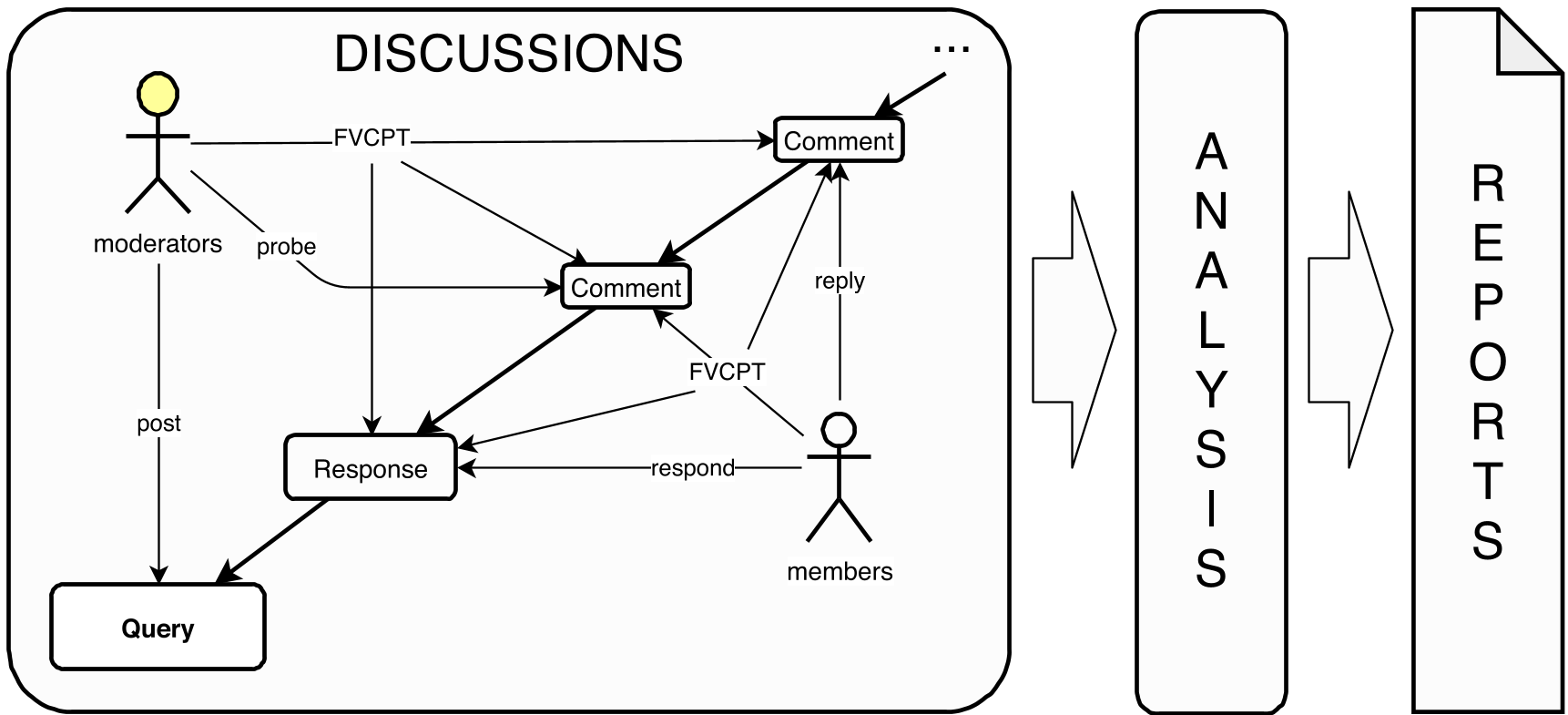
The authors analyze over 770,000 interactions, focusing on the hierarchy of artifacts:
- Queries: Posted by moderators (The Root).
- Responses: Members answering the queries.
- Comments: Discussions surrounding those responses.
The Pareto Distribution of Participation
The study found a massive disparity in activity levels. Splitting the users into "frequent" and "infrequent" groups (based on the Pareto principle) revealed specialized roles:
- Frequent Members: The "First Responders" who jump on new queries quickly.
- Infrequent Members: The "Discussants" who initiate deeper conversations around existing responses.
Why Do People Respond? The Role of Rewards and Following
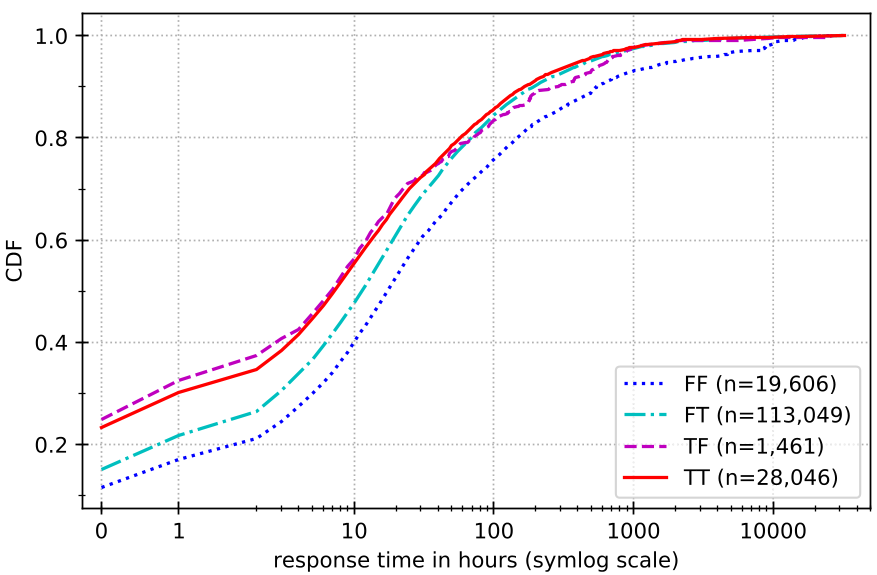
One of the most actionable parts of the study involves responsiveness. The authors tested two factors:
- Follow: Getting notified when a specific member or artifact is active.
- Rewards: The gamification aspect (badges).
Using the Kolmogorov–Smirnov test, the authors proved that following has a stronger immediate impact on speed, but rewards provide more consistent motivation over time. When combined (the "TT" group in the data), responsiveness reaches its peak.
Network Evolution: The Stability Paradox
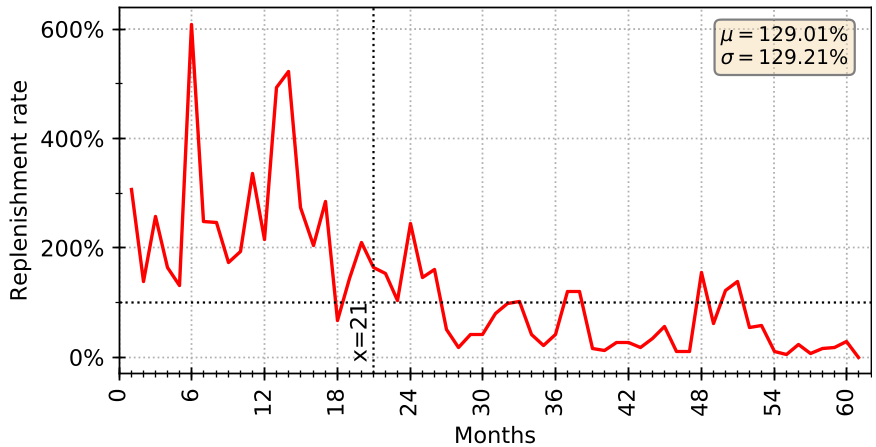
The most surprising find is the "Stability Paradox." From a microscopic view, the network is chaotic—71% of pairs that interact this month won't interact next month. Yet, from a macroscopic view, the network's structural properties (like density and average path length) remain remarkably stable over years.
The Two Pillars of Stability:
- High Replenishment Rate: For every 100 members who stop interacting, 129 new members step in.
- Novelty Bias: Members have a persistent tendency to interact with new people they've never engaged with before.
Takeaway for Community Builders
For those managing online communities or crowdsourcing platforms, the lesson is clear: Churn is not necessarily a failure of the system. In an SCC, the constant rotation of members prevents "cliques" and ensures a fresh stream of perspectives. To keep the engine running, focus on:
- Facilitating "Following": It's the #1 driver for day-one engagement.
- Pacing Rewards: Use badges to sustain engagement as the "novelty" of following wears off.
- Monitoring the Replenishment Rate: As long as new members arrive faster than old ones leave, the network's structural integrity remains safe.
Future Work
The authors suggest that the next frontier is developing a "topology-generation model" to simulate how these communities might react to "attacks" or sudden shifts in moderation, providing a playbook for community resilience.