
FITMAN Anlzer: Turning Global Social Buzz into Industrial Intelligence
Infusing social data analytics into Future Internet applications for manufacturing
The paper introduces FITMAN Anlzer, a domain-independent Future Internet enabler designed to automate social data analytics for the manufacturing sector. By integrating sentiment analysis via SVM and real-time social media monitoring, it transforms unstructured user-generated content from platforms like Facebook and Twitter into actionable business intelligence for product design and trend forecasting.
TL;DR
The FITMAN Anlzer is an open-source, cloud-based platform that bridge the gap between social media noise and manufacturing strategy. By leveraging a scalable NoSQL backend and a customizable SVM-based sentiment engine, it allows manufacturers to monitor trends and customer sentiment in real-time, feeding social insights directly into the product design cycle.
Context: The Untapped Potential of Collective Intelligence
In the era of Web 2.0, consumers are vocal about their preferences, yet most manufacturers remain "deaf" to this data. The sheer volume, informal nature (slang, typos), and lack of structure in social media posts create a massive barrier. Prior tools were either too generic (Hootsuite) or too rigid, requiring data scientists to retrain models for every new product line.
The authors of this paper argue that for social data to be useful in a Digital Factory setting, it must be Domain-Independent and User-Centric.
Methodology: A Scalable Pipeline for Unstructured Data
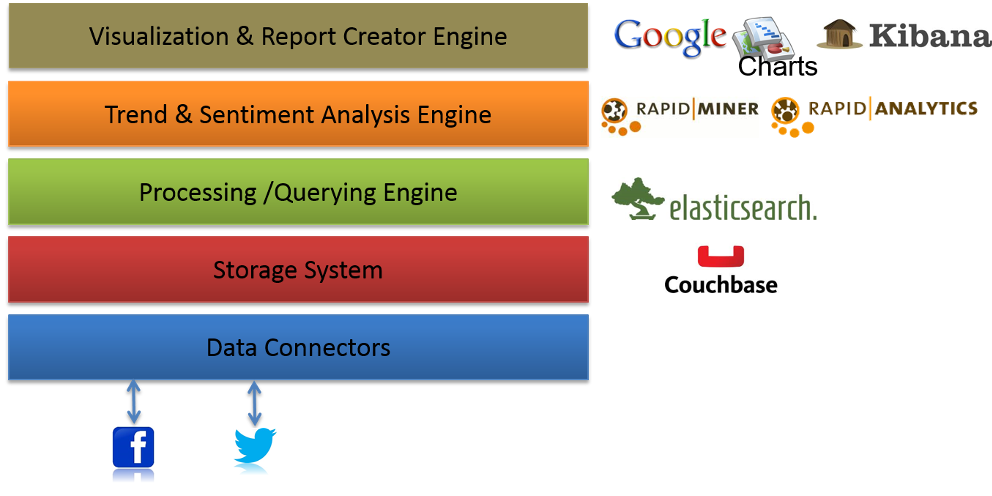
The FITMAN Anlzer architecture is built on a "Future Internet" philosophy—modular, open-source, and highly interoperable.
1. Data Retrieval and Normalization
The system utilizes Python scripts to tap into the Twitter Streaming API and Facebook Graph API. Because these sources provide data in varied formats, the Anlzer normalizes everything into a unified JSON schema, stripping irrelevant metadata and cleaning the text (URL removal, swearing filters).
2. The Sentiment Engine
While many modern systems lean on Deep Learning, the researchers chose SVM (Support Vector Machine) due to its high performance and reliability in text classification tasks within manufacturing contexts.
The NLP pipeline includes:
- Emoticon Mapping: Converting symbols into polarity placeholders.
- N-gram Generation: Capturing context through unigrams and bigrams.
- TF-IDF Weighting: Determining the importance of specific manufacturing-related keywords.
Real-World Utility: From Queries to Charts
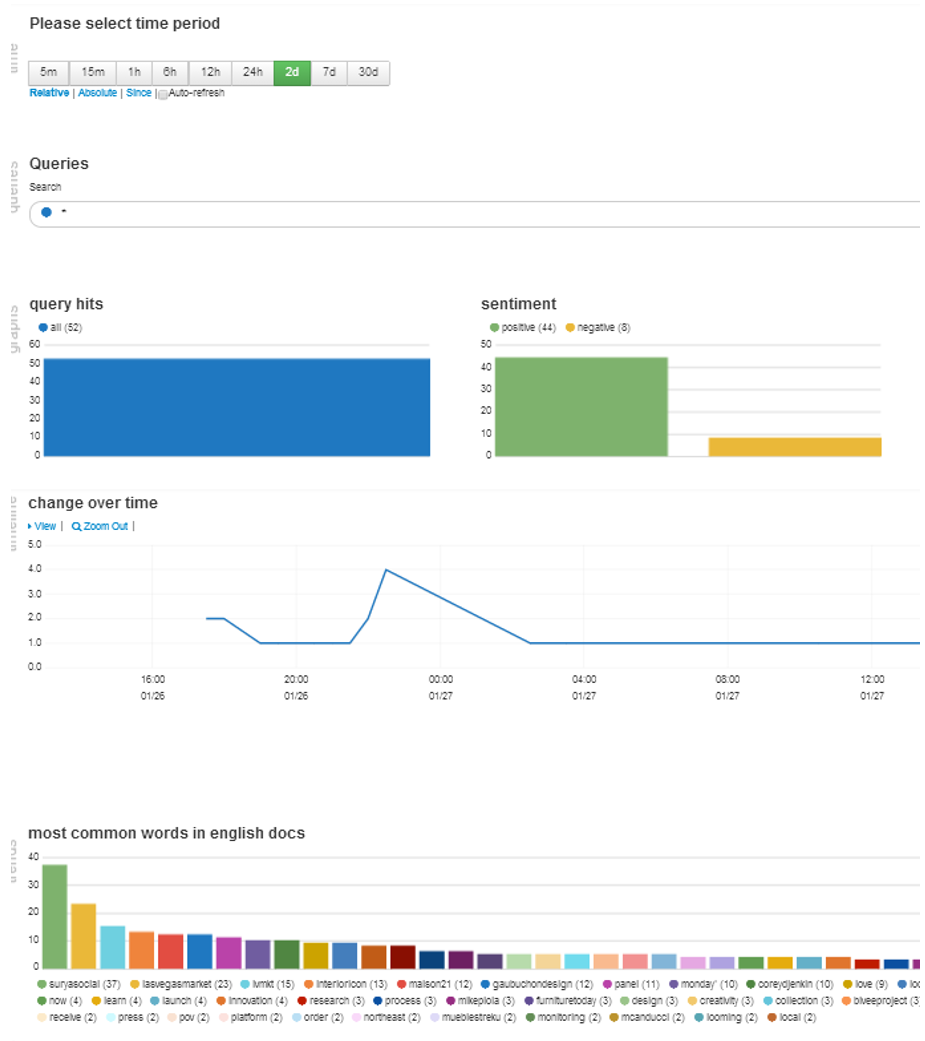
The strength of the FITMAN Anlzer lies in its UI. It doesn't require SQL knowledge. A marketing manager can create a "Project," input competitor keywords, and the system generates Google Charts visualizations showing:
- Sentiment Trends: Is the buzz around the new furniture collection positive?
- Trend Detection: What specific attributes (e.g., "minimalist", "sustainable") are co-occurring with positive sentiments?
- Historical Comparison: How does current brand reputation compare to last quarter?
Critical Insight & SOTA Position
Compared to generic sentiment tools like Lexalytics, FITMAN Anlzer is uniquely positioned as a Specific Enabler (SE) in the FI-WARE ecosystem. Its greatest advantage is Human-in-the-loop retraining. If the system misidentifies a promotional tweet as "negative," the user can manually correct it and retrain the SVM model with a single click, ensuring the tool "learns" the manufacturer's specific business logic.
Limitations and Future Work
While robust, the current implementation relies on keyword-based trend analysis. The authors admit that future iterations need to:
- Incorporate Part-of-Speech (POS) tagging to better understand linguistic nuance.
- Address the Subjective-Objective dilemma (distinguishing between a factual statement and an opinion).
- Enhance Demographic Analytics to understand who is driving the trends.
Summary
The FITMAN Anlzer represents a significant step toward the Social Factory. By democratizing complex NLP and machine learning tools, it allows manufacturers to listen to their customers at scale, ensuring the next generation of products is designed not in a vacuum, but in response to real-world demand.