
Beyond the Inbox: Tracking the Multi-Channel Evolution of Vishing
A social-engineering-centric data collection initiative to study phishing
This paper presents a multi-channel data collection framework designed to study modern phishing, specifically focusing on "vishing" (voice phishing). The authors propose a cross-channel correlation approach that integrates data from emails, instant messages, social networks, and decoy phone lines to identify and analyze large-scale social engineering campaigns.
TL;DR
Phishing is no longer just a "dodgy email" problem. This research introduces a comprehensive data collection system that treats phishing as a multi-faceted social engineering attack. By linking malicious emails, IM messages, and social media spam to automated voice calls (vishing), the authors unveil how attackers use cross-channel strategies to trap victims.
Contextual Positioning
Published during a pivotal shift in cybercrime (EuroSys '11), this work marks the transition from reputation-driven hacking to profit-driven, automated "business" models. While most 2011-era research was obsessed with URL filtering in emails, Maggi et al. looked toward the burgeoning world of VoIP and automated telephony.
The Problem: The "Silo" Defense Gap
Traditional security systems are experts at identifying a single malicious link in an email. However, attackers have realized that people are far more likely to trust a human voice. By sending an email that says, "Call this number to verify your account," phishers bypass automated email scanners. Because the "payload" is a phone conversation rather than a piece of malware or a URL, the attack remains invisible to standard defenses.
Methodology: The "Reverse-Vishing Bird"
The core innovation is a four-module architecture designed to feed a centralized correlation engine.
1. The Phone Bot (The Heart of the System)
Using the Asterisk PBX, the team built two sub-modules:
- The Recorder: Answering calls on "decoy" numbers (telephony honeypots).
- The Caller: Actively calling numbers found in spam emails. It uses a "reverse-vishing" script—mimicking a curious victim—to bait the attacker into revealing their automated script or live operator tactics.
2. Cross-Channel Correlation
The system doesn't just collect data; it links it. If a phone number appears in both a Skype message and a spam email, the system marks them as part of the same campaign. They use URL Redirection Chain analysis to see if different shortened links eventually land on the same phishing site, providing a "fingerprint" of the attacker's infrastructure.
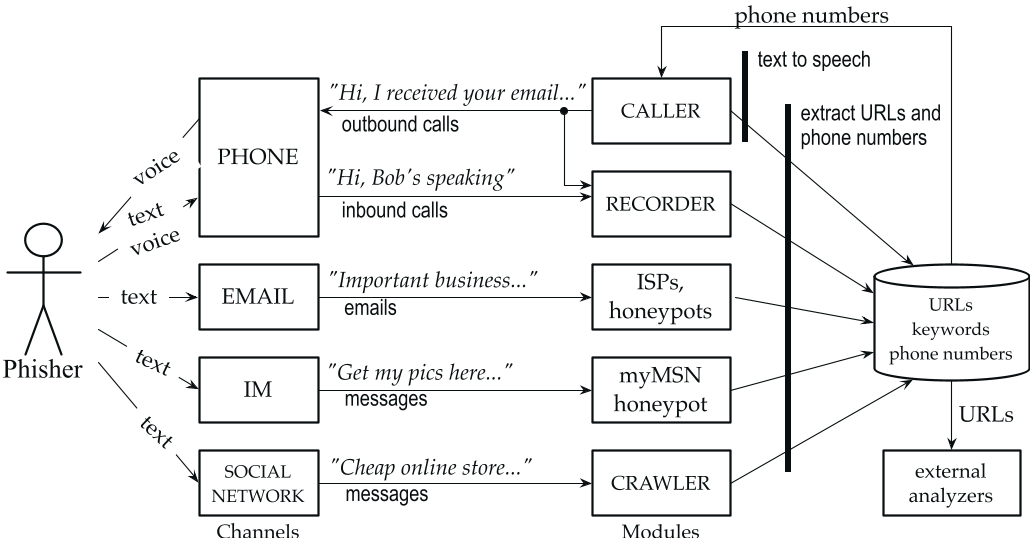 Figure 1: High-level overview of the data collection and correlation pipeline.
Experiments and Key Findings
The researchers tested their proof-of-concept using real-world data from an ISP in Southern California:
- Data Volume: Out of millions of spam emails, only 0.047% contained phone numbers. While this seems low, it represents over 16,000 targeted vishing attempts in just one month, demonstrating the scale of the "voice" business.
- Automation Patterns: The study confirmed that vishing is industrializing. Automated responders (voice bots) heavily used terms like "press" and "credit", whereas live scammers used more varied natural language.
- Churn Rate: About 10% of the numbers extracted were already disconnected or spoofed by the time the researchers called back, highlighting the rapid "burn rate" of attacker infrastructure.
Critical Insight & Future Outlook
The brilliance of this work lies in its social-engineering-centric view. Instead of looking at code, it looks at content.
Limitations: The paper acknowledges the difficulty of Speech-to-Text (STT) accuracy in 2011. While the Sphinx engine struggled back then, modern Whisper-based models would today make this architecture incredibly potent for real-time threat intelligence.
The Legacy: This paper serves as a blueprint for modern "Threat Intelligence Platforms" (TIPs). It teaches us that to fight a human-centric threat (Social Engineering), our data collection must be as flexible and multi-channel as the attackers themselves.
Takeaway
If you are only monitoring one channel (like email), you are blind to the other three channels the attacker is using to build rapport with your users. The "Vishing" threat is a cross-platform game.