
Social-EOC: Sorting the Signal from the Noise in Emergency Social Media
Social-EOC: Serviceability Model to Rank Social Media Requests for Emergency Operation Centers
The paper introduces Social-EOC, a formal serviceability model designed to identify and prioritize actionable help requests on social media for Emergency Operation Centers (EOCs). By utilizing a Learning-to-Rank (LTR) approach combined with inferred serviceability characteristics, the system achieves a significant performance boost in ranking critical messages, reaching up to a 25% improvement in nDCG over text-only baselines.
During a disaster, social media becomes a digital lifeline. However, for Emergency Operation Centers (EOCs), it can also be a source of paralyzing information overload. While thousands of people post about a hurricane, only a fraction of those posts are actionable—meaning they contain a request the EOC can actually fulfill.
The paper "Social-EOC" addresses this gap by moving beyond simple "relevance" to a more rigorous concept: Serviceability.
TL;DR
Researchers have developed Social-EOC, a formal model and ranking system that identifies social media requests that are explicit, detailed, and correctly addressed. Using a Learning-to-Rank approach, they improved the prioritization of critical messages by up to 25% (nDCG) across major crisis datasets like Hurricane Harvey and the Nepal Earthquake.
The Problem: The High Cost of Digital Noise
In a crisis, a Public Information Officer (PIO) might see thousands of tweets starting with "@fbcoem" (Fort Bend County Office of Emergency Management).
- Message A: "Thank you for all you do! God bless."
- Message B: "Why is the water not draining at [Specific Intersection]?"
Current automated systems often struggle to distinguish between these. Message A is polite but operationally "noise." Message B is "serviceable" because it asks an answerable question about a specific location. Without a way to rank these effectively, PIOs waste precious minutes manual filtering, leading to delayed responses for the most critical pleas.
Methodology: The Social-EOC Model
The authors define a Serviceable Request as a message that satisfies three core criteria:
- Explicit Intent: It asks for a specific resource or an answerable question.
- Correct Address: It is sent to an organization that actually has the power to respond.
- Sufficient Detail: it provides the "Who, What, Where, and When" necessary for action.
System Architecture
The system doesn't just look at keywords; it uses Machine Learning to infer serviceability qualities.
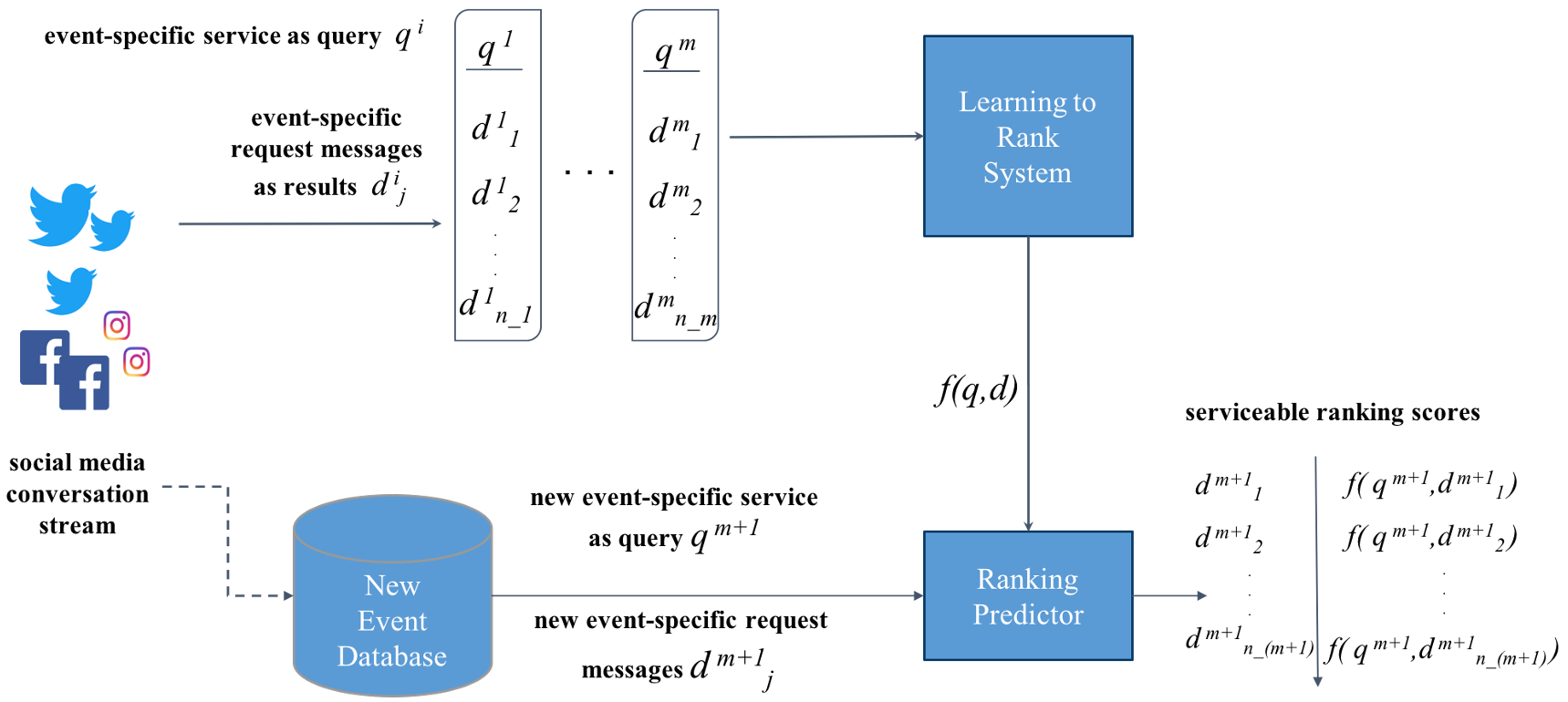 The Social-EOC workflow: from collecting conversational streams to ranking them using SVM-Rank based on inferred serviceability features.
The model extracts:
- Generic Features: Word count, hashtags, mentions.
- Text Features: TF-IDF bag-of-words.
- Serviceability Features: Scores automatically generated for the four attributes (Explicit, Answerable, Correctly Addressed, Detailed).
Experimental Results: Precision Under Pressure
The researchers tested their model against six major disasters. To ensure the model was "grounded" in reality, they had actual emergency management practitioners from the US, Canada, and Nepal provide the gold-standard labels.
Performance Comparison
The results showed that adding "Serviceability" features (the T+I model) consistently outperformed standard text-based baselines.
| Event | nDCG@5 (Baseline) | nDCG@5 (Social-EOC) | Improvement |
|---|---|---|---|
| Nepal Earthquake | 46% | 58% | +12% |
| Alberta Floods | 57% | 65% | +8% |
| Hurricane Sandy | 50% | 71% | +21% |
These gains are statistically significant and demonstrate that the "serviceability" of a message is a quantifiable signal that can be picked up by AI.
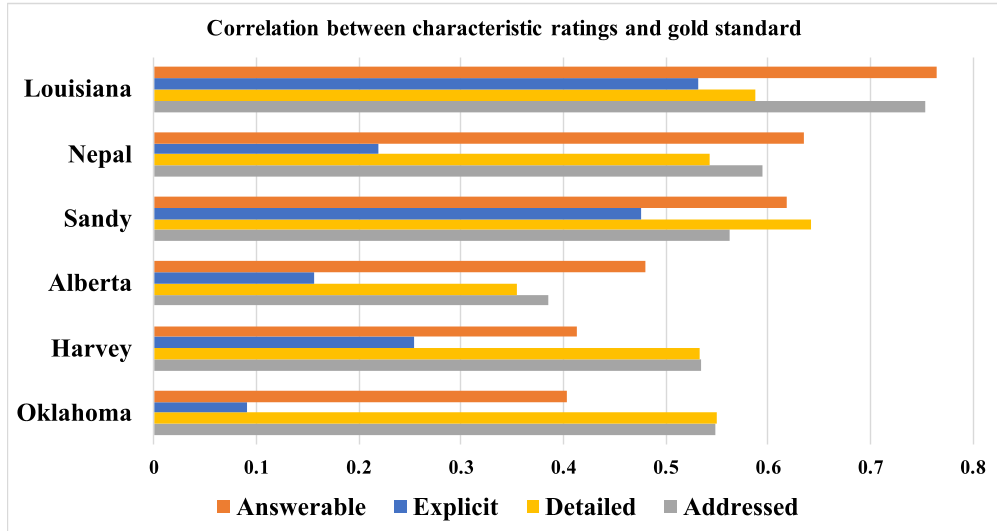 Figure 2: Strong positive correlation between what the AI sees as "serviceable" and what human experts prioritize.
Critical Insight: Why This Matters
The most profound takeaway is that cross-event models work. The researchers found that training a model on previous disasters helped prioritize requests in new ones. This is crucial because, at the start of a disaster, there is no "ground truth" data to train on. The ability to use a "Global Serviceability Model" means EOCs can deploy this technology the moment a crisis begins.
Conclusion & Limitations
Social-EOC represents a shift from "Big Data" (collecting everything) to "Smart Data" (prioritizing what is actionable).
However, challenges remain:
- Language: The study primarily focused on English.
- Implicit Requests: The model currently struggles with "indirect" requests where the agency isn't explicitly tagged (e.g., a post without an @mention).
Despite these, Social-EOC proves that by modeling the specific information needs of practitioners, we can create AI tools that effectively support human responders when every second counts.