
Beyond the Expert-Novice Model: Transforming Engineering Education through Social Epistemic Cognition
Social epistemic cognition and engineering students' collaborative learning in emerging areas: An implementation case study in a course for social networking
This paper introduces Social Epistemic Cognition (SEC) to engineering education, proposing a framework to understand how students' knowledge-related cognitive processes are mediated by online social interactions. Through a case study of a "Social Networking" course, it validates that SEC is significantly correlated with Collaborative Knowledge Building (CKB) and predicts academic performance via social network centrality.
TL;DR
In fast-evolving fields like Social Media Analytics or AI, the traditional model of a professor "disseminating" knowledge to a student is insufficient. This paper presents a paradigm shift using Social Epistemic Cognition (SEC). By building online blogging communities for engineering students, the research proves that a student’s "social position" and "cognitive justification" in a network are direct predictors of their academic success.
The Problem: The Knowledge Disconnect in Modern Engineering
Engineering education faces a crisis of relevance. Technology evolves faster than textbooks. The paper argues that the traditional Expert-Novice Model creates barriers:
- Expert-Knowledge Barrier: Professionals struggle to stay updated.
- Expert-Novice Barrier: Information flows one way, slowing down deep conceptual mastery.
The author suggests that in emerging areas, we need a "Collaborative Learning Community" where knowledge is co-constructed rather than passed down.
Methodology: Operationalizing SEC
The core of this research is the SEC Framework, which suggests that how we think about knowledge (its source, its structure, and our aims) is fundamentally shaped by our social environment.
The author implemented this in a 12-lecture course using:
- Iterative Blogging: Students shared reflections and external resources (YouTube, tech news).
- Online Discourses: Mandatory peer-commenting to foster "Symmetric Knowledge Advancement."
- Social Network Analysis (SNA): Measuring the "prestige" and "influence" of students within their digital community.
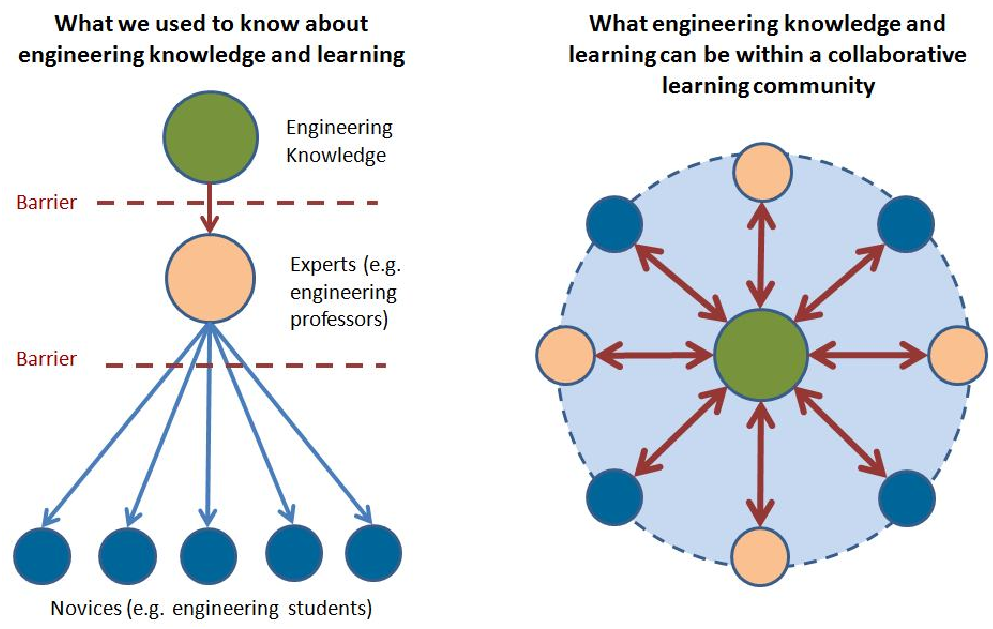 Fig 1. Moving from a closed expert model to a collaborative, open-access knowledge community.
The Five Pillars of SEC in Engineering
- Social Epistemic Aims: Do students discuss data to reach a common truth?
- Structure of Social Knowledge: Do they view shared knowledge as simple or complex?
- Source and Justification: Do they believe a peer's post blindly or verify it?
- Social Epistemic Virtues: Do they have the courage to correct misinformation?
- Processes: How reliable is the argumentation used in group projects?
Key Results: Connection to Academic Performance
The study’s most striking find was the quantitative link between SNA Centrality and Grades.
- Closeness Centrality: Predicted academic performance with a medium effect size ().
- In-degree/Out-degree: Higher participation and "prestige" in the blogosphere linked to better exam scores.
- SEC-CKB Correlation: All five components of SEC were strongly correlated with Collaborative Knowledge Building ().
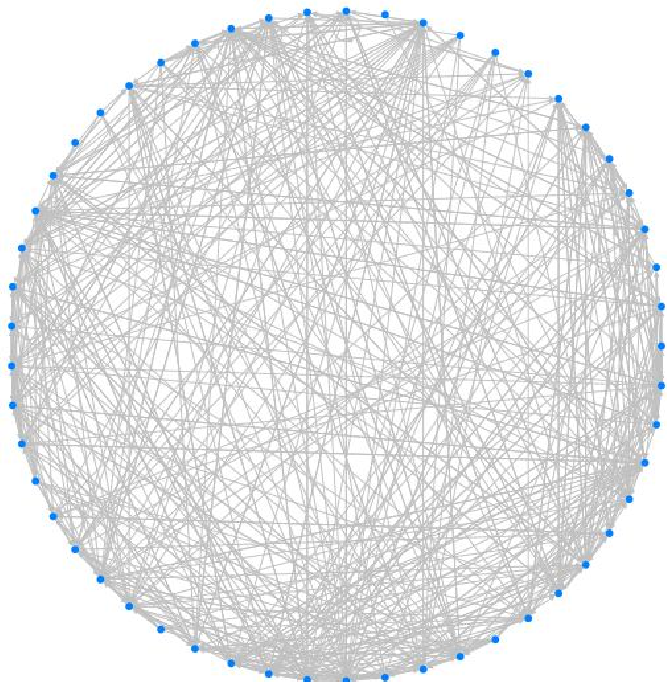 Fig 3. Visualization of student interactions. Those at the "center" of this web tended to perform better academically.
Critical Insight: Why This Works
The "magic" isn't just in the software (the blog). It's in the Epistemic Agency. When a student writes a Python script to analyze their own class's social network (as some did spontaneously), they move from surface learning (memorizing formulas) to deep learning (applying concepts to their social reality).
Limitations & Future Work
The study was conducted in a course about Social Networking, which might create a "domain bias"—students may have been more inclined to network because it was the course topic. Future research must validate if SEC holds the same weight in more abstract fields like Theoretical Physics or Thermodynamics.
Conclusion
Social Epistemic Cognition offers a powerful lens for the future of STEM. By shifting the focus from individual "heads" to the "networked brain" of the classroom, we can prepare engineers who don't just know facts, but know how to collaboratively build the truths of tomorrow.