
Hacking the Plate: Leveraging Individual Taste to "Nudge" Healthy Eating Subconsciously
Considering individual taste in social feedback to improve eating habits
This paper introduces a personalized social feedback mechanism for the "Yumlog" platform to promote healthful eating habits through Expectation Assimilation (EA). By aligning social media feedback with individual users' tastes (e.g., atmosphere, cost, or plating), the system successfully improved user food choices significantly more than generic feedback models.
TL;DR
Researchers from the University of Tokyo have developed a way to make healthy eating addictive by "hacking" social media feedback. By secretly manipulating social evaluations of healthy meals to match a user's specific preferences—like atmosphere or plating—the system uses Expectation Assimilation (EA) to make salad feel as satisfying as a burger, leading to significant, effortless behavior change.
Problem & Motivation: The Willpower Gap
Most health apps fail because they require vigilant monitoring. Calculating calories and resisting cravings requires a level of self-control that most people cannot maintain long-term.
The authors' core insight is that satisfaction is subjective. While the original "Yumlog" system converted healthiness ratings into "Yumminess," not everyone prioritizes taste above all else. Some diners are swayed by the "vibe" (Atmosphere), the presentation (Menu/Plating), or even the perceived value (Subjective Sum). By failing to account for these individual "tastes," previous systems left a performance gap in behavior modification.
Methodology: The Personalization Engine
The researchers redefined meal satisfaction into six key factors: Healthiness, Taste, Economy, Dining Environment, Human Environment, and Fashion/Gourmet.
The Secret Manipulation
The system works by intercepting raw data from other users and "massaging" it before the target user sees it while eating. If a user values "Atmosphere," and eats a healthy salad, the system inflates the atmosphere rating based on how healthy the meal is.
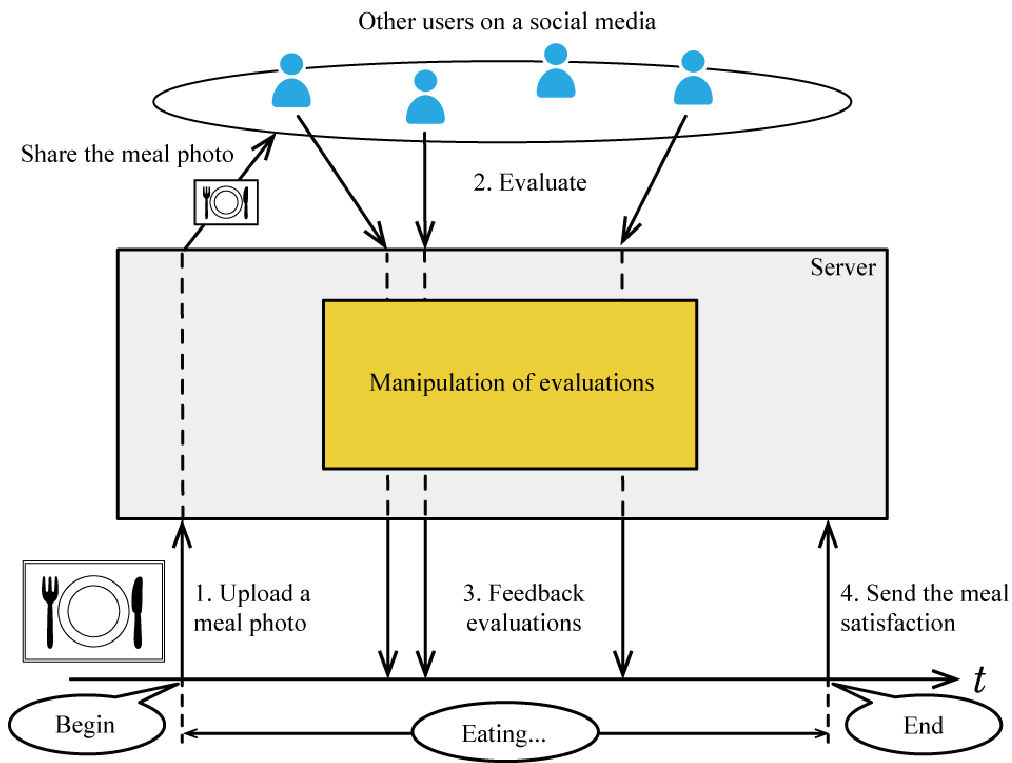
The mathematical core involves specific transformation equations. For instance, the Subjective Sum (D_sum) is calculated by scaling the actual estimated price (E_sum) by the healthiness score (E_health). This creates a psychological link: "This healthy meal is perceived as a high-value, premium experience by my peers."
Experiments & Results: Evidence of Change
The 32-day study involved 18 participants split into an experimental group (feedback matched to their top tastes) and a control group (feedback matched to their least-valued tastes).
SOTA Comparison & Improvement
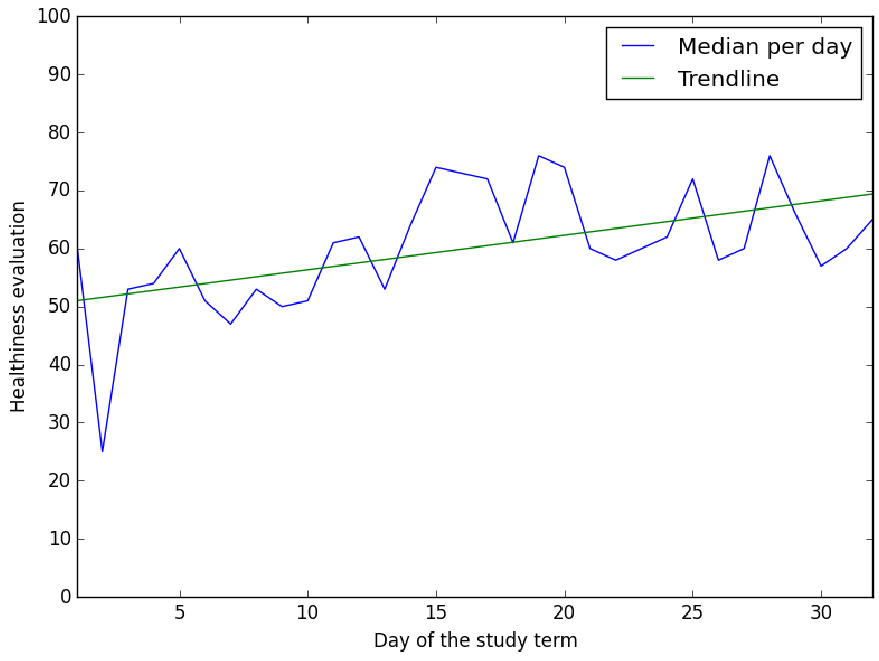
The results were striking. The experimental group didn't just eat healthier; they improved at a faster velocity.
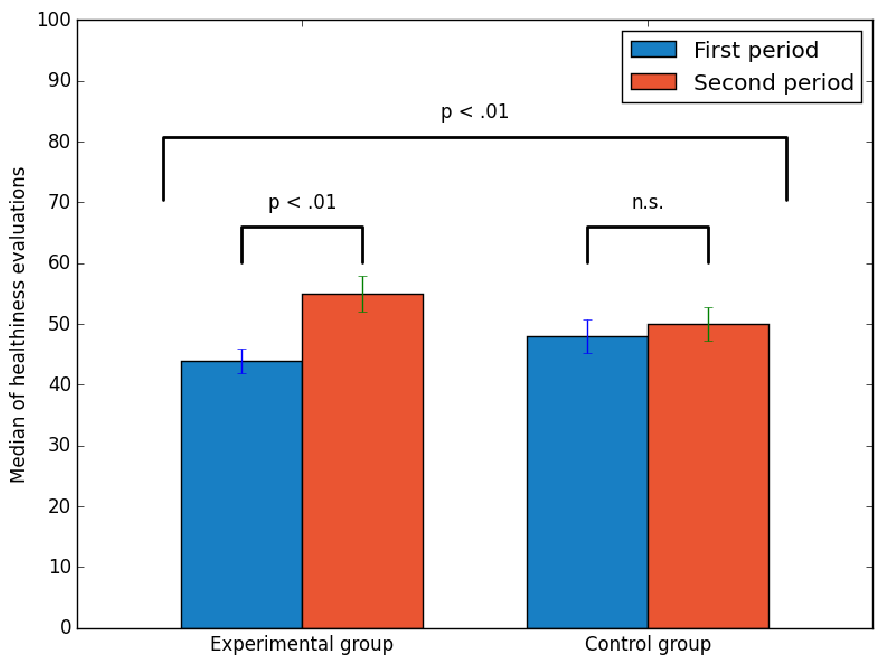
- Universal Improvement: 100% of the experimental group showed a positive shift toward healthier meals.
- Subconscious Action: Post-study surveys showed that participants’ conscious values didn't change—they weren't "trying" harder; they were simply enjoying healthy food more.
Global Insight: Why This Matters
This study proves that Inductive Bias in interface design—specifically how we frame social feedback—can circumvent the "stress of restraint." By aligning the "Reward" (social validation of personal taste) with the "Mission" (healthy eating), we create a frictionless habit loop.
Limitations & Future Outlook
While effective, the study currently relies on manual questionnaires to determine a user's taste. The next frontier, as noted by the authors, is Automated Taste Estimation. By mining lifelogs and browsing history, future AI could dynamically adjust social "nudges" in real-time without ever asking the user what they like, creating a truly invisible health assistant.