
Leveraging the Social Graph: Redefining Content Delivery for OSNs
Social Graph-Based Partitioning and Distribution for OSN Content Caching and Proactive Delivery
The paper introduces a hybrid caching and distribution architecture specifically designed for Online Social Networks (OSNs), utilizing social graph partitioning (METIS) and proactive content delivery. It demonstrates that socially-aware cooperative content placement significantly outperforms random partitioning in environments where user traffic is driven by social relationships.
TL;DR
The explosion of Online Social Network (OSN) traffic has rendered traditional, socially-blind CDNs inefficient. This paper proposes a Socially-Aware CDN that uses the METIS graph partitioning algorithm to align data storage with social clusters. The key finding: where you put the data (cooperative placement) matters significantly more than when you push it (proactive delivery) for boosting cache hit rates.
Motivation: Why Your CDN is Socially Awkward
Most commercial CDNs are reactive; they wait for a cache miss before fetching content from the origin server. In the context of Facebook or X (Twitter), this is wasteful. User interactions are not random—people primarily view content from a small group of friends.
If a user's data is stored on Server A, but all their friends are served by Server B, every interaction results in unnecessary inter-server traffic. The authors argue that the Social Graph is the ultimate map for content placement, allowing us to group "cliques" of users onto the same cache hardware.
Methodology: Graph Partitioning Meets Caching
The researchers developed a hybrid simulation using METIS, a multilevel graph-partitioning package.
1. Social Content Placement
Instead of randomly assigning users to servers, METIS ensures that users with high social connectivity (friends) are placed in the same partition. This maximizes the probability that a friend's content is already present in the local cache when a user requests it.
2. Proactive Content Delivery
When a user uploads content, the system proactively pushes that update to the servers where their friends reside. This aims to eliminate the "first-access" miss penalty.
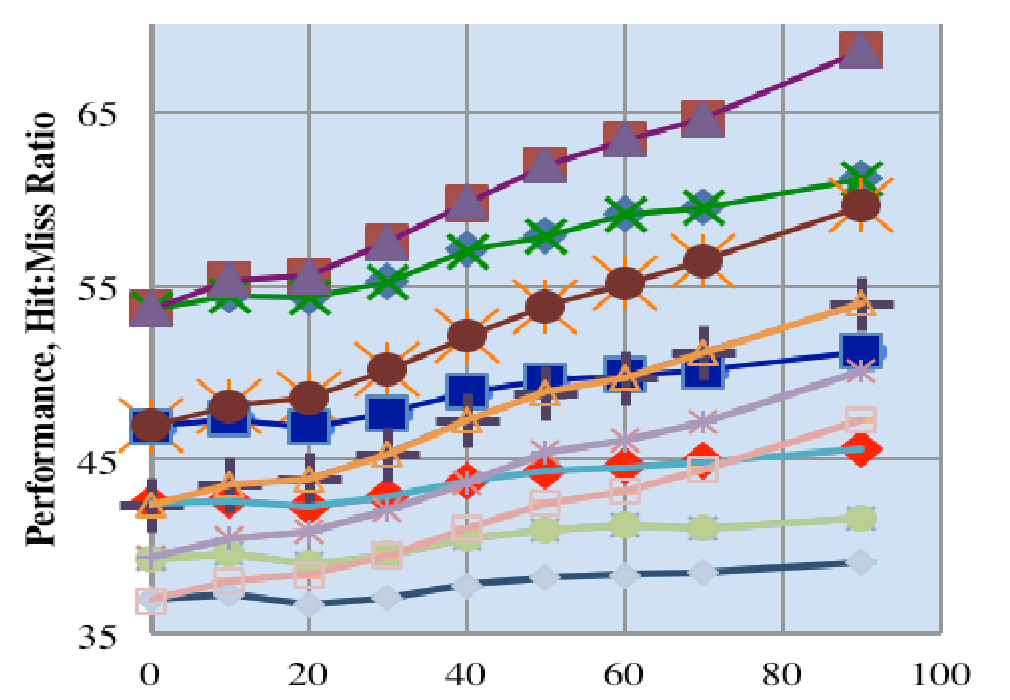 Fig 1 & 2: Performance metrics showing how random traffic yields no benefit from social schemes, proving that the gain is strictly tied to social behavior.
Experiments and Results
The team tested the system against varying degrees of "social influence" in traffic—from 0% (pure random popularity) to 100% (purely following friend links).
- The Power of METIS: As traffic became more socially driven, the hit:miss ratio for METIS-partitioned setups skyrocketed, outperforming random partitioning by a wide margin (as seen in Figure 3).
- The Proactive Paradox: Surprisingly, pushing content proactively (the "A" label in their charts) did not significantly boost performance. The authors suggest that because uploads occur less frequently than views (roughly 20% of the time following the Pareto principle), the cooperative placement itself handles most of the load.
- Fragmentation Limits: There is a "sweet spot" for partitioning. As the number of cache servers (partitions) increases, the likelihood of splitting a friend-clique increases, leading to a steady decline in the hit-ratio.
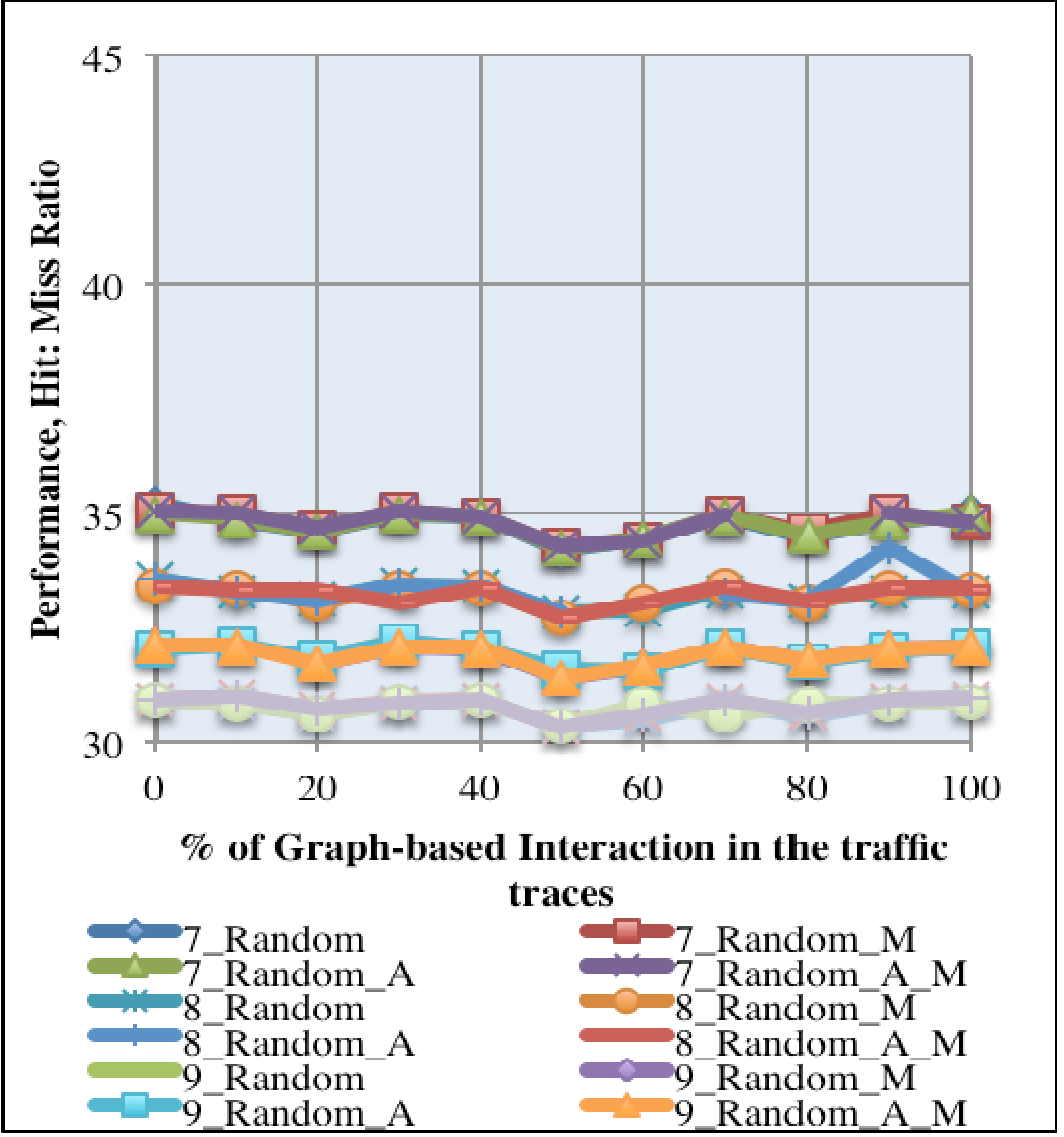 Fig 3: The clear performance gap where METIS partitioning (upper curves) scales better with social interaction than random partitioning.
Critical Analysis & Conclusion
This work provides a strong empirical foundation for Socially-aware Content Placement. While the proactive delivery results were underwhelming, the core insight remains: the underlying topology of human interaction is a powerful predictor for network demand.
Key Takeaways:
- Topology is King: Aligning hardware boundaries with social graph cliques reduces latency more effectively than complex forecast-and-push algorithms.
- Granularity Control: System architects must balance the number of cache partitions; too many servers can degrade the effectiveness of social clustering.
- Future Work: The authors admit their proactive push implementation was limited. Future research might explore selective proactive delivery, only pushing "viral" content from high-degree nodes.
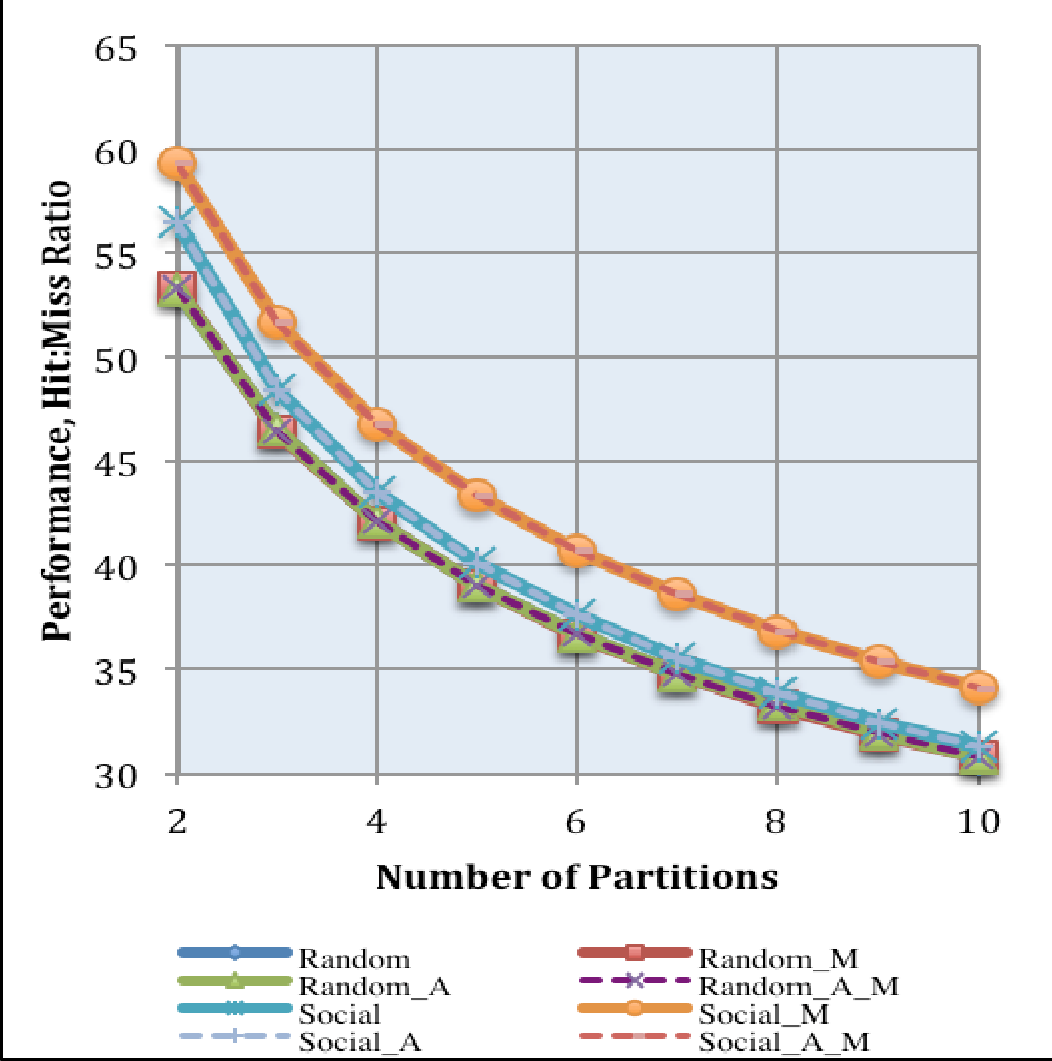 Fig 5: The definitive comparison showing that METIS-driven setups maintain a superior performance ceiling compared to random baseline architectures.