
Beyond Static Profiles: Enhancing Group Recommendations via Dynamic Activity and Expert Insights
Social group recommendation based on dynamic profiles and collaborative filtering
The paper proposes a novel social group recommendation scheme that combines dynamic user profiles with collaborative filtering. It introduces a mechanism to update user preferences in real-time based on social network activities and incorporates weighted "expert" information to improve recommendation reliability and variety.
TL;DR
Static user profiles are the "Achilles' heel" of modern recommendation systems—they grow stale the moment they are created. This paper introduces a framework that transforms static profiles into Dynamic Profiles by mining real-time social activities. By integrating Collaborative Filtering with a specialized weighting for Expert Users, the proposed system increases recommendation accuracy by up to 65% for users with rapidly changing interests.
The Problem: The "Frozen Profile" Syndrome
Most social network services (SNS) ask you what you like when you sign up. You might select "Action Movies" or "Jazz." Two years later, you might be into "Documentaries" or "Lo-fi Beats," but the system still pushes Action/Jazz because your profile is static.
The authors identify two fatal flaws in prior SOTA (State Of The Art):
- Lack of Temporal Awareness: They don't account for how user tastes drift over months or even weeks.
- Expertise Blindness: They treat every user's preference with equal weight, ignoring the fact that a "Power User" in a specific niche provides more reliable signals than a casual observer.
Methodology: The Dynamic Profile Engine
The core of this work is the transition from to .
1. Quantifying Activity (The Profile Value)
The system tracks three primary attributes: Posts, Comments, and Check-ins. It calculates a Profile Value (PV) using a time-decaying function. This ensures that an activity from yesterday carries more weight than an activity from six months ago.
2. Expert Identification
Instead of just finding "similar" users, the system identifies Experts—users whose activity levels exceed a specific threshold in a category. In the Collaborative Filtering (CF) stage, the preferences of these experts are given a "boost" to ensure the recommended groups are of high quality.
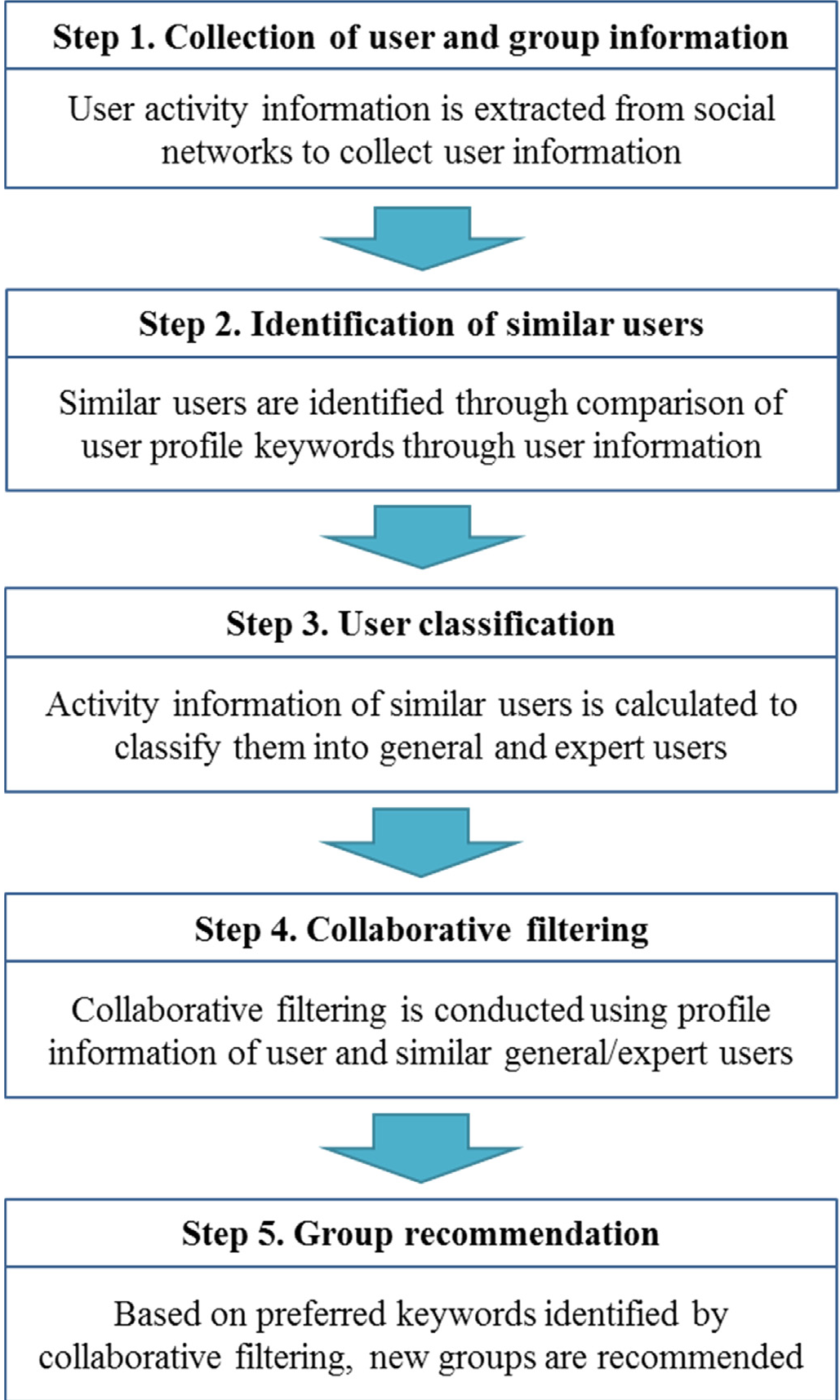 Figure 1: The architecture shows the pipeline from raw social activity collection to expert selection and final group matching.
Experiments: Proving the Gains
The authors compared their approach against ARISE, a recent social recommendation baseline. The results were categorized by how fast user preferences change:
- Fast-Changing (F_Group): +65% Accuracy improvement.
- Normal (N_Group): +68% Accuracy improvement.
- Static (S_Group): +11% Accuracy improvement.
The reason for the massive jump in F_Group and N_Group is simple: the dynamic profile "caught up" to the user, while the baseline was still stuck on old data.
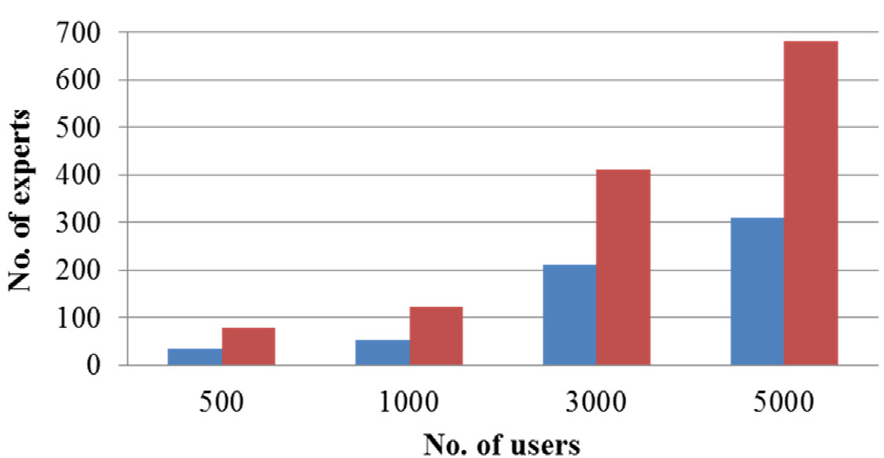 Figure 2: The match rate between user preferences and recommended groups significantly outperforms existing static models.
Critical Insight & Conclusion
This paper proves that Recency is as important as Relevancy. By treating a user's profile as a living, breathing data stream, and by filtering the "noise" of general users through the "signal" of experts, the system moves closer to a truly personalized experience.
Limitations: While the numerical results are impressive, the system relies heavily on users being active. For "lurkers" (users who consume but don't post/comment), the PV might stay low, potentially leading back to the "Cold Start" problem. Future work should look at how passive consumption (scrolling time, clicks) can be integrated into the dynamic profile.
Bottom Line: If you are building a recommendation engine for a community-driven platform, stop looking at what your users said they liked last year—start looking at what they are doing today.