
Social Help: Bridging the Digital Divide via Collective Efficacy and Smart Interventions
14623_Social help developing methods to support older adults in mobile privacy and security.
The paper introduces "Social Help," a multi-stage research project designed to enhance mobile privacy and security for older adults by leveraging their existing social networks. It focuses on developing technological interventions that facilitate remote assistance and collective literacy, moving beyond traditional interface design or individual training.
TL;DR
The project "Social Help" by Tamir Mendel addresses why older adults struggle with mobile privacy and security. Instead of just redesigning apps, it proposes a system to connect older users with their trusted social circles through privacy-preserving screenshots and automated stress detection, shifting the burden from the individual to a supportive "collective."
Background: Beyond the Interface
As the global population ages, mobile security remains a gatekeeper for essential services like e-commerce and health. Traditional research focuses on Self-Efficacy (training the individual) or specialized UI design. However, Mendel argues these are insufficient because technology updates too fast. The project’s unique positioning is its focus on Social Support—leveraging the fact that older adults already prefer asking family for help over professional services.
Pain Points & Motivation
Current social help is plagued by three issues:
- Language Barriers: Older adults struggle to describe technical issues over the phone.
- Privacy Risks: Helping with security often means the helper sees sensitive data (photos, passwords).
- Availability Gap: Relatives want to help but often don't know when the older adult is actually struggling.
Methodology: The Three Pillars of Support
The thesis proposes a systematic approach to digitizing the "analog" help older adults receive:
1. Understanding the Dynamics
By surveying helpers and seekers, the study found that helpers are willing but underutilized. Familiarity with the seeker's preferences is the biggest driver of willingness to assist.
2. The Social Help Application
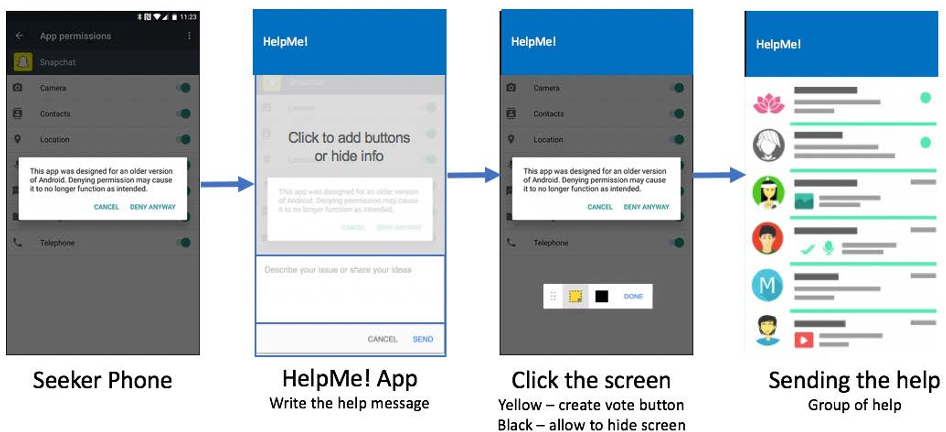
The researcher designed an app where "seekers" can take screenshots and use transparent UI overlays to highlight a problem or blur out private information before sending it to a "helper."
3. Physiological Triggering
Perhaps the most ambitious part is using wearable sensors to detect stress. If an older adult’s galvanic skin response (GSR) spikes while using a mobile app, the system can automatically prompt a social help session, reducing the embarrassment or friction associated with asking for help.
Experiments & Initial Results
Preliminary studies confirmed a significant "help potential." While the willingness to help parents is high, the frequency is currently tied to physical proximity.
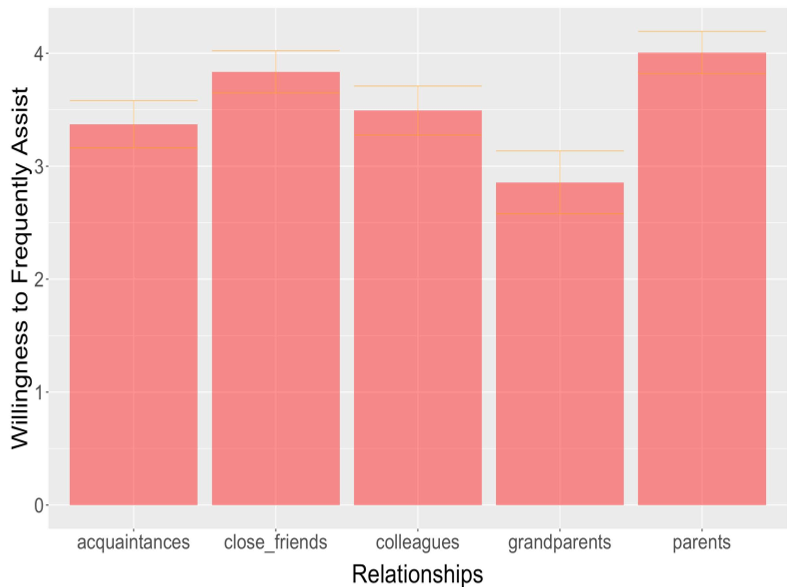
The data suggests that if we can reduce the "burden" on the helper by providing precise, pre-analyzed context (via the app), we can bridge the gap between wanting to help and actually being helpful.
Critical Analysis & Conclusion
Takeaway
Mendel’s work identifies a paradigm shift: Collective Literacy. The goal isn't necessarily to make every senior a security expert, but to make the social network a more efficient "external brain."
Limitations
- Helper Fatigue: Repeated requests might still lead to frustration, even with better tools.
- Privacy Paradox: While the app hides info, the helper still gains significant insight into the seeker’s digital life.
- Sensor Accuracy: Distinguishing between "bad stress" (frustration with UI) and "neutral stress" (excitement or physical activity) in real-world scenarios remains a high bar for the third study.
Future Outlook
If successful, this model could be extended beyond the elderly to other "digitally vulnerable" groups, transforming how we view technical support from a "one-to-one service" to a "one-to-circle" social interaction.