
SocialImpact: Unmasking the Humans Behind the Botnets through OUSD Analysis
SocialImpact: Systematic Analysis of Underground Social Dynamics
The paper introduces SocialImpact, a systematic analysis framework and suite of metrics designed to quantify the dynamics of online underground social networks (OUSDs). It transitions from traditional network-centric attack detection to an adversary-centric approach, featuring a proof-of-concept system called Cassandra that identifies influential cybercriminals and malicious groups.
TL;DR
Traditional security defends the "wire" and the "box," but SocialImpact defends against the "actor." This research moves beyond detecting packets to analyzing the social fabric of the underground economy. By modeling online underground social dynamics (OUSD) and utilizing a customized PageRank metric, the authors developed Cassandra, a system capable of pinpointing high-value targets (malware developers and exploit sellers) within the noise of underground forums.
Background: Moving Up the Kill Chain
The majority of security research focuses on the end of the attack lifecycle: a bot is already in the network, or a virus is already on the disk. However, these tools are created, rented, and traded in digital black markets long before the first packet is sent. The authors argue that by the time we take down a botnet, the architects have already moved on. To stop the cycle, we must analyze the Social Dynamics—the relationships and conversations—where these threats are born.
Problem: The Blind Spots of Topology
Why can't we just use standard social network analysis?
- Topology is not enough: Methods like HITS or standard PageRank only look at who follows whom. In the underground, a highly active "bot builder" might have few followers but massive impact through the content they share.
- Multilingual Chaos: Underground communities often use slangs (e.g., Fenya), cryptolanguages, or intentional misspellings to evade automated systems.
- Disconnected Evidence: Security analysts often have "external evidence" (like a specific string found in a binary) but no way to map that string back to a social persona.
Methodology: The OUSD Model and SocialImpact Metrics
The core of the paper is the Online Underground Social Dynamics (OUSD) model. It breaks down the digital underground into six fundamental entities.
The Formal Architecture
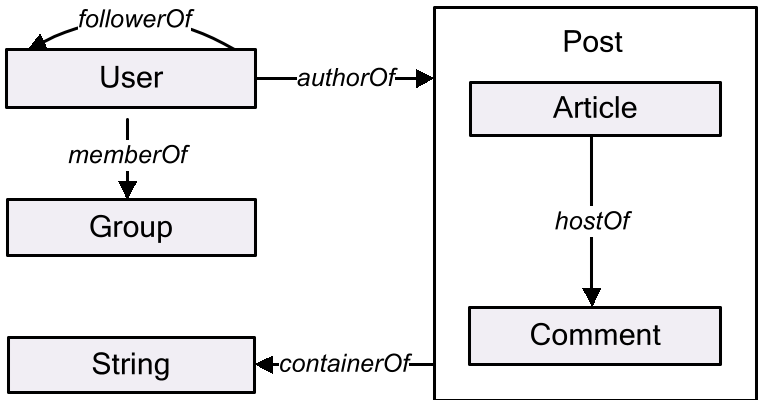
The authors track five unidirectional relationships: authorOf, followerOf, memberOf, hostOf, and containerOf. This allows the system to bridge the gap between a user and a specific string (like an IP address or a jargon term).
SocialImpact Ranking
The "secret sauce" is the SocialImpact Suite, consisting of nine indices. Unlike Google's PageRank, which ranks pages, SocialImpact ranks User Influence and User Relevance.
- UserInfluence (x3): A personalized PageRank function. It doesn't just look at followers; it weights a user's influence based on the quality and impact of the articles they write.
- UserRelevance (x4): This allows an analyst to input a keyword (e.g., "Zeus botnet") and find not just articles about Zeus, but the most influential users discussing it, even if they don't use the word in every post.
System Implementation: Cassandra
The authors built Cassandra, a Java-based platform backed by a Neo4j graph database.
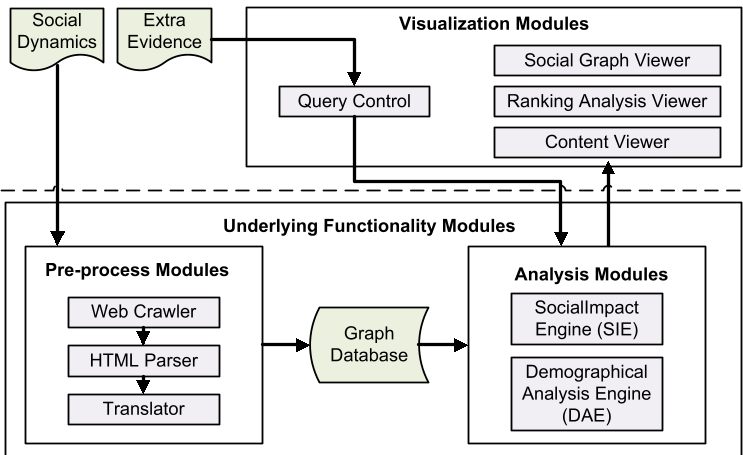
Cassandra handles the "messiness" of the real world by:
- Google Translate Integration: Converting Russian/other languages to English.
- Jargon Dictionaries: Mapping "c4n" to "can" and "sUm1" to "someone."
- Visualization: Providing a "Social Graph Viewer" to see clusters of adversarial activity.
Experiments: Insights from the Russian Underground
The researchers crawled 4GB of data from Livejournal, a hub for Eastern European social activity.
Key Finding: Influence != Activeness
One of the most profound takeaways from the evaluation (Table 1) was that the "loudest" people aren't the most influential.
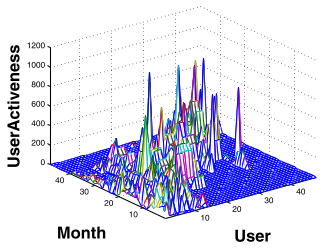 Fig: Correlation Coefficient between User Activeness and Influence is only 0.52.
In simple terms: Talking more does not make you a leader. High-influence users often post less frequently but provide high-value code or deep vulnerability analysis (e.g., the analysis of Rustock.C). Conversely, groups showed a 0.90 correlation, suggesting that for a community to be influential, it must stay active.
Evidence Mining Case Study
Cassandra demonstrated its power by identifying a user, crx ur, who was discussing how to bypass Windows Vista x64 driver signing—a critical step for advanced rootkit development. While a standard keyword search might find the post, SocialImpact highlighted this user as a high-influence actor, allowing investigators to prioritize them over thousands of low-level "script kiddies."
Critical Analysis & Conclusion
Takeaway
SocialImpact proves that the "adversary-centric" view is a vital complement to network defense. By quantifying the social capital of underground actors, we can identify emerging threats (Zero-days, new botnets) before they hit the wild.
Limitations
- Evasion: If adversaries move to encrypted end-to-end platforms (like Telegram or Signal), the crawling-based approach of Cassandra faces significant hurdles.
- Data Volume: Graph databases like Neo4j offer speed, but calculating global PageRank-style metrics over billions of nodes remains a computational challenge.
Future Outlook
The integration of NLP and Sentiment Analysis could further refine these metrics—distinguishing between an influential researcher and a highly-regarded "escrow" (trader) in the underground market.