
Controlling the Viral Flow: Using Social Influence to Shape CDN Traffic
Utilizing Social Influence in Content Distribution Networks
This paper proposes a novel content distribution architecture that leverages Online Social Network (OSN) influence graphs to regulate resource utilization. The core method utilizes a recursive reward function to identify influential links, enabling Content Distribution Networks (CDNs) to either accelerate or dampen application adoption to prevent traffic spikes or limit malicious propagation.
TL;DR
Infrastructure providers usually treat sudden surges in traffic as unpredictable "Flash Crowds." This paper flips the script by suggesting that because content adoption is driven by social influence, it is actually predictable and controllable. By modeling how users influence their neighbors on platforms like Flickr or Facebook, a Content Distribution Network (CDN) can "gatekeep" the visibility of content to ensure network resources are never overwhelmed, while still ensuring the content eventually reaches everyone.
The Motivation: Influence as an Engineering Variable
Viral content is the enemy of stable infrastructure. When a video or app goes "viral," it doesn't follow a steady-state pattern; instead, it creates a sudden, massive spike that can degrade Quality of Service (QoS) or crash servers.
The authors argue that we currently ignore a crucial piece of data: the Influence Graph. If a CDN knows that User A is highly likely to influence User B, it can choose to hide User A's activity from User B temporarily if the servers are currently at capacity. This "social engineering" of traffic allows for demand smoothing—turning a sharp peak into a manageable plateau.
Methodology: The Recursive Reward Model
The core of the paper is a mathematical framework to quantify the "value" of exposing a social connection.
- Joint Influence Probability: The probability that a user will adopt content based on the combined influence of all their active neighbors.
- Recursive Rewards: Unlike simple degree-based metrics (which just look at how many friends someone has), the reward function is recursive. It calculates the immediate influence on a neighbor PLUS the potential downstream influence that friend might have on their own circles.
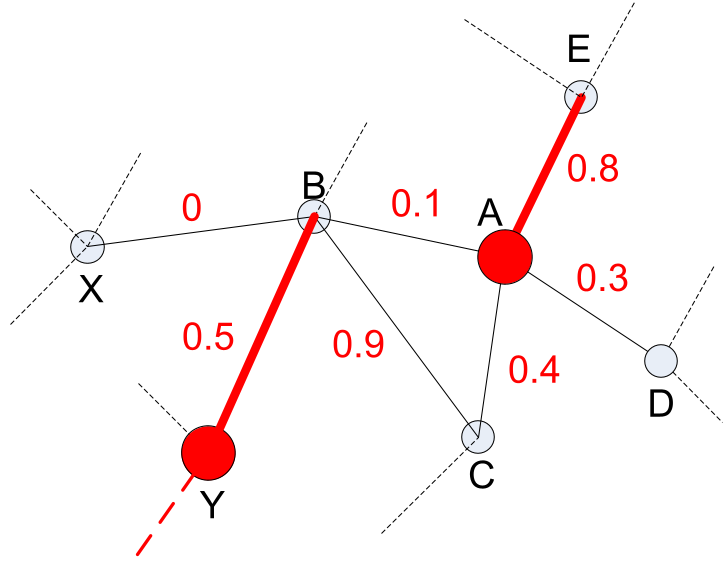 Fig 1: The CDN acts as a filter, deciding which social links (red edges) to activate to control the cascade.
The algorithm effectively performs a back-propagation of rewards. When a link is exposed, the algorithm updates the potential rewards of all incoming paths, ensuring the system always prioritizes the most effective "influence pathways" given the current physical constraints of the network.
Experiments: Flickr in the Crosshairs
The researchers tested their model using real-world data from Flickr, tracking 7,937 social links. They compared their reward-based approach against three baselines: Random exposure, Degree-based (targeting "popular" users), and Greedy-PI (perfect information).
Key Result 1: Superior Efficiency
The reward algorithm significantly outperformed degree-based heuristics. To reach the same number of active users, the proposed method required far fewer link exposures, achieving a ~50% improvement in activation efficiency.
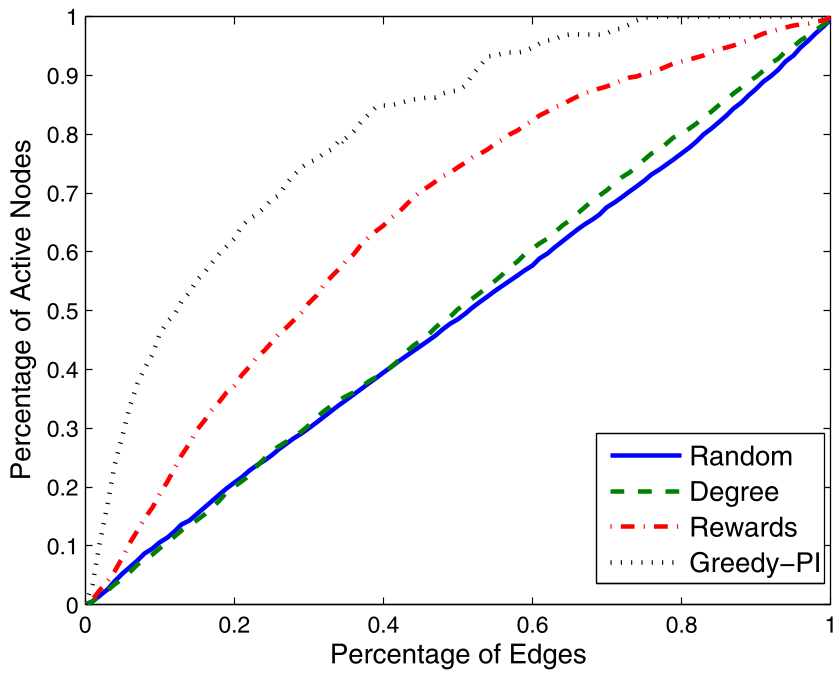 Fig 2: Percentage of active nodes vs. exposed edges. The proposed Reward model (blue) closely tracks the theoretical maximum (Greedy-PI).
Key Result 2: Security & Dampening
The model isn't just for speeding things up. For untrusted or potentially malicious applications, the CDN can apply a damping factor. By blocking the top 25% of "high-reward" links, the spread of a suspicious app is drastically slowed down, giving security systems time to analyze it. Crucially, once the block is lifted, the growth rate recovers instantly.
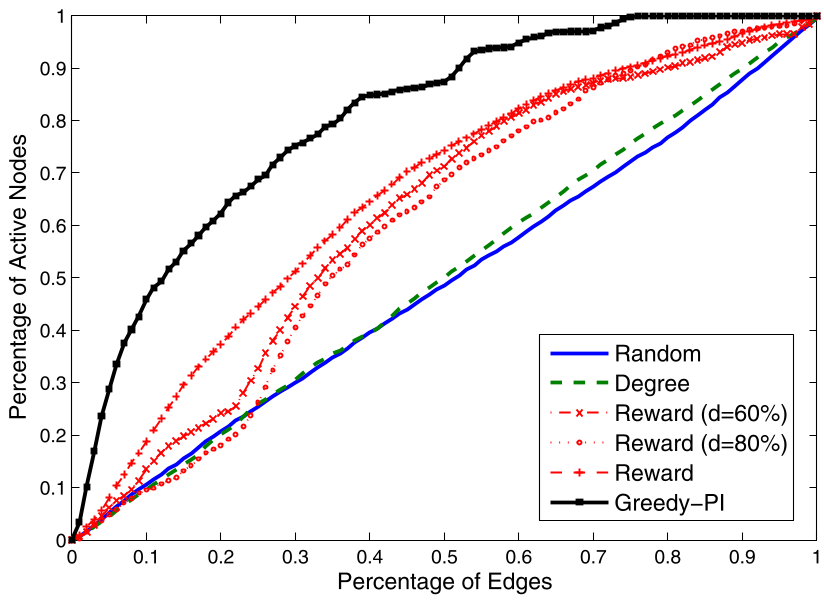 Fig 4: By applying a damping factor, the adoption curve is flattened during the verification period.
Critical Analysis & Future Outlook
This paper marks a transition from reactive network management to proactive social-aware orchestration.
Strengths:
- Intuition: It recognizes that Inductive Bias in network traffic comes from human social structures.
- Flexibility: The recursive model handles the complex, loopy nature of social graphs better than simple heuristics.
Limitations:
- Dynamic Influence: The current model assumes influence probabilities are static. In reality, user interest wanes over time (temporal decay).
- Privacy: The architecture requires a level of data sharing between OSN providers and CDNs that may raise significant privacy and regulatory (GDPR) concerns.
Takeaway for the Industry: For future cloud architects, the message is clear: The next generation of Load Balancers won't just look at CPU and Packet Rate; they will look at the "Social Heat" of the content being served.