
Brewing Influence: Decoding the Starbucks Network in Korea through Spatio-Temporal Models
Social Influence Models Based on Starbucks Networks
This paper introduces Dynamic and Static Influence Models to analyze the rapid expansion of Starbucks Korea as a social network. By leveraging store coordinates and opening dates, the authors quantify the diffusive power of individual stores in urban clusters like Seoul.
TL;DR
Why did Starbucks Korea expand at a world-record pace without traditional TV advertising? This paper treats Starbucks stores as nodes in a social network, proposing two influence models—Dynamic and Static—to measure how "innovation" (coffee culture) diffuses through urban space. The study reveals that a store's impact is a product of its opening timing, proximity to neighbors, and the strategic quality of its physical surroundings.
Background: Retail as a Social Network
Starbucks Korea reached its 100th store in just five years, a feat largely attributed to "word-of-mouth" effects rather than marketing spend. The researchers hypothesize that Starbucks stores function as a physical social network where the sight of office workers with coffee cups serves as a communicative channel for diffusion.
Problem & Motivation: Beyond Static Maps
Existing research often evaluates node influence within static, pre-defined networks. However, retail expansion is inherently dynamic. The authors recognize that a store's ability to trigger the opening of a neighbor (a proxy for high demand) depends on:
- Spatial Proximity: Distance determines the "weight" of influence.
- Temporal Sequence: The order of opening determines the direction of influence flow.
- Satiation: When one store reaches capacity, it "diffuses" demand to its nearby successors.
Methodology: The Mechanics of Diffusion
The core contribution lies in two distinct modeling approaches:
1. Dynamic Influence Model
This model focuses on the history of formation. It uses a directed graph where influence only flows from older stores to newer ones.
- Distance Weight (): Decays as distance increases (e.g., 1 for <200m, 1/3 for 400-600m).
- Time Weight (): Uses a Sigmoid Function to model the non-linear decrease in influence as the time gap between store openings grows.
- Recursive Propagation: The influence of a "seed" node propagates through the network, multiplied by a damping factor at each step.
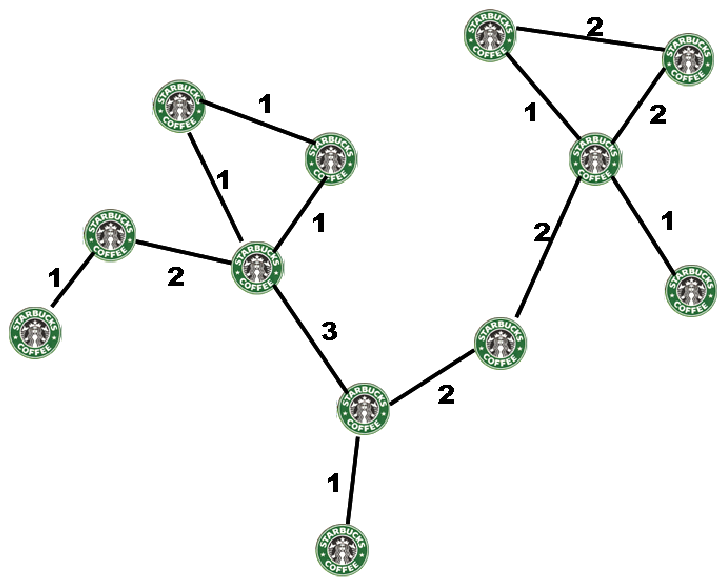 Figure 1: Conceptual visualization of stores as nodes and distance-based edges.
2. Static Influence Model
This model evaluates current cumulative power. It ignores the temporal sequence (opening dates) and treats the network as an undirected graph, identifying which nodes are most central to the established ecosystem today.
Experiments: Identifying "Power" Locations
The study focused on 92 stores in the Seoul heartlands (Jung-gu and Gangnam).
Key Finding: The Importance of Surrounding Context
While the Sogong-dong store ranked #1 in the Static Model (current popularity), the Gyunggi-Building store was the #1 Dynamic influencer. Despite being small, its location near banks, subways, and bookstores created a "chain reaction" of diffusion that shaped the surrounding network.
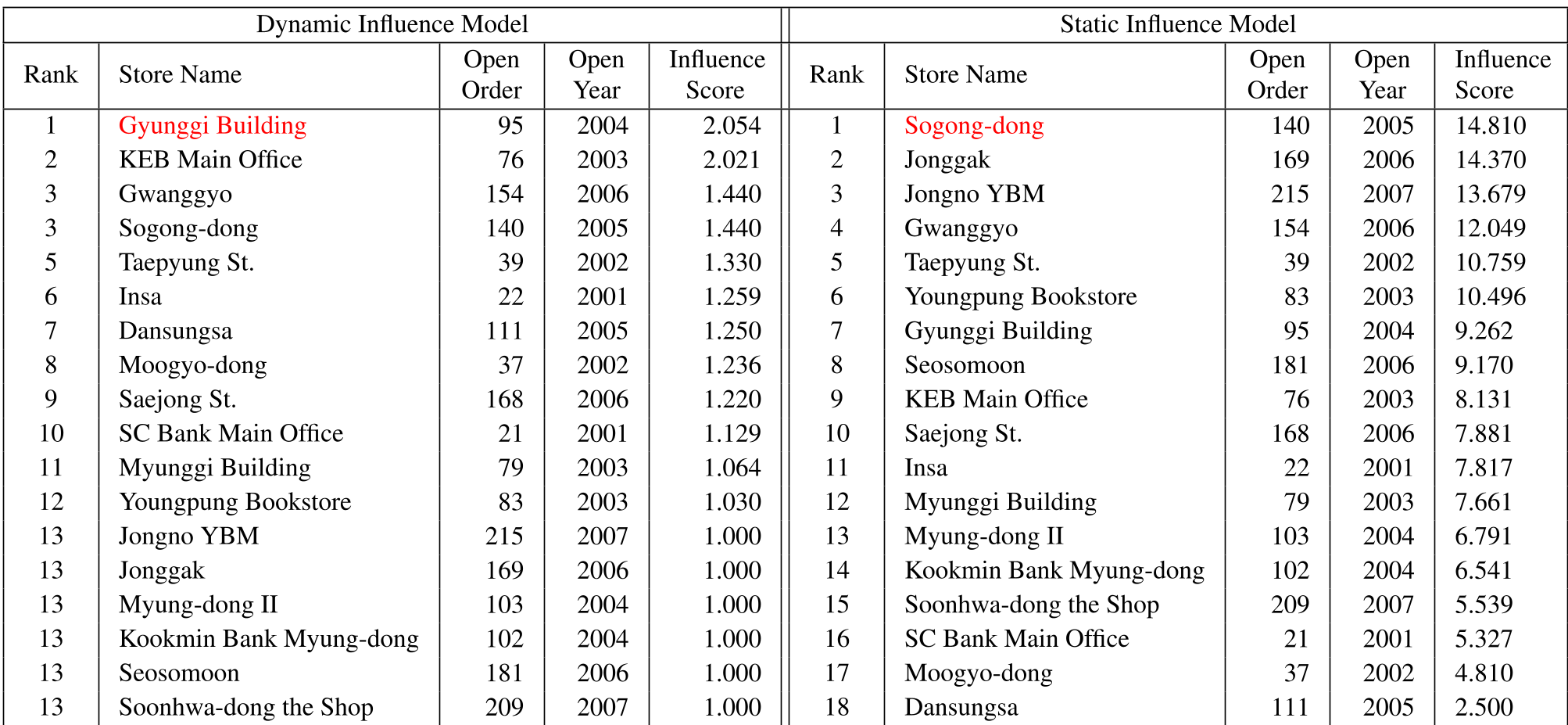 Table 1: Comparison between Dynamic and Static Influence Rankings. Note how "Gyunggi Building" dominates the growth history.
The Competitor Factor
When the authors added The Coffee Bean stores to the network, the rankings shifted dramatically. Interestingly, Coffee Bean stores, despite being fewer in number, often occupied more "powerful" locations, with a Coffee Bean branch taking the #1 spot in the combined network influence list.
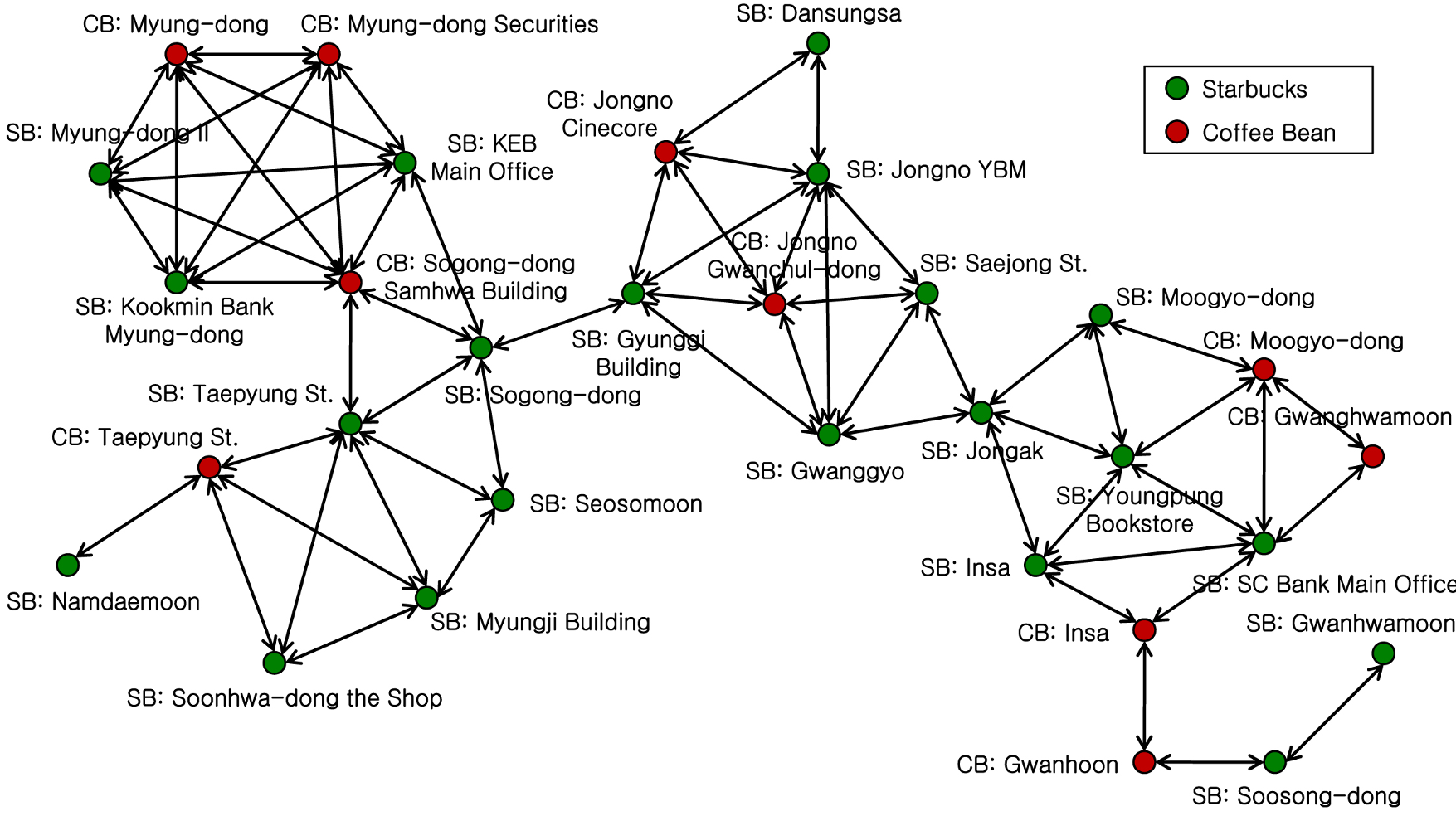 Figure 2: The complex interplay between Starbucks and Coffee Bean locations in central Seoul.
Critical Insight & Conclusion
The paper proves that retail success is a cluster phenomenon. A store is not an island; its value is derived from its ability to act as a "seed" for further expansion.
Takeaways for Industry:
- Strategic Seeding: Launching a new brand requires identifying "power areas" where the surrounds (subways, offices) maximize visibility and word-of-mouth.
- Network Awareness: Success depends on the total network density, including competitors, rather than just isolated store performance.
Limitations: The model currently lacks internal data like actual foot traffic or per-store profit. Integrating these "ground truth" metrics would transform these influence scores from structural estimates into predictive financial tools.