
Beyond Opaque Peers: How Logic Unmasks Private Opinions in Social Networks
Reflecting on Social Influence in Networks
The paper introduces a formal modal logic framework, KDL (Knowledge, Diffusion, and Learning), to model social influence in networks. It distinguishes between agents' private opinions and public behaviors, introducing a novel mechanism called Reflective Social Influence where agents infer others' private states to resolve social paradoxes like pluralistic ignorance.
TL;DR
In social networks, we often say one thing but think another—a phenomenon known as pluralistic ignorance. This paper provides a formal logical framework, KDL, that allows agents to "see through" the public behavior of their peers. By reasoning about the rules of social influence, agents can infer the private opinions of their neighbors, leading to a more stable and "intelligent" form of social dynamics called Reflective Social Influence.
Problem & Motivation: The Transparency Gap
Most mathematical models of social influence (like the DeGroot model) assume that if your friend expresses a "Pro" opinion, they actually feel "Pro." This is personal transparency. On the other hand, some newer "two-tier" models assume total opacity—you see the behavior, but the private thought is a black box.
Real life is messier. In the famous Emperor’s New Clothes, everyone publicly admires the Emperor's "garments" because they fear being labeled stupid, even though everyone privately sees he is naked. The authors argue that existing models can't explain why a single child's shout ("He is naked!") breaks the spell. The secret lies in information dynamics: once we reason about why others are acting the way they do, the house of cards collapses.
Methodology: The Logic of Reflection
The authors build a bridge between two worlds:
- Hybrid Logic: Using "Nominals" (labels for specific agents) and "@" operators to jump between different perspectives in a network.
- Epistemic Logic: Using "Knowledge" operators (K) to model what agents know about each other.
The Core Mechanism: Learning through Influence
The most striking contribution is Definition 2: Reflective Social Influence. In a standard model, if all your friends are "Contra," you might cave to the pressure and express "Contra" too (Simple Influence).
In the Reflective model, the agent asks: "Wait, Bob expressed 'Pro' only after Alice did. If Bob privately felt 'Contra,' the rules of influence say he would have stayed 'Neutral.' Therefore, Bob must privately be 'Pro'!"
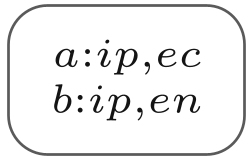 Figure 1: The model separates Inner Opinions (ip, ic, in) from Expressed Behaviors (ep, ec, en). This distinction is the engine of the entire framework.
Experiments: Breaking the Oscillation
The authors use a "Startup Buy-up" scenario (Alice and Bob) to demonstrate a failure of simple models. Under simple influence, Alice and Bob might infinitely flip-flop their public opinions, never reaching a consensus because they are reacting to each other's public masks rather than private truths.
By applying their Tableau System (a formal proof method), the authors show that:
- Learning Updates can cut the "uncertainty links" in a graph.
- Once Bob knows Alice’s true opinion, he stops flip-flopping.
- The truth eventually "diffuses" through the network as agents observe the shifts in their neighbors' behaviors.
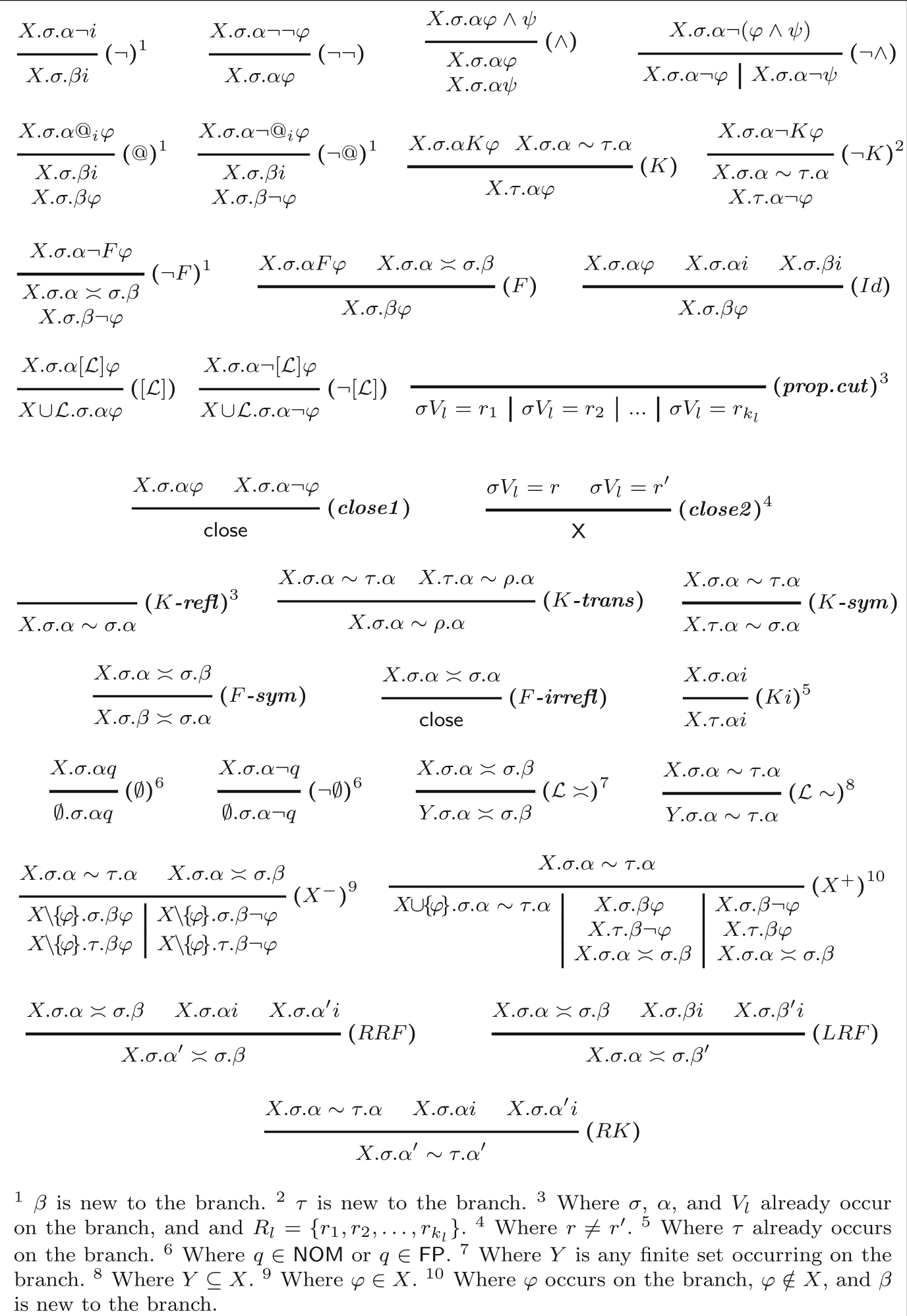 Figure 2: The sound and complete tableau system allows for automated verification of whether a specific social configuration will eventually lead to agents knowing the truth.
Critical Insight & Conclusion
Takeaway
The value of this work is in shifting social network theory from imitation (copying neighbors) to inference (guessing neighbors' minds). This transition prevents agents from being trapped in suboptimal states like the "Bystander Effect."
Limitations
The logic currently assumes Rational Agents who follow influence rules perfectly. In reality, human behavior is noisy/stochastic. Furthermore, the "Reflective" model gets exponentially complex as you add higher-order reasoning (I know that you know that I know...).
Future Outlook
This framework provides the "logic-gate" foundation for more advanced AI social simulations. Future systems could use these rules to detect "Strategic Behavior" in online markets or social platforms, identifying where public sentiment is a mask for a different private reality.