
The Panopticon in Your Pocket: How Location-Based Social Networking Reshapes Human Trust
Using a social informatics framework to study the effects of location-based social networking on relationships between people: A review of literature
This paper provides a comprehensive literature review of Location-Based Social Networking (LBSN), defining it as the convergence of Online Social Networking (OSN) and Location-Based Services (LBS). Using a Social Informatics framework, the authors explore how real-time location sharing affects human relationships, specifically focusing on the socio-technical impacts on trust and privacy.
TL;DR
This paper systematically reviews the emergence of Location-Based Social Networking (LBSN)—platforms like Google Latitude and Foursquare—through the lens of Social Informatics. It argues that while these tools offer unprecedented connectivity, they introduce a form of "social surveillance" that may fundamentally alter the mechanics of trust and friendship by replacing voluntary disclosure with automated "accountabilities of presence."
Beyond Determinism: The Social Informatics Lens
Most tech reviews fall into the trap of technological determinism (technology dictates social change) or social shaping (humanity molds tools). The authors advocate for Social Informatics, a framework that views the relationship as "bidirectional."
The core insight is that LBSN isn't just a tool; it's a socio-technical network. The way we use location data is shaped by our existing social norms, but the automated nature of that data simultaneously forces those norms to evolve—often in paradoxical directions.
The Core Mechanism: From LBS to LBSN
The authors define LBSN as the "composite" of two preceding technologies:
- Online Social Networking (OSN): The public articulation of social connections (e.g., Facebook).
- Location Based Services (LBS): The technical ability to track a device (e.g., GPS navigation).
When combined, these create a "Third Space"—a hybrid of physical and virtual reality where your "whereabouts" become part of your "identity."
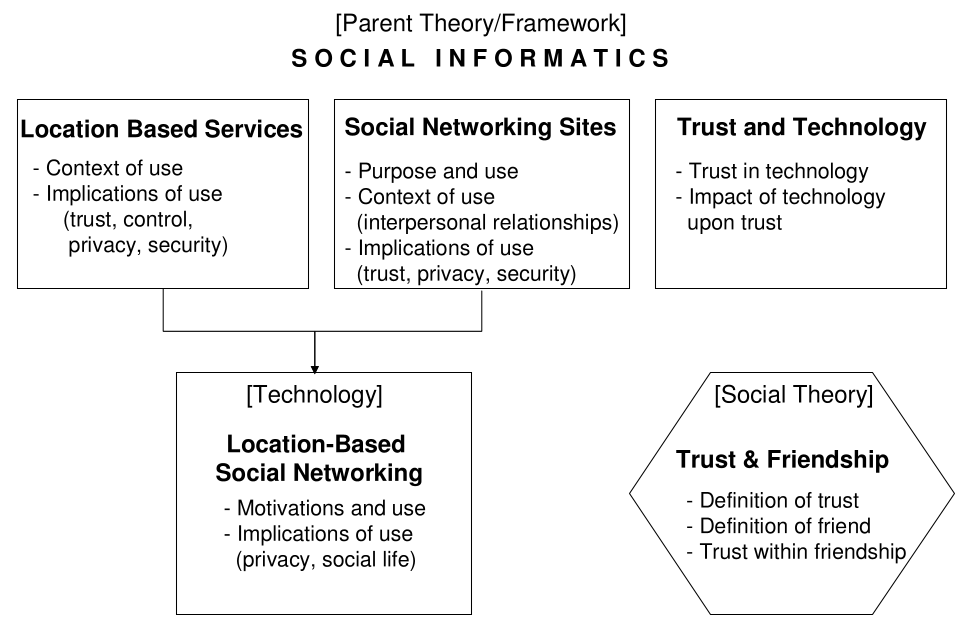 Figure 1: The paper's classification model linking social theory (Trust/Friendship) to technical domains.
The Problem with "Accountabilities of Presence"
The paper highlights a chilling concept: Geoslavery. This occurs when one entity monitors and exerts control over the physical location of another. In the context of LBSN, this manifests as "Accountabilities of Presence."
Unlike a text message where you can choose when and how to reply, automated LBSN creates a Panopticon effect. Users know they might be watched at any time. This leads to:
- Self-Censoring: Users become self-conscious about the locations they visit.
- The End of the "White Lie": Automation removes the ability to manage one's own narrative, which the authors suggest is actually a vital component of social maneuvering.
- Mutual Monitoring: Friendships shift from "staying in touch" to "ongoing story-telling" through passive observation.
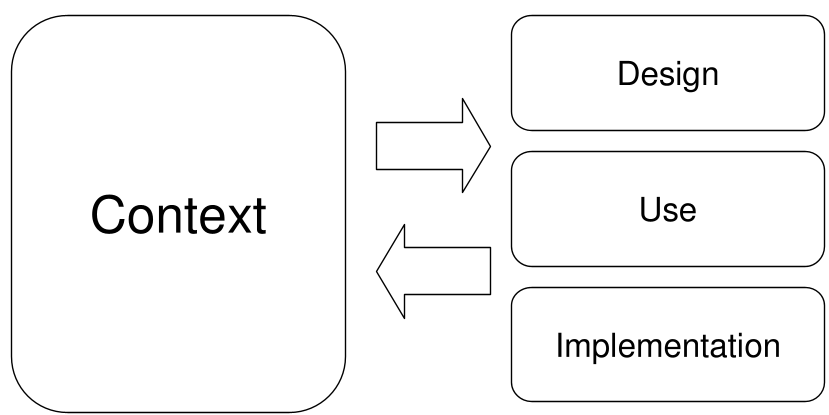 Figure 2: The bidirectional shaping between social context and technology design.
Trust: The Leap of Faith vs. Data Verification
The most profound academic contribution of this work is the analysis of Trust.
- Cognitive Trust: Based on evidence of trustworthiness.
- Emotional Trust: Based on the bond between parties.
The authors argue that LBSN might be substituting control for trust. True trust requires a "leap of faith" in the absence of total information. When we use LBSN to "verify" where a friend is, we aren't trusting them; we are monitoring them. This transition from trust-based relationships to verification-based relationships could degrade the "solidarity and self-esteem" that traditional friendships provide.
Critical Analysis & Conclusion
Takeaway
The proliferation of LBSN (over 100 apps identified in the study) indicates that "social surveillance" is becoming a normalized social ritual. Proactive research is needed to ensure these tools "enhance" rather than "displace" the authentic vulnerability required for trust.
Limitations
As a literature review, the paper focuses more on identifying the gap than filling it with new experimental data. Furthermore, being written in the early 2010s, it focuses on apps like Dodgeball and Latitude which have since been absorbed into broader OS-level features (like Apple's "Find My"), making the surveillance even more invisible and pervasive.
Future Outlook
The authors set the stage for fieldwork to investigate "automated disclosure." In an era of AI-driven location prediction, the next step in this research lineage would be to ask: What happens to trust when the technology knows where you will be before you even get there?