
Educational TV Reloaded: Unleashing the Social Potential of cMOOCs
Social interaction inside the cMOOC #ExIF13: Adaptive e-learning in distance education on a new track!?
This paper examines the potential of Connectivist Massive Open Online Courses (cMOOCs) as adaptive learning systems within distance education, using the "#ExIF13" course as a case study. It highlights how social interaction transforms traditional educational television into a dynamic, networked learning environment.
TL;DR
The paper explores the transition of distance education from mass-media knowledge transfer to a connectivist, adaptive social process. Through the lens of the #ExIF13 cMOOC, the authors demonstrate how integrating social media filters and peer production can solve the "one-size-fits-all" limitation of traditional e-learning.
Background: Breaking the "Ether" Barrier
Distance education has historically been a story of generations—from correspondence to telecommunications. However, the current "Cyberlearning" generation aims for something more: adaptivity. The authors posit that we are moving away from the Cartesian perspective (knowledge as a substance to be transferred) toward a network-centric model where human interaction is the primary driver of competence.
Problem: The Crisis of Scarcity in a Digital Age
Why do traditional MOOCs often feel like automated textbooks?
- Mass Production Bias: Organizational structures favor "standard songs" rather than "personalized remixes."
- Lack of Feedback: Mass-media educational TV lacks the real-time feedback channels necessary for deep learning.
- Rigid Ecosystems: Fixed curricula ignore the "Long Tail" of diverse, niche learner needs.
Methodology: The #ExIF13 Framework
The cMOOC "Discover the Island of Research" (#ExIF13) was designed as a seven-week expedition. The methodology relied on three pillars:
- Live Interaction: Supplementing archived broadcasts with live Twitter backchannels for instant guest-lecturer interaction.
- Competence over Input: Instead of exams, students produced "media artifacts" (videos, blogs, playlists).
- Long Tail Filtering: Using Twitter recommenders and Google+ groups to help learners find their specific niche within the broader topic.
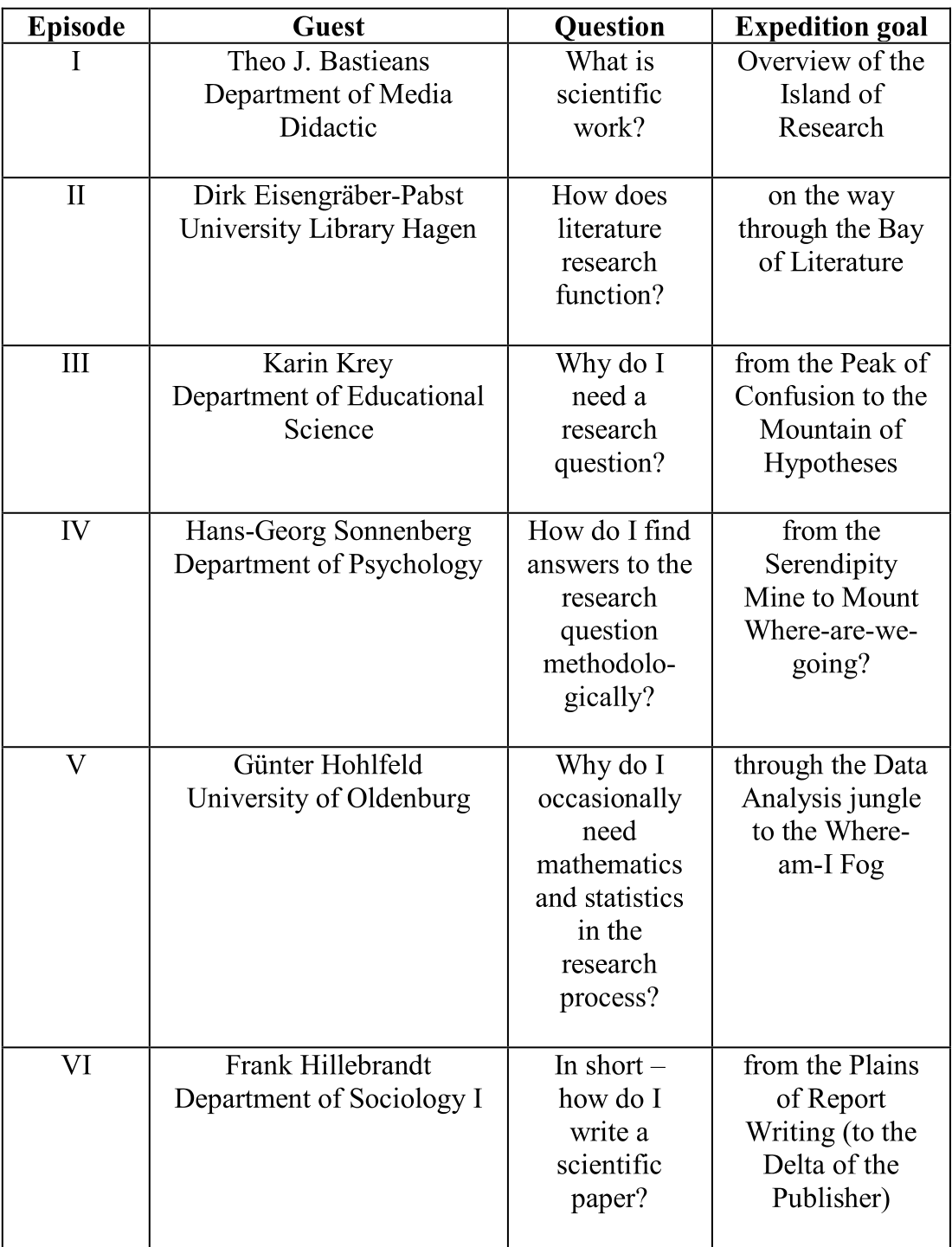 Above: The structured expedition through the "Island of Research," mapping academic milestones to live guest sessions.
Experiments & Results: From Consumption to Production
The authors observed a shift in student roles. Learners were no longer just "viewers" but "producers." The use of social media as a "Long Tail filter" allowed for a specialized remix of content tailored to individual life phases.
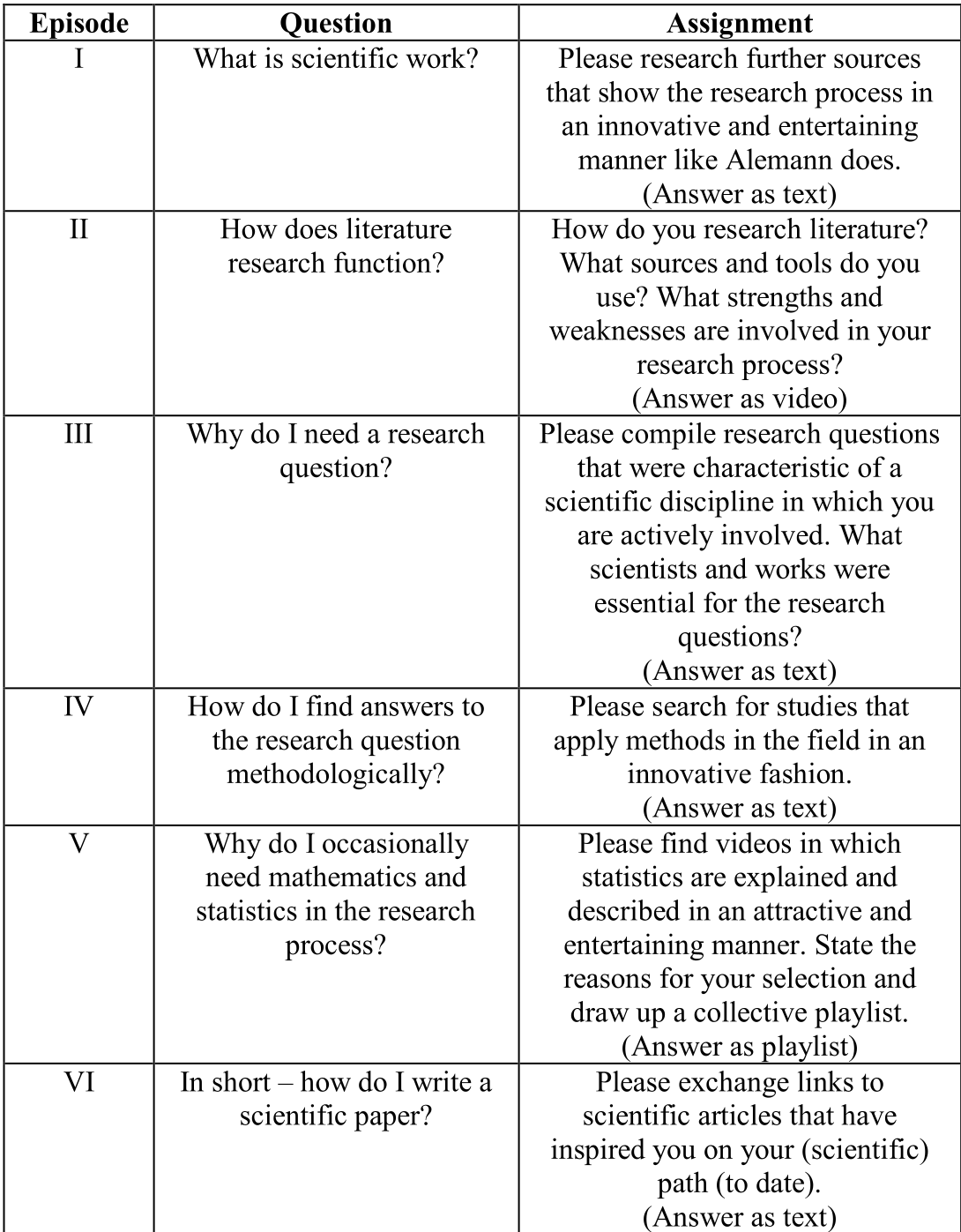 Above: Examples of task-based output orientation. Note the move from text-based answers to collaborative playlists and video production.
Key Achievements:
- Establishment of Sustainable Networks: The community persisted beyond the live broadcasts via the #ExIF13 hashtag.
- Peer-to-Peer Distribution: Students shared resources across platforms, effectively becoming teaching assistants for one another.
Critical Analysis: Gardening, Not Architecture
The authors conclude with a powerful analogy by Brian Eno: designing a modern learning environment is more like gardening than architecture. You don't build a rigid structure; you set the conditions (soil, water, light—or in this case, social channels and open tasks) and let the learning grow organically.
Limitations
While the paper highlights the potential of cMOOCs, it acknowledges that we are still in an experimental phase. The success of such a model relies heavily on the "Social Media Literacy" of participants and the willingness of institutions to abandon "rigidly stipulated ecosystems."
Future Outlook
The shift toward Connectivism suggests that future distance education will be less about the "Standard Repertoire" of a university and more about helping students build their own "Personal Learning Album."