
Modeling the Pulse of SIoT: Dynamics, Cloud-Edge Feedback, and Blockchain Traceability
Social Interaction and Information Diffusion in Social Internet of Things: Dynamics, Cloud-Edge, Traceability
2020-09-30
Summary
Problem
Method
Results
Takeaways
Abstract
This paper proposes a triad-layer framework (Social Interaction, Cloud-Edge, and Blockchain) for modeling information diffusion in the Social Internet of Things (SIoT). It introduces a cloud-edge-aided dynamical model to characterize the coupling between human social consciousness and device-level information spreading, achieving localized, traceable, and secure data management.
## TL;DR
Information in the Social Internet of Things (SIoT) isn't just about bits moving between sensors; it's heavily influenced by the social behavior of the device owners. This paper introduces a sophisticated **coupled dynamical model** that accounts for how "Social Consciousness" (boosted by Edge Computing) and "Traceability" (guaranteed by Blockchain) can predict and control the spread of information—especially negative or redundant data—across complex IoT ecosystems.
## The Core Challenge: The Human-Device Dissonance
Most current IoT diffusion models treat devices as autonomous agents. However, smart devices are personal items. If a user is "aware" of a data breach or a virus through their social circle, they take action.
The authors identify three missing links in current research:
1. **Coupling**: The failure to link social interaction layers with physical IoT layers.
2. **Latency**: Centralized clouds provide feedback too slowly for users to react.
3. **Trust**: A lack of decentralized mechanisms to trace where "negative information" started.
## Methodology: The Interaction-Information Model
The authors propose a multi-state model (US, AS, AI, AR, AT) where nodes transition based on both physical contact and social awareness.
### 1. The Cloud-Edge Advantage
At the **Edge**, data is processed locally. This proximity provides "timely feedback," which boosts the owner's consciousness. The model uses an impact factor $ heta$ to adjust the infection rate:
$$ \beta_A = e^{- heta} \beta_U $$
When $ heta$ (consciousness) is high, the probability of a device successfully receiving/spreading information ($\beta_A$) drops significantly.
### 2. Blockchain as a Truth Engine
By registering device states on a blockchain implemented through smart contracts (specifically referencing Ethereum’s capabilities), the system creates **Aware-Trustful (AT)** states. This allows administrators to trace the lineage of information and pinpoint the most influential nodes.
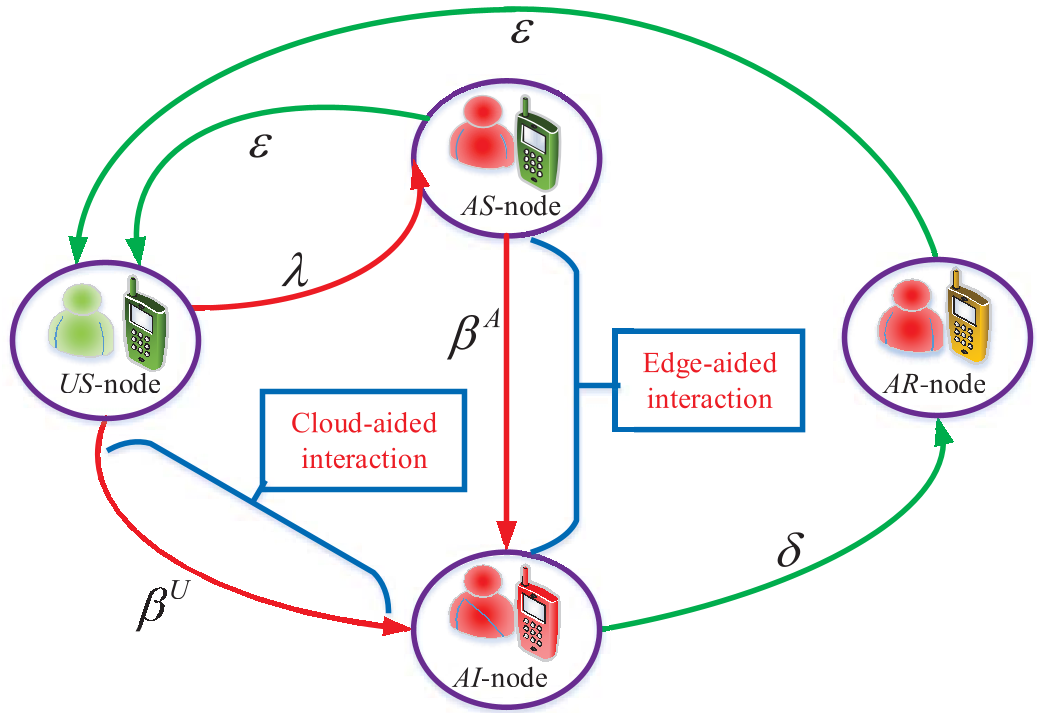
*Figure 1: The proposed architecture showing the interplay between the Social Layer, IoT Layer, and the Blockchain-based Cloud-Edge infrastructure.*
## Mathematical Insights: The R0 Threshold
A pivotal contribution of this work is the derivation of the **Basic Reproduction Number ($R_0$)**:
$$ R_0 = \frac{\beta^U}{\delta} $$
Surprisingly, the analysis reveals that while **social interaction** (the rate $\lambda$) changes the *final size* of the information spread, it does *not* change the threshold ($R_0$) required for an outbreak. This means social awareness is a tool for mitigation, not prevention.
## Experimental Validation
The authors used **Mean-Field Theory** to validate their differential equations against discrete simulations.
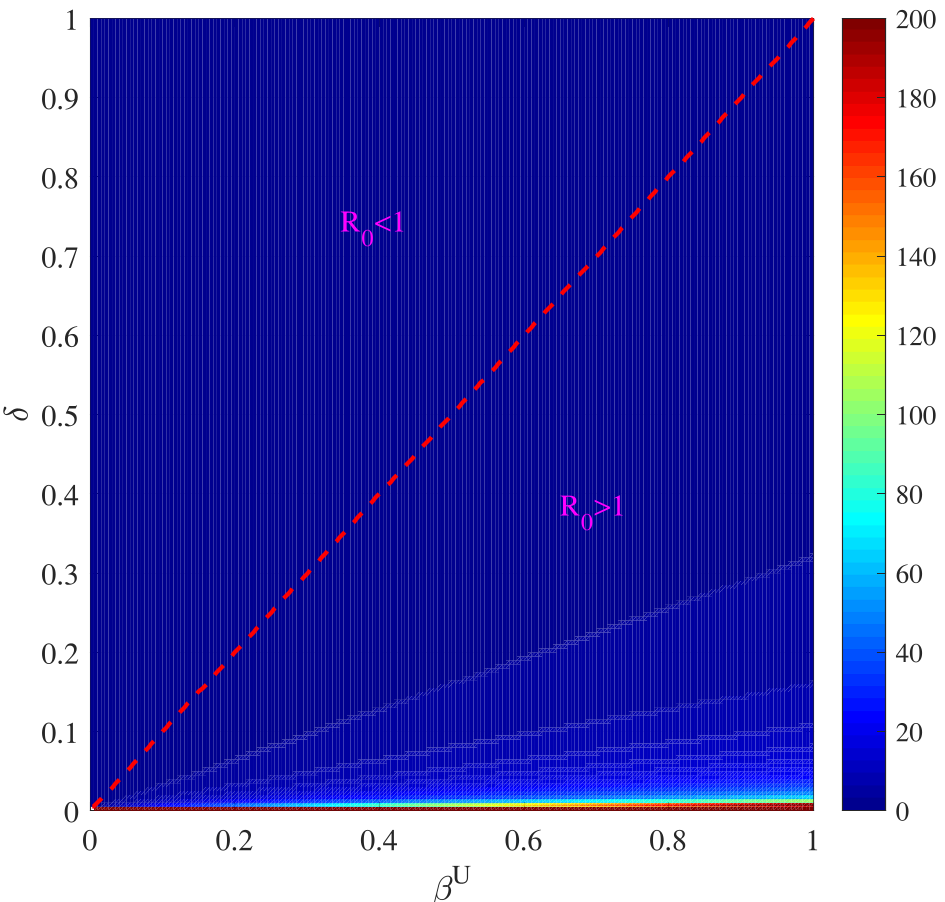
*Figure 2: Trajectories of Susceptible (AS), Infected (AI), and Recovered (AR) nodes converging to a steady state when $R_0 > 1$.*
Key results include:
- **Stabilization**: Regardless of initial conditions, the system always converges to a predictable equilibrium.
- **Inhibition**: Increasing the local processing power at the edge (increasing $ heta$) effectively "flattens the curve" of information infection.
- **Model Superiority**: Comparative simulations show the proposed model is significantly more accurate than traditional single-layer models because it accounts for human-driven "reset" behaviors (the probability $\epsilon$).
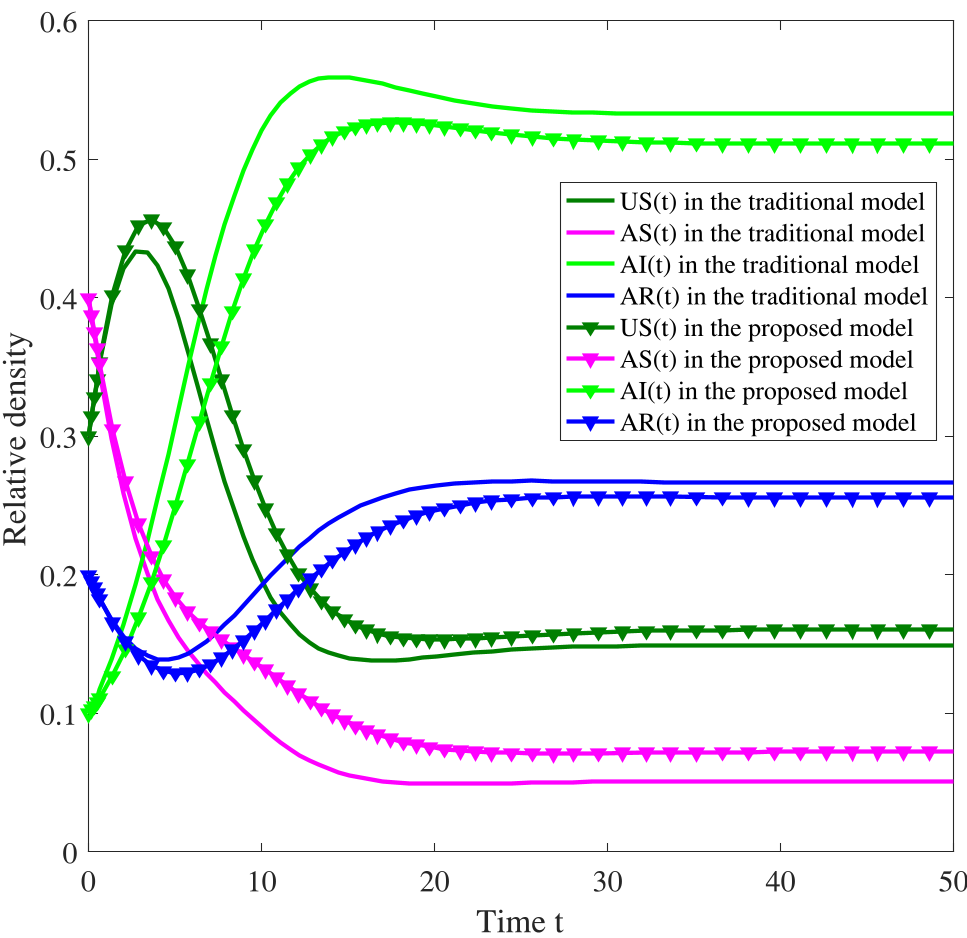
*Figure 3: Performance comparison showing that the Cloud-Edge model predicts fewer infected nodes, reflecting real-world human intervention.*
## Critical Analysis & Takeaways
This work bridges the gap between **Epidemiology** and **Network Engineering**. By viewing information as a virus and social awareness as a vaccine, the authors provide a framework for "Social Management" of technology.
**Limitations**: The computational overhead of running blockchain nodes on resource-constrained IoT devices remains a hurdle, though the author's use of "Edge-assisted Cloud Blockchain" partially mitigates this.
**Conclusion**: For future Smart Cities or Smart Agriculture, managing data isn't just about bandwidth—it's about managing the **consciousness** of the network. This paper provides the mathematical and architectural blueprint to do exactly that.