
Social Interaction: Turning Social Networks into the Ultimate Storytelling Remote
Social Interaction for Interactive Storytelling
The paper introduces a novel "social interaction" interface for interactive storytelling that leverages social networks (Facebook, Twitter, Google+) as the primary control mechanism. By integrating the Logtell storytelling engine with Natural Language Processing (NLP), the system allows multi-user audiences to influence plot development in real-time through comments and votes.
TL;DR
This paper introduces a framework that transforms social media platforms into the interaction interface for interactive narratives. By combining Natural Language Processing (NLP) with logical plot generation, the system allows thousands of users to collectively shape a story's outcome through simple comments and "likes," significantly boosting user engagement over traditional interfaces.
Background: Beyond the Single-Player Narrative
While interactive storytelling has existed for decades, it has largely remained a solitary experience. Previous attempts at multi-user interaction were hampered by hardware constraints or clunky interfaces. The authors identify a massive opportunity in the "second screen" phenomenon—where viewers discuss TV shows on social media—and propose using these existing habits as the core interaction mechanic for digital narratives.
The Problem: The Scalability Gap
Most interactive storytelling systems use GUIs, speech recognition, or body gestures. While effective for one person, these methods fail when applied to an audience of thousands (e.g., Digital TV). The challenge is twofold:
- Technical: How do you parse messy, unstructured social media comments into concrete logical instructions for a story engine?
- UX: How do you provide a satisfying experience where individual voices feel heard within a crowd?
Methodology: The Social Interaction Server
The core of the system is the Social Interaction Server, which acts as a translator between the chaos of social media and the rigidity of a Temporal Logic plot generator.
1. The Architecture
The system uses a loop-based chapter structure. The "Storytelling Server" generates a chapter, sends "induction messages" (prompts) to social media, and waits for user feedback.
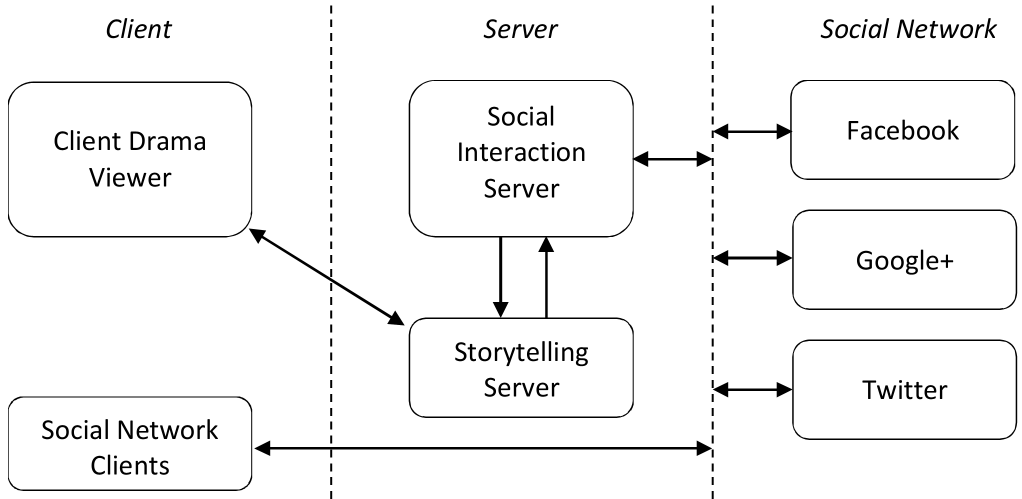 Fig 1: The interaction flow between the narrative generator and social platforms.
2. Turning Text into Logic
To handle comments, the authors utilized the Stanford Parser. Instead of just looking for keywords, the system performs Dependency Parsing to identify specific "Subject-Verb-Object" relationships.
- Example: "Draco should kill Marian!" is parsed into the logic:
kill(Draco, Marian). - The system includes Anaphora Resolution (knowing that "her" refers to "Marian") and Negation Detection (recognizing "should not kill").
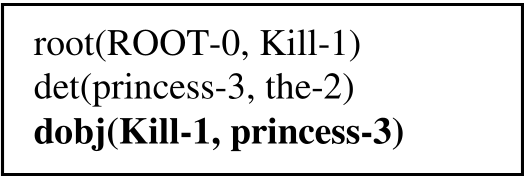 Fig 2: The pipeline from social media text to valid First-Order Logic sentences.
3. Three Modes of Engagement
- Comments: Direct expression of desire (High effort).
- Preferences: Sentiment analysis of "likes" and "+1s" (Medium effort).
- Polls: Simple voting on pre-defined options (Low effort).
Experiments & Results: Innovation Over Efficiency
The researchers compared their social interface with a traditional GUI.
User Satisfaction
Interestingly, while the GUI performed better in "Usability" (it's faster to click a button than type a tweet), the Social Interaction interface won in "Satisfaction," "Curiosity," and "Enjoyment." Users found the social aspect more exciting and innovative.
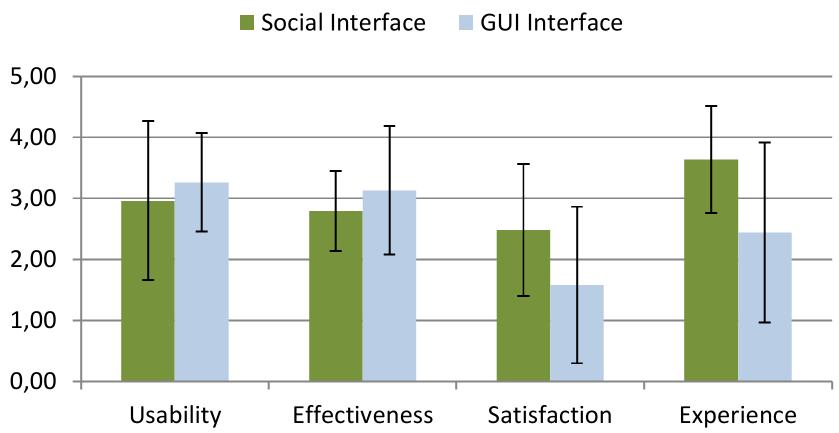 Fig 3: Comparison of GUI vs. Social Interface across HCI metrics.
Technical Performance
- Accuracy: The NLP parser successfully recognized 90.6% of valid suggestions.
- Speed: Processing a comment took only 2.7ms, making it highly scalable for massive audiences.
Critical Insight & Conclusion
The Takeaway
The genius of this work isn't just the NLP; it’s the Social Orchestration. By meeting users where they already are (Facebook/Twitter), the barrier to entry for "interactive TV" vanishes. The story becomes a shared cultural event.
Limitations & Future Work
- Natural Language Robustness: The system can still be tripped up by spelling errors or slang—a problem that modern Large Language Models (LLMs) would likely solve today.
- Conflict Resolution: How should the system handle a 50/50 split in the audience? The authors current use a "frequency of citation" model, but more complex social choice theories could be applied.
In conclusion, this paper successfully bridges the gap between passive consumption and active participation, laying the groundwork for a future where the "audience" is the "author."