
Bridging the 80-Year Gap: How Digital Gameplay Fosters Intergenerational Connection
Social Interaction Between Older Adults (80+) and Younger People During Intergenerational Digital Gameplay
This study investigates non-kin social interaction between rural older adults (80+) and younger people (18-25) during collaborative digital gameplay using Nintendo Wii. Through Conversation Analysis (CA), it identifies "guided participation" as the primary mechanism for maintaining shared focus and meaning-making.
TL;DR
As the "oldest-old" (80+) population grows, social isolation becomes a critical risk. This study proves that collaborative digital games—specifically "Wii Sports"—can act as a powerful bridge. By analyzing six weeks of interaction, researchers found that gameplay transforms teenagers into caregivers and seniors into active learners, fostering deep "prosocial" connections that transcend age.
Background: The Isolation of the Oldest-Old
In industrialized societies, age segregation is a growing phenomenon. Older adults over 80 face restricted mobility and the loss of peer networks. Traditional intergenerational programs often lack a "shared focus," leading to awkward or forced interactions. The authors of this study posited that digital games—typically viewed as a youth-centric medium—could provide the "Meaning-Making" framework needed for these two groups to bond.
Methodology: Beyond Just "Playing Games"
The study paired 11 seniors with 11 undergraduates. Using Conversation Analysis (CA), the researchers didn't just look at whether the participants had fun; they looked at the "micro-mechanics" of their talk.
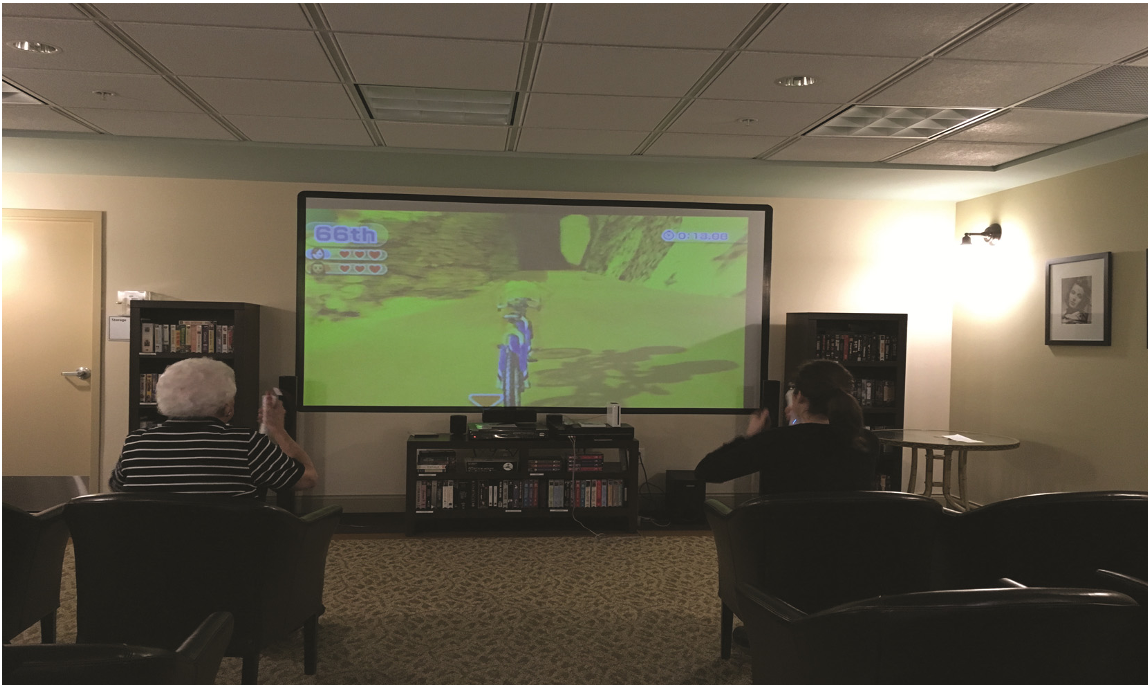
- The Setup: Pairs sat side-by-side playing Wii Sports Resort (Cycling and Canoeing).
- The Focus: Turn-taking, "Question-Answer" sequences, and how they handled failures.
Core Insights: The "Identity Shift"
The most fascinating finding was the fluid shifting of social roles.
1. Guided Participation
Instead of the older adult being an authority figure, as is traditional in many cultures, the "hierarchy" was flipped. The younger player became the Scaffold.
- Younger Role: Teacher, Leader, Encourager, and Caregiver (offering water, checking comfort).
- Older Role: Student, Follower, and Storyteller.
2. Coping with Setbacks
When a game task failed, the younger players intuitively used "positive reframing." Instead of saying "We lost," they would say, "Look how close we were!" This helped the older adults overcome "technology anxiety" and stay in the "Game Flow."
3. Downtime Socialization
The game acted as a catalyst for deeper sharing. During breaks, older adults frequently shared "life stories" (e.g., heart health, exercise habits), which the younger participants met with genuine interest and praise. This fulfilled the senior's need for Generativity—the desire to guide the next generation.
Key Results & Evidence
The data suggests that the "Question-Answer" adjacency pair was the backbone of the relationship.
- Emotional Resilience: By week 4, older participants moved from saying "I'm spoiling the game" to taking the lead by asking, "So, hold it like this?"
- Prosocial Growth: Younger participants demonstrated heightened patience and responsibility, discovering a "mature role" within the partnership.
(Note: This diagram illustrates the increase in shared focus and decreased anxiety as documented in the CA excerpts of the paper.)
Critical Analysis & Takeaways
Why it Works
The Wii's motion-sensing controls are intuitive enough to lower the barrier to entry, while the collaborative nature of "Canoeing" (requiring synchronization) forces communication. The "Asymmetric Knowledge" (Young leads tech, Old leads life experience) creates a balanced exchange of value.
Limitations
The study was small (5 key pairs) and predominantly female. The high educational level of the students might also skew the levels of "patience" observed.
The Future of Aging
This research suggests that we should stop viewing seniors as "passive recipients" of care and instead view them as active participants in digital culture. Future AI-driven or VR games could specifically design for this "leader-follower" dynamic to reduce elderly loneliness on a global scale.
Conclusion
Intergenerational digital gameplay is more than just entertainment; it is a social glue. By allowing the youth to teach and the elderly to share, we can dismantle ageist stereotypes and build a more cohesive, multi-generational society.