
Socializing the Road: Enhancing Vehicular Networks with Human Trust
Where people and cars meet: social interactions to improve information sharing in large scale vehicular networks
The paper introduces a social Ubiquitous-Help-System (UHS) that integrates Friend-of-a-Friend (FOAF) social networking into Vehicular Ad-Hhoc Networks (VANETs). By leveraging social trust and "Quality of Information" (QoI) indices, the system optimizes data routing and information reliability in large-scale mobile environments.
TL;DR
The paper "Where People and Cars Meet" proposes a paradigm shift in Vehicular Ad-hoc Networks (VANETs) by overlaying a social trust graph (FOAF) onto moving vehicles. It introduces the Ubiquitous-Help-System (UHS), which uses social relationships to filter and validate data like parking availability. This results in a cleaner, more reliable network where "who you know" determines the quality of the data you receive.
Context-Awareness vs. Information Overload
In the world of Intelligent Transportation Systems (ITS), the problem isn't a lack of data—it's a lack of trustworthy data. Current VANET protocols often rely on simple broadcasting (push) or on-demand requests (pull). However, when thousands of cars broadcast traffic or parking updates, the network faces a "tragedy of the commons": high redundancy and the potential for "garbage data" from malfunctioning or malicious nodes.
The authors argue that Context-Awareness must include the Social Context. If a friend (or a friend of a friend) tells you a parking spot is free, that information carries more weight than a broadcast from a total stranger.
Methodology: FOAF-based Relevance Backpropagation
The core innovation is the marriage of the Friend-of-a-Friend (FOAF) vocabulary with a Relevance Backpropagation algorithm.
1. The Social Help Framework (UHS)
The UHS acts as a middleware between the application layer and the physical network. It manages:
- Locality: Prioritizing info about the current destination.
- Common Ground: Using social ties to weight responses.
- Reliability: Maintaining a QoI (Quality of Information) index for every peer.
2. The Algorithm
Instead of blind flooding, messages are routed based on social grades. When a node receives a piece of context (like a traffic alert):
- It checks if the sender is a friend or FOAF.
- If the info is relevant and accurate, the sender's social grade is incremented (+1).
- If the info is irrelevant or incorrect, a Negative Feedback message is backpropagated, and the sender's grade is penalized.
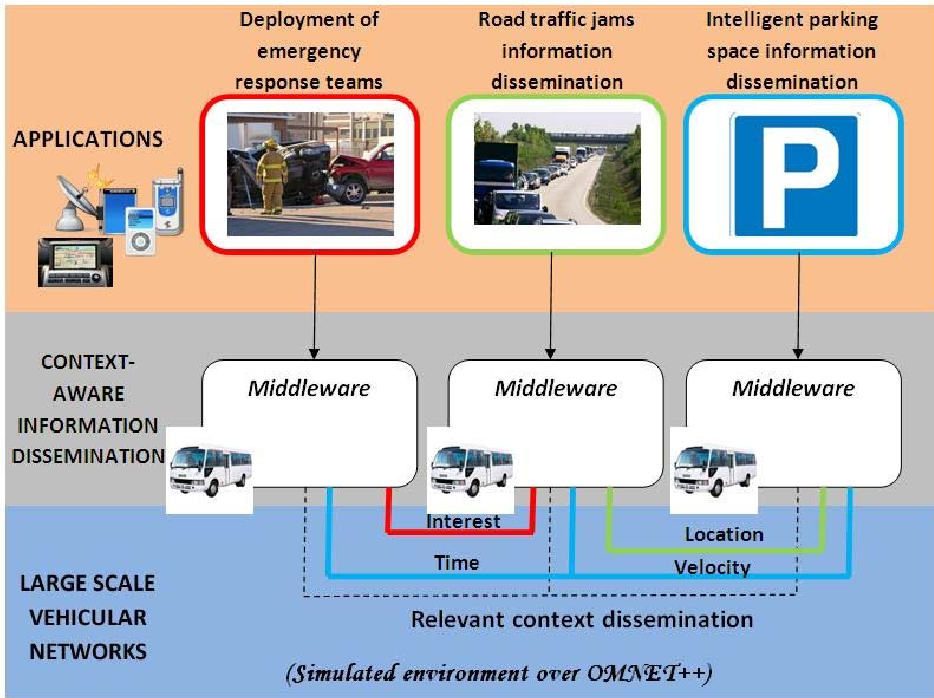 Figure 3: The UHS Framework residing between the application and physical layers.
Experimental Validation
Using the OMNeT++ simulator fed with realistic car movement data, the authors compared their FOAF-based approach against a standard relevance backpropagation model.
Key Findings:
- Efficiency: Network traffic usage was reduced, as messages weren't forwarded to untrusted nodes.
- Trustworthiness: By only trusting a limited set of nodes (friends/FOAF), the system inherently filtered out the "noise" and potential misinformation common in open broadcasts.
- Availability: Surprisingly, even with stricter filtering, the availability of useful information increased by 5%, as the network was less congested with junk packets.
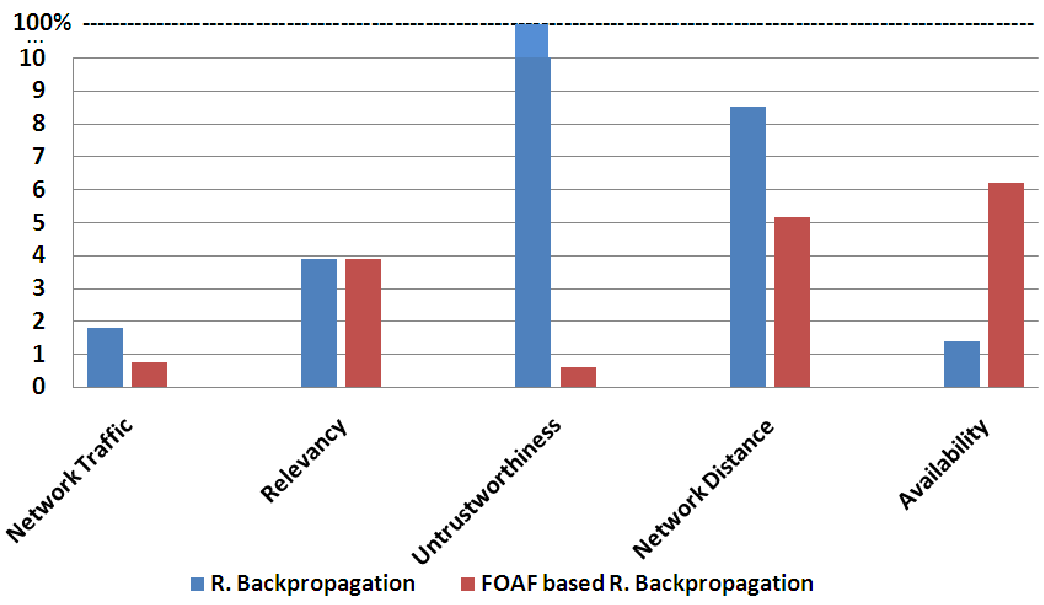 Figure 7: Simulated results showing improvements in Relevancy and Availability.
Critical Insight: The "Social Filter" as a Routing Heuristic
The brilliance of this work lies in using human social structures as a proxy for network reliability. In a nomadic, large-scale environment, traditional cryptographic handshakes might be too slow or heavy. Social "Quality of Information" acts as a lightweight, decentralized heuristic that effectively prunes the search space for data.
Limitations: The study relies on a simulation with 27 nodes; scaling this to a city-wide deployment with millions of cars would require more robust handling of "Social Cold Starts" (when a car has no friends in the vicinity). Additionally, the privacy implications of sharing FOAF profiles in a public vehicular network remain an open avenue for research.
Conclusion
This paper proves that the "Social Internet of Vehicles" is more than just a buzzword. By integrating human-centric trust into machine-centric routing, we can build vehicular networks that are not just faster, but more "intelligent" in how they share the road.