
Establishing the Social Brain: Understanding the Social Internet of Things (SIoT)
Social Internet of Things (SIoT): Foundations, thrust areas, systematic review and future directions
The paper "Social Internet of Things (SIoT): Foundations, thrust areas, systematic review and future directions" provides a comprehensive framework for integrating social networking principles into the Internet of Things. It defines the SIoT paradigm where smart objects autonomously establish social relationships to enhance service discovery, network navigability, and trustworthiness management.
TL;DR
The "Social Internet of Things" (SIoT) moves beyond simple device connectivity to create a decentralized ecosystem where smart objects interact as "friends." By mimicking human social networks, SIoT solves the massive scalability and discovery challenges of the traditional IoT, enabling objects to autonomously find services and verify trust through a graph of digital relationships.
Background & Positioning
As we approach an era of trillions of connected devices, the traditional Internet of Things (IoT) is hitting a wall. Finding a specific service in a sea of billions of sensors is like finding a needle in a global haystack. This paper defines the Social Internet of Things (SIoT)—a paradigm shift where objects aren't just tools, but social actors. It positions SIoT as the essential evolution for navigating complex, heterogeneous, and dynamic digital environments.
Motivation: Why do Objects Need Friends?
The authors identify that human society solves complexity through collaboration and trust-based networks. Prior IoT work was often limited to:
- Centralized Directories: Which become massive bottlenecks.
- Lack of Autonomy: Requiring human intervention for service pairing.
- Brittle Security: Treating all devices as static endpoints rather than dynamic entities.
By imbuing objects with the ability to form Social Relationships, we can leverage "Small World" phenomena—the idea that any service is only a few "social hops" away.
Methodology: The Architecture of Object Socialization
The core of the paper lies in its taxonomy of relationships and thrust areas. Objects form bonds based on shared manufacturers (Parental), shared locations (Co-location), or shared owners (Ownership).
1. The SIoT Thrust Areas
The framework is built on four pillars:
- Service Discovery: Finding "who" provides "what" based on location or interest.
- Network Navigability: Choosing the best path through the social graph.
- Trust Management: Rating friends to avoid malicious "bad-mouthing" or "self-promoting" attacks.
- Relationship Management: The intelligence to start, update, or kill a digital friendship.
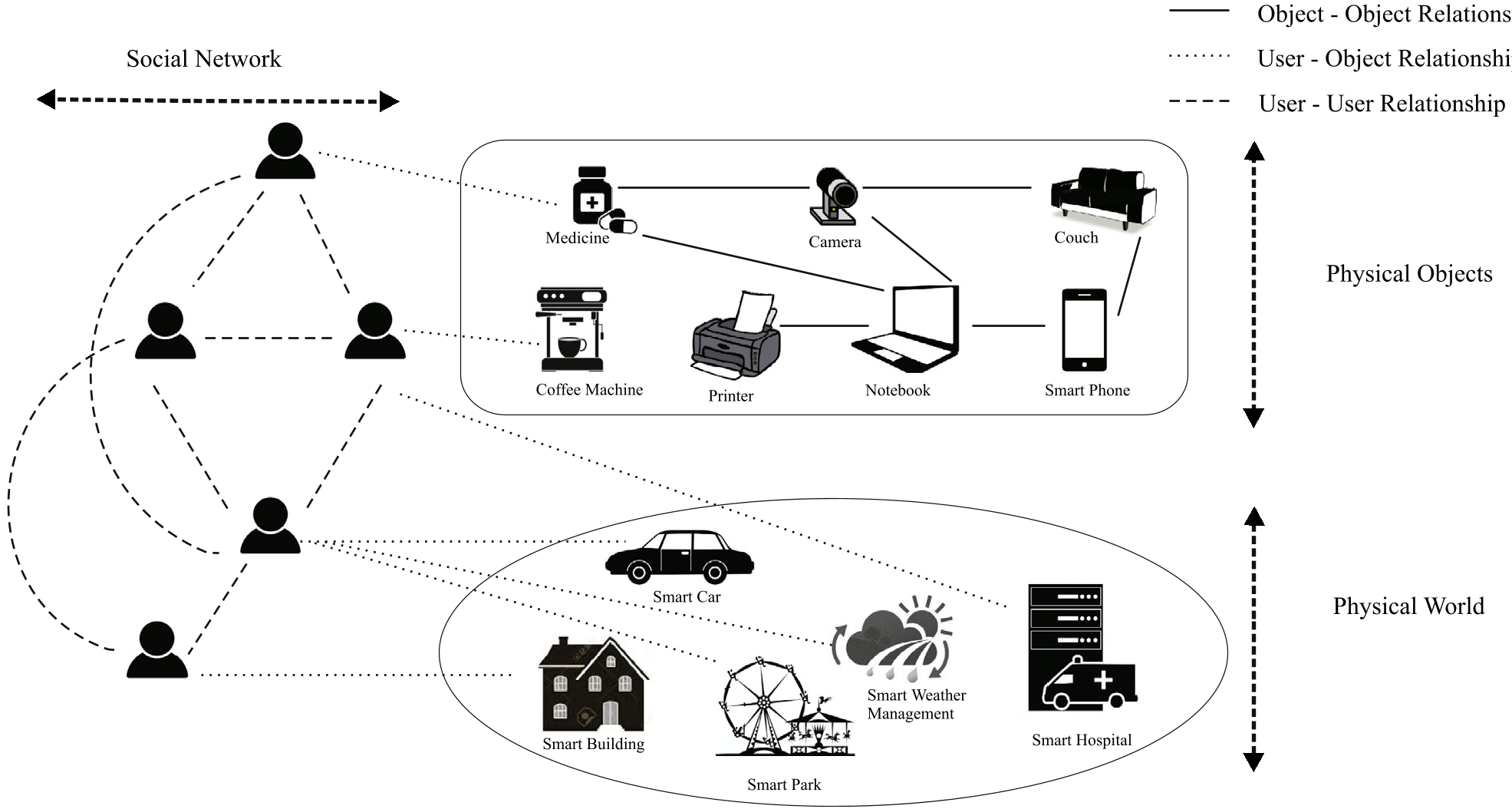 Figure 1: The intersection of physical objects, digital space, and social networks.
2. The Logic of Navigability
How does a smart fridge find a technician without an owner's help? The paper describes Link Selection Strategies. Instead of random searching, the object analyzes its social graph using:
- Clustering Coefficients: How tightly its current friends are connected.
- Betweenness Centrality: Identifying "hub" objects that act as bridges to other communities.
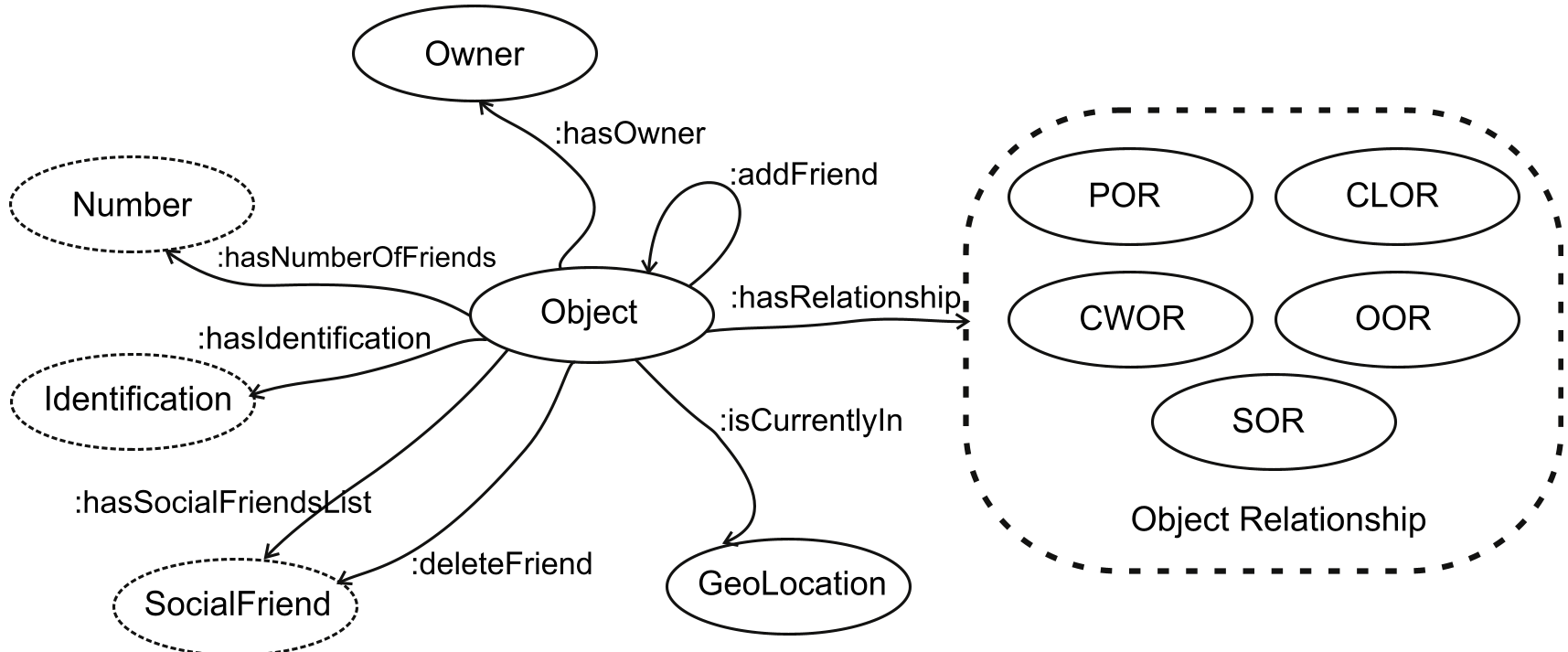 Figure 2: An ontological model for interpreting complex object-to-object and user-to-object links.
Experiments & Results: Navigating the Graph
The paper reviews various platforms (like Lilliput and Socialite) and discovery schemes. Key findings include:
- Efficiency: Social-aware discovery (using FOAF) can drastically reduce the number of messages sent across the network compared to flooding.
- Resilience: Trust models based on Bayesian estimation and Fuzzy Logic effectively isolate "malicious" nodes that provide false feedbacks.
- SOTA Comparison: While centralized engines (like Snoogle) work for small areas, SIoT-based decentralized models scale better as the number of devices increases exponentially.
Critical Insight & Future Outlook
The true value of this paper is the transition from Bare-IoT (connectivity) to Cognitive-SIoT (intelligence).
Takeaways:
- Autonomy is Key: Future IoT devices must have the "agency" to manage their own social circles.
- Small-World Navigability: The physics of social networks (6 degrees of separation) is the only way to search the "trillion-device" web effectively.
Limitations: Setting up these "inference rules" for billions of devices remains computationally expensive. Current platforms like Paraimpu are a good start but still require significant manual configuration. The next frontier will be Machine Learning-driven Relationship Prediction, where objects learn who to trust based on real-time behavior patterns rather than pre-defined rules.
Conclusion
SIoT isn't just a buzzword; it’s a necessary architectural layer for the next generation of smart cities and airports. Deepening the "social" ties between our devices is the only way to ensure they remain helpful, scalable, and—most importantly—trustworthy.