
Edmodo meets Kahoot: Revolutionizing Higher Education through Social Learning Networks
Exploring the Impact of Social Learning Networks in M-Learning: A Case Study in a University Environment
This study evaluates the integration of Social Learning Networks (SLN) within a mobile learning (M-learning) framework in higher education. By deploying Edmodo for collaborative learning and Kahoot for gamified assessment, the researchers demonstrated a significant increase in student engagement and motivation among computer science undergraduates.
TL;DR
Higher education is undergoing a digital metamorphosis. This research explores how merging Social Learning Networks (SLN) like Edmodo and Kahoot within a mobile-assisted learning (M-learning) environment significantly boosts student motivation and engagement. By testing these tools with 120 computer science students, the study provides a roadmap for shifting from static, conventional teaching to an interactive, gamified pedagogical model.
The Digital Disconnect: Motivation and Methodology
While smartphones are ubiquitous in students' pockets, their purposeful integration into the classroom remains surprisingly rare. Many institutions still rely on "one-to-many" traditional lectures that fail to capture the interactive habits of the digital native.
The researchers identified a critical gap: How can we bridge the gap between social media habits and formal education? The insight was to use Edmodo as a "virtual classroom" for structure and Kahoot as a "gamification engine" for assessment, creating a dual-layered social learning experience.
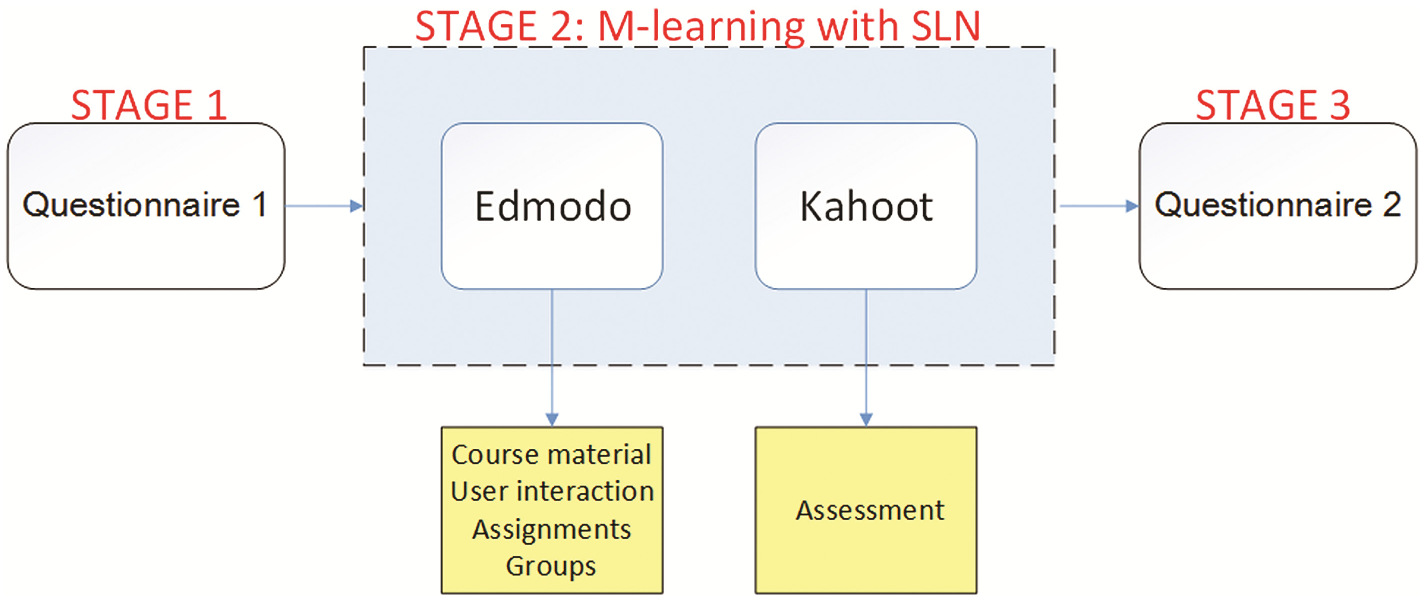
Methodology: A Three-Stage Experimental Framework
The study followed a structured quantitative approach to measure the shift in student perception:
- Pre-study Phase: Assessing prior familiarity with M-learning. Interestingly, while 67.3% used social media for learning, few had experience with structured SLN tools.
- Implementation Phase: For 12 weeks, students used Edmodo for assignments and teamwork, while periodic Kahoot quizzes were used for real-time assessment.
- Post-study Phase: A comprehensive 5-point Likert scale survey to measure satisfaction, motivation, and perceived learning gains.
Core Findings: Interaction and Assessment
The results highlight a clear preference for digital social tools over traditional methods:
1. Engagement and Interaction
Students found Edmodo exceptionally helpful for peer-to-peer discussion (Mean: 3.96/5.0). By providing a closed, safe social space, the platform removed the traditional barriers of "time and place," allowing students to assist each other outside of formal hours.
2. The Power of Gamification
Kahoot emerged as the favorite tool for assessment. The game-based nature of the platform provided immediate feedback, which students perceived as more accurate and effective than traditional paper exams.
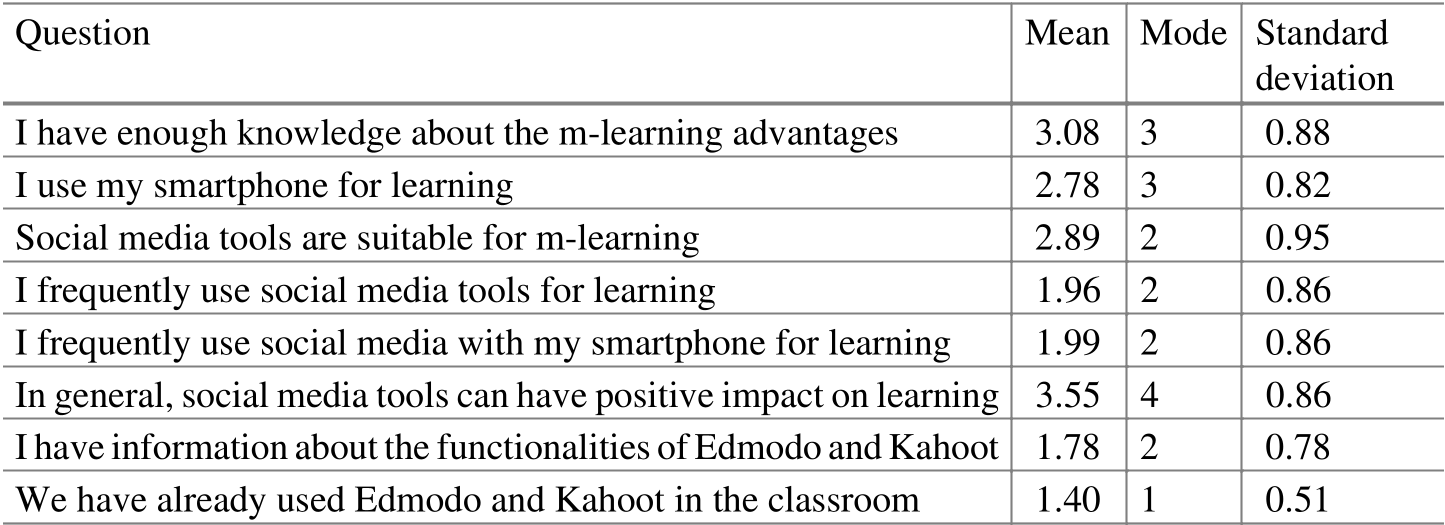 Table 1: Pre-study data showing low initial familiarity with SLN functionalities.
3. Motivation Surge
One of the highest scores in the study was for motivation (Mean: 4.35). Students were not just "using" the technology; they were "enjoying" the process. This suggests that the novelty and interactivity of SLNs can counteract classroom fatigue.
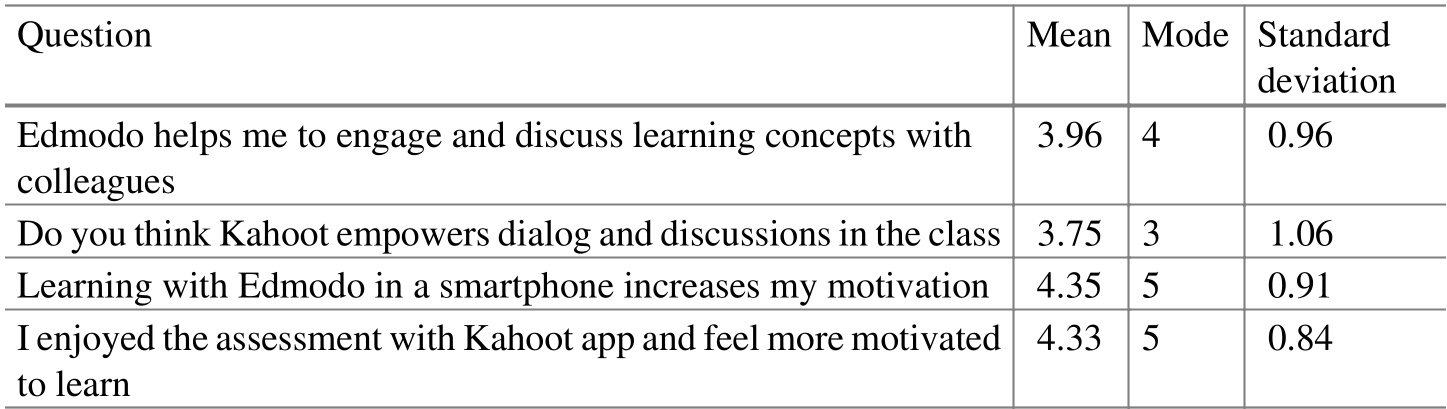 Table 2: High scores in motivation and engagement after implementing Edmodo and Kahoot.
Critical Insight: Why Does It Work?
The success of this approach lies in the Inductive Bias of social tools. Edmodo mimics the UI of popular social networks (like Facebook), lowering the learning curve for students. Meanwhile, Kahoot leverages the "competitive instinct," turning a stressful event (an exam) into a social event (a game).
However, the study also notes a "neutral" stance regarding whether these tools actually increased subject knowledge. This brings up a vital academic question: Does higher engagement always lead to higher cognitive retention? While the tools improve the experience, the content must still be pedagogically sound.
Conclusion and Outlook
This case study at Tetovo University confirms that SLNs are not just distractions; they are potent pedagogical instruments. For educators, the takeaway is clear: the classroom must extend into the digital mobile space to remain relevant.
Future Directions:
- Investigating the correlation between SLN use and actual final exam grades (quantitative learning outcomes).
- Exploring how specialized course content (e.g., complex coding vs. theoretical ethics) influences the effectiveness of these platforms.
- Mitigating "assessment-oriented" perceptions to ensure students value deep learning over just "winning" the Kahoot game.
By transforming the smartphone from a distraction into a learning hub, higher education can finally catch up with the digital lives of its students.