
Social Learning with Partial Information: Can We Find the Truth by Sharing Less?
Social Learning with Partial Information Sharing
This paper introduces a social learning framework where agents in a network share only partial beliefs regarding a specific hypothesis of interest. It proposes two main algorithms—the "Partial Approach" and the "Self-aware Partial Approach"—to achieve distributed hypothesis testing while significantly reducing communication overhead.
TL;DR
In the world of social networks, agents usually need to share everything they know to reach a consensus. This paper challenges that assumption, proving that a network of agents can learn the true state of nature even when they only share their opinion on a single hypothesis. Through two novel algorithms, the authors identify the mathematical boundaries (based on KL divergence) between truth learning and "belief collapse" or mislearning.
Contextual Positioning
This work sits at the intersection of Signal Processing and Network Science. While prior SOTA works in non-Bayesian social learning (like those by Jadbabaie or Sayed) established convergence for full belief vector exchange, this paper marks a shift toward communication efficiency and privacy-aware interaction.
The Core Challenge: The "Everything or Nothing" Paradox
In traditional models, if there are 100 possible weather states, every agent must broadcast a 100-element vector at every time step. This is computationally expensive and socially intrusive. The fundamental question is: If we only care if it's "Sunny," can we ignore the "Rainy," "Cloudy," and "Snowy" data in our messages and still arrive at the right conclusion?
Methodology: Partial vs. Self-Aware Strategies
The authors propose a modified diffusion construction. Instead of sharing the full vector , agents share only .
- Partial Approach: Agents are "focused." They even modify their own internal belief to match the structure of the shared data, splitting the remaining probability uniformly.
- Self-aware Partial Approach: Agents are more "stubborn." They use their own true full belief while incorporating the partial beliefs of their neighbors.
Architecture & Likelihood Mechanics
The process follows a Bayesian update followed by a social combination step:
(Note: Refer to Equations 2-5 in the paper for the specific Bayesian-to-Log-Linear transition.)
Theoretical Insights: The KL Divergence Battle
The paper's brilliance lies in its convergence analysis. The fate of the network's belief depends on the KL Divergence () between the true likelihood and the "average" likelihood of other hypotheses .
- Truth Learning: If the shared hypothesis is the true one (), agents always eventually discover the truth.
- Belief Collapse (The Danger): If agents share a false hypothesis that is "close enough" to the truth (low KL divergence), the network might settle on a lie.
- Uniform Splitting: If the evidence for the shared hypothesis is weak, agents simply split their remaining confidence among everything else.
Experimental Validation
The authors simulated a 10-node network (see Figure 1 for topology).
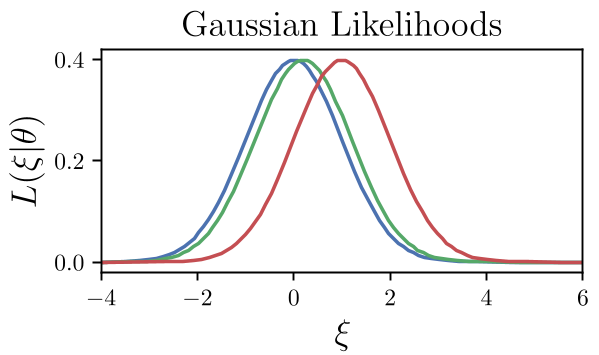 Fig 2: In the Partial Approach, we see the belief for (the truth) reaching 1.0 when shared. However, if is shared and it's "plausible," the network mislearns.
The "Self-Awareness" Dial
By tuning the hyperparameter (the weight an agent gives to its own data), the authors showed that agents could avoid the "herd mentality" of a false shared hypothesis. For very high , agents can actually recover oscillatory behavior that keeps the truth-seeking process alive even when their neighbors are sharing partial, misleading information.
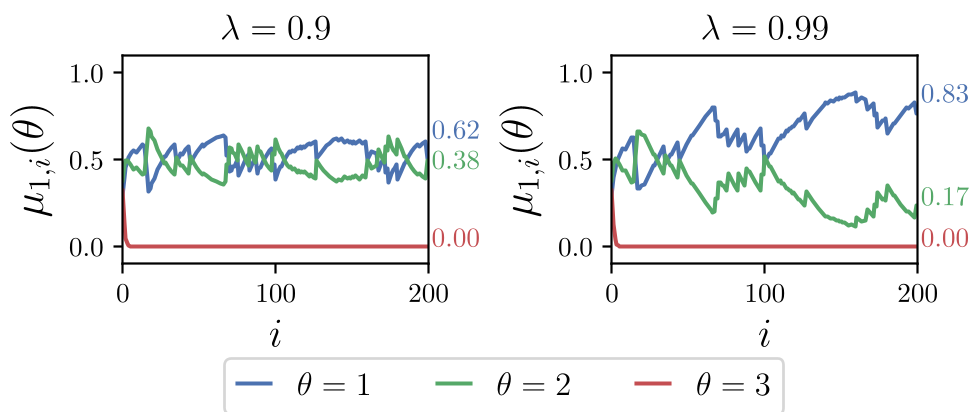 Fig 4: High self-awareness () prevents total collapse and allows agents to stay closer to the ground truth via local observations.
Critical Analysis & Future Outlook
Takeaway: Communication efficiency doesn't have to sacrifice accuracy, but it increases the risk of "information bubbles" if the shared hypothesis is poorly chosen.
Limitations:
- The uniform splitting of unshared mass is a heuristic; in reality, agents might have a better prior on how to distribute that mass.
- Strong connectivity is required; in dynamic or weakly connected graphs, partial information might get lost before it converges.
Future Work: The authors hinted at a "Max-Belief Sharing" approach where agents dynamically choose the most relevant hypothesis to share. Preliminary results show this can be even more robust, provided the initialization isn't poor.