
The Social Road: Why Safety Isn't Enough for Autonomous Cars
791_The Social Life of Autonomous Cars.
The paper investigates the "social road" challenges for autonomous vehicles (AVs), specifically analyzing how current systems fail to interpret human social cues. Using a corpus of 93 YouTube videos of Tesla and Volvo systems, the study highlights critical gaps in robotic interaction with human drivers.
TL;DR
Autonomous vehicles (AVs) like Teslas are masterpieces of mechanical engineering, but they are "socially illiterate." This research by Stockholm University reveals that AVs frequently fail in real-world traffic because they cannot read the subtle social "handshakes" of human drivers—like a car slowing down to let you in or a slight "creep" at a four-way stop. By repurposing YouTube dashcam footage, the study proves that driving is a complex social dance, and if robots can't learn the steps, the road will only get bumpier.
Background: Beyond the Algorithm
We often think of driving as a series of physical constraints: stay in the lane, keep 5 meters from the car ahead, and stop at red lights. But for humans, driving is a social activity. We look at other drivers' eyes, we interpret a slight hesitation as an invitation, and we use "pre-actions" to signal our next move. Current AVs operate in a vacuum of logic that often clashes with this human intuition.
Problem & Motivation: The Gap in Autopilot
The primary pain point identified is that AI systems view the world in bits and bytes—binary "blocks" or "gaps."
- Prior Work Flaw: Most testing happens in controlled environments or via proprietary data that ignores the "messy" human element.
- The Insight: Authors argue that "a gap is not just a gap." To a robot, a space between two cars is just a safety buffer. To a human, that same space might be a polite "gesture" of invitation. When the robot fails to accept the invitation, it isn't just inefficient—it’s perceived as rude, leading to aggressive reactions from human drivers.
Methodology: The YouTube Corpus
Instead of relying on expensive, sanitized manufacturer data, the researchers turned to the world's largest repository of third-party data: YouTube.
- The Dataset: 93 video clips totaling 10.5 hours of real-world driving.
- The Focus: Reviews and travelogues of Tesla’s Autopilot and Volvo’s XC90 system.
 Figure 1: The study analyzes how drivers interact with Autopilot systems in everyday traffic scenarios.
Core Findings: The Three Pillars of Social Failure
1. Failing to Recognize Gestures
In one analyzed clip, a Tesla signaled to change lanes. A human behind it slowed down to "offer" a gap. The Tesla, unable to recognize this social cue, hovered in its lane. By the time the Tesla finally moved, the human driver had become frustrated and accelerated, nearly causing a collision. To the human, the Tesla was "doubly rude."
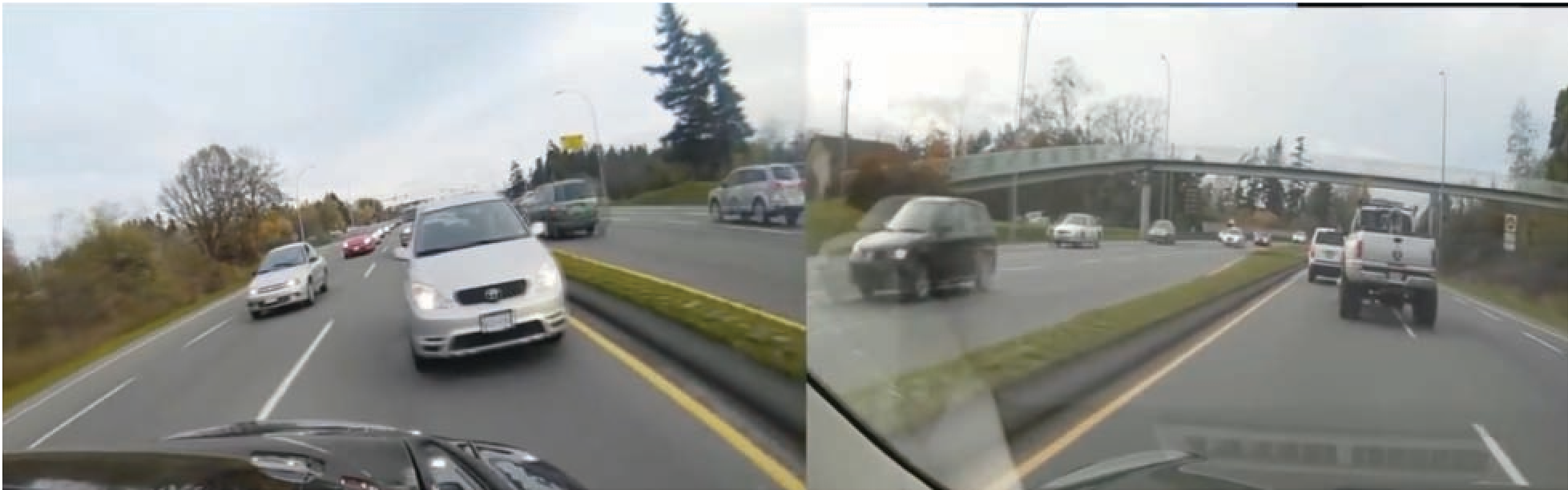 Figure 2: (a) The human driver offers space; (b) The AV fails to react, leading to social friction.
2. The Necessity of "Creeping"
At four-way stops, humans use "pre-actions." We "creep" forward to say, "I'm going next." The study found that Google’s self-driving cars often remained too still. Humans interpreted this as hesitation and "jumped" their turn, forcing the AV to brake abruptly—a move that confuses everyone behind it.
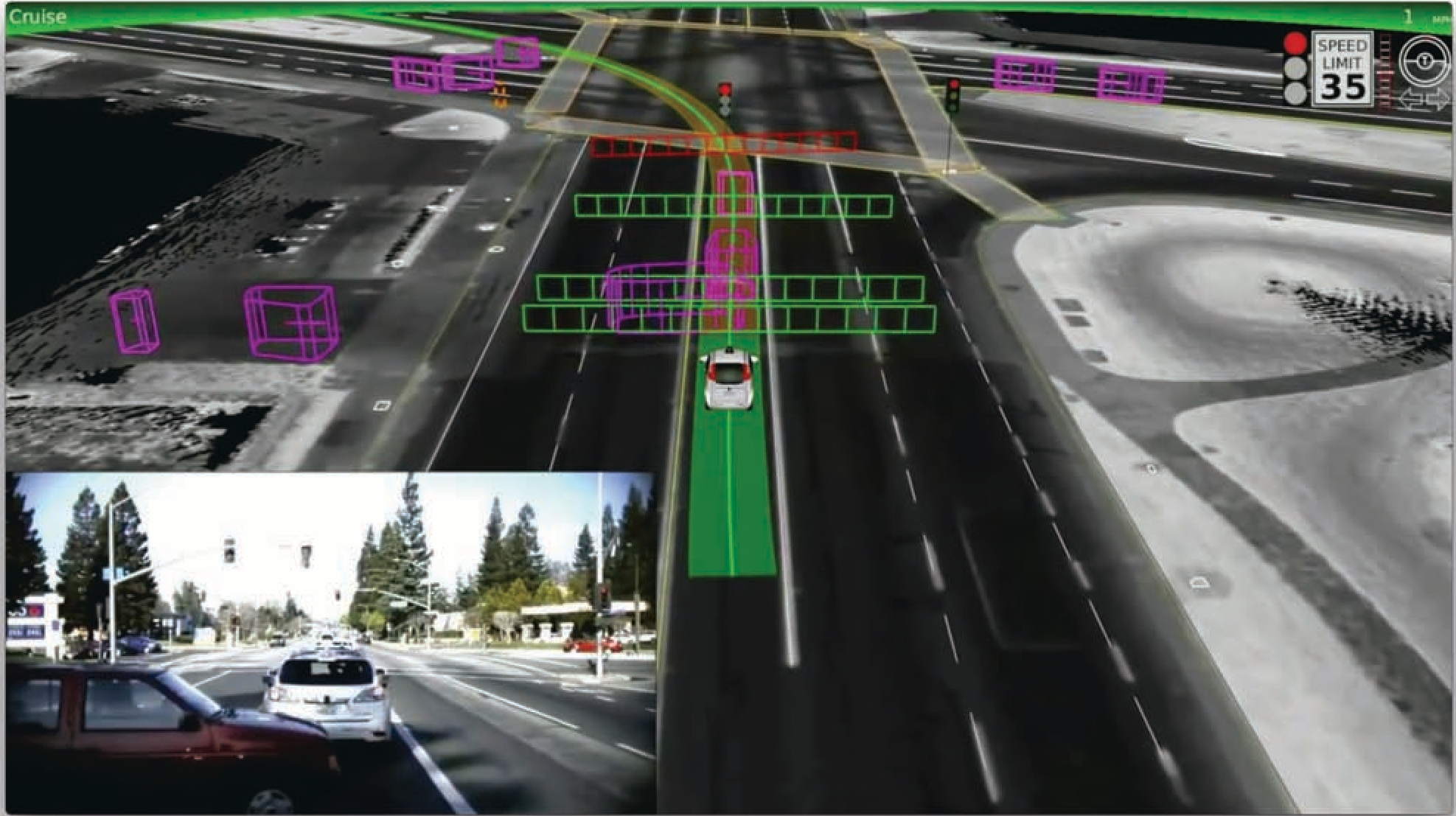 Figure 3: A Google car’s lack of "creep" motion leads a white car to jump the turn.
3. The Uncanny Valley of Driving
As AVs get better at the mechanics of driving, their social failures become more jarring—a phenomenon the authors call the Uncanny Valley of Autonomous Cars. Because the car looks like it's driving "normally," humans expect it to "behave" normally. When it doesn't, it evokes anger rather than the patience one might show a novice driver.
Critical Analysis & Conclusion
The Takeaway: The road is a shared social space. Being "legally" right or "statistically" safe isn't enough if it causes chaos for everyone else.
Limitations: The study relies on 2017-era technology (Tesla Autopilot 1.0). While sensor hardware has improved, the fundamental problem of social reasoning remains largely unsolved in modern end-to-end neural driving models.
Future Outlook: For AVs to be truly integrated, they might need external signaling systems (like digital "eyes" or light-based intent signals) to warn humans: "I am a robot, and I am intending to stop/go." Until then, the friction between biological and silicon drivers will remain a major bottleneck for the industry.