
The Digital Pulse of Democracy: Mapping Linkage Patterns in the 2008 Facebook Election
The social life of social networks: Facebook linkage patterns in the 2008 U.S. presidential election
This research investigates the digital linkage patterns on the Facebook "walls" of 2008 U.S. Presidential candidates (Obama, Clinton, and McCain). It reveals a robust integration of Web 2.0 technologies, specifically identifying how social networking, online video (YouTube), and blogs converged to form a new digital public sphere.
TL;DR
Long before "fake news" and "echo chambers" became household terms, the 2008 U.S. Presidential election served as the first major laboratory for social media's impact on democracy. This paper analyzes over 600,000 Facebook wall posts to show how voters use links to bridge the gap between social networking, YouTube, and the wider blogosphere. It uncovers a highly partisan landscape where power-users drive the narrative toward external blogs while casual users stay within the "walled garden" of Facebook.
Problem & Motivation: Beyond the Status Update
In 2008, social networking was an emerging frontier. While researchers knew that 10% of American adults used sites like Facebook for politics, they didn't understand the mechanics of the dialogue. Was Facebook just a place for "cheerleading," or was it a functional Public Sphere where people exchanged evidence?
The authors identified a critical gap: the lack of quantitative data on "out-links." By clicking a link, a user is performing a deliberate act of navigation—guiding the community's attention. Understanding where those links go reveals whether social media is an insular bubble or a gateway to a broader information ecology.
Methodology: Scrubbing the Wall
The researchers developed a sophisticated data pipeline to capture the ephemeral nature of Facebook walls before they were buried by the passage of time:
- Data Capture: A Java program simulated browsing across tens of thousands of indexed wall pages.
- Database Integration: Extracted HTML was parsed into a MySQL database, capturing User IDs, timestamps, and message content.
- Link Filtering: Using Regular Expressions (
[Hh][Tt][Tt][Pp]), the team isolated high-intent posts containing active hyperlinks.
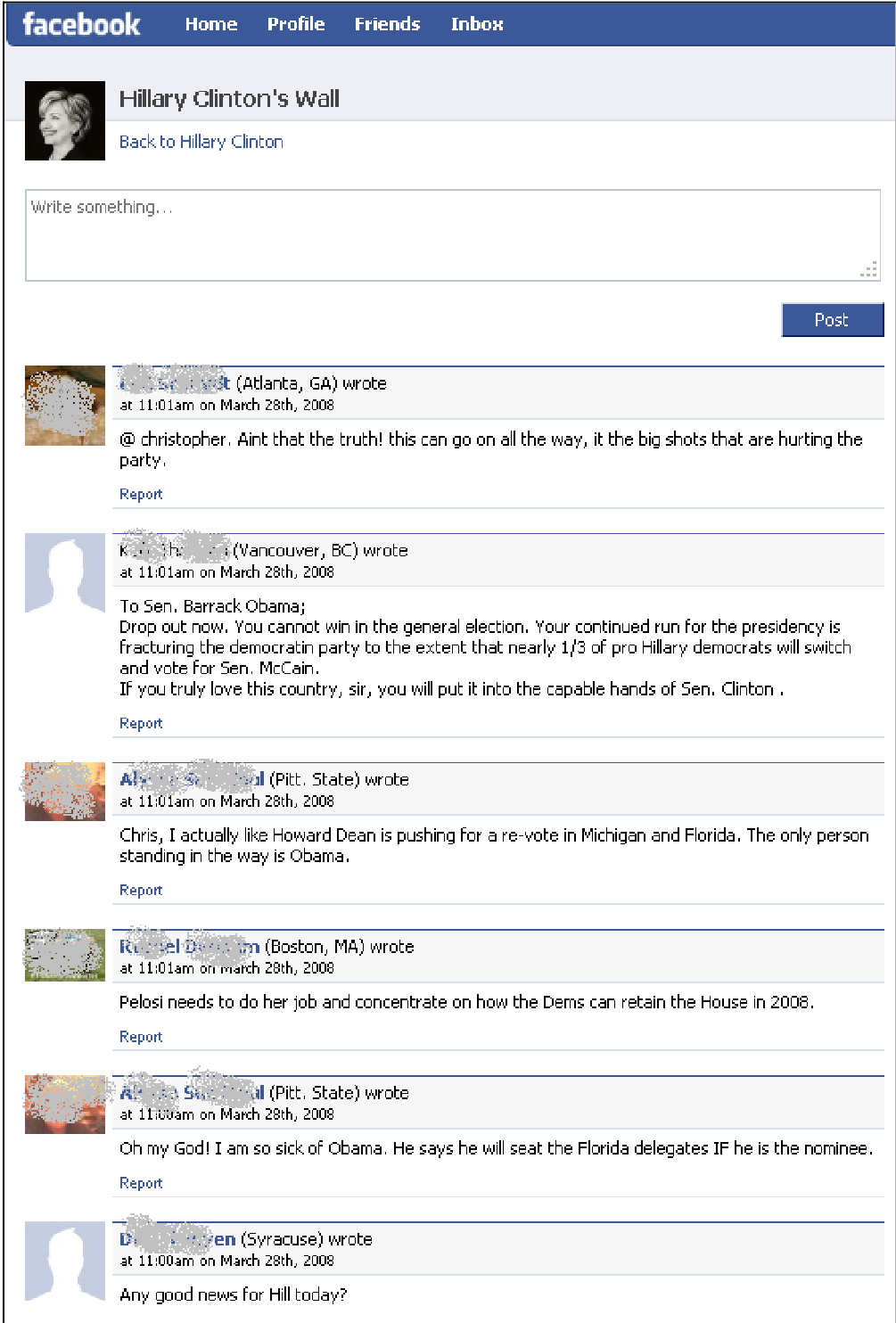 Figure 1: A snapshot of the 2008-era Facebook wall, the primary site of this digital discourse.
Methodology: Findings & The Rise of Video
The study discovered that 10 domains accounted for 90% of all links. Most notably, YouTube emerged as the king of political evidence.
- YouTube Dominance: Nearly 23% of all links went to YouTube, illustrating that video was the primary medium for sharing candidate debates, gaffes, and advertisements.
- The Partisan Divide: The "homophily" (birds of a feather) effect was staggering. On Barack Obama’s wall, 95.3% of candidate-related links pointed to his own site. Users were not trying to convert "the other side" by posting on their walls; they were reinforcing their own communities.
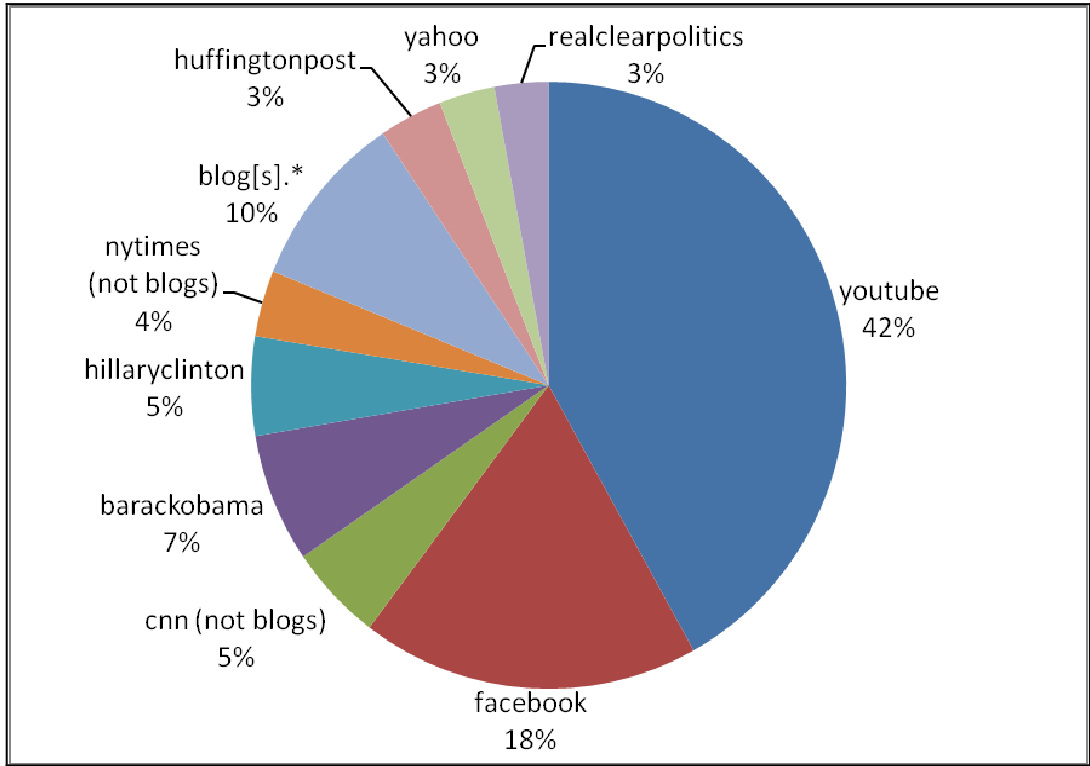 Figure 2: The distribution of the top ten domains shows the heavy reliance on YouTube and Facebook internal links.
Poster Behavior: Casual vs. Extreme
One of the most profound insights is how "Expertise" or "Investment" changes behavior. The authors categorized users by their posting frequency:
- Unary/Low Frequency Posters: Tended to link back to other Facebook groups or applications (staying within the social ecosystem).
- Extreme Posters (>1000 posts): Acted as "information brokers." They were significantly more likely to link to external blogs (19.4% vs 9.5% for low-frequency users), suggesting that the most active participants are the ones bringing outside information into the community.
Future Visions: Re-imagining the Public Sphere
The authors argue that Facebook’s current design is actually hostile to healthy political discourse. They highlight three major failures:
- Lack of Threading: Important debates are lost in a chronological "river of news."
- Identity vs. Anonymity: While Real-Name policies enhance accountability, the design provides no sense of "Presence" (who is currently here?).
- Topic Fragmentation: It is nearly impossible to see the "ambient" topics of conversation without reading every post.
To solve this, they proposed a "Who-What-When Browser": a visualization tool that uses topic clouds and poster clouds to help users navigate history and identify key influencers and arguments.
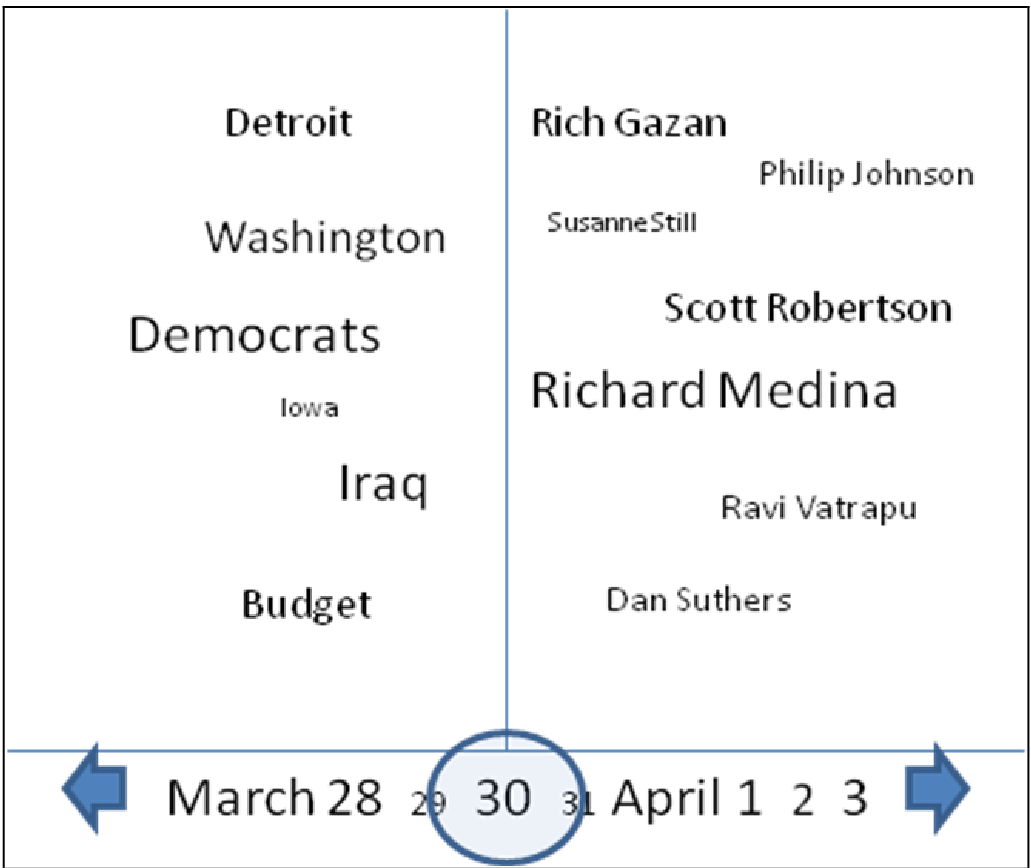 Figure 3: A design proposal for visualizing political discourse using temporal topic clouds.
Takeaway: The Socio-Technical Reality
This paper serves as an early warning and a structural map. It proves that social networks aren't just for "socializing"—they are functional components of digital government. The study concludes that links are the "socio-technical means" of transcending walled gardens. If we want to foster better digital citizenship, we must design interfaces that prioritize deliberation over mere chronological scrolling.