
Social Media as a Digital Stethoscope: Mining Product Safety Signals from the Crowd
Social media analysis for product safety using text mining and sentiment analysis
The paper proposes a novel framework for active surveillance of drug and cosmetic product safety by analyzing user-generated content from Facebook and Twitter. Using a combination of lexicon-based methods and Naive Bayes classifiers, the system monitors brand sentiment to provide early warnings of adverse effects and potential counterfeiting.
TL;DR
Counterfeit drugs and cosmetic allergies are global health hazards often under-reported in traditional systems. This research proposes an automated framework that mines Facebook and Twitter data using Text Mining and Sentiment Analysis to act as an early-warning system for product safety. By combining domain-specific lexicons with Naive Bayes classifiers, the authors demonstrate how negative sentiment trends can pre-emptively signal dangerous product batches or counterfeit outbreaks.
Background: Beyond Brand Reputation
While sentiment analysis is a staple of marketing, its application in Pharmacovigilance (monitoring drug safety) is a high-stakes frontier. The core insight of this paper is that users often vent about skin rashes, ineffective medication, or "weird" product textures online long before they file a formal report with a regulatory agency.
The Challenge: Noise in the Signal
Existing methods struggle with:
- Context Dependency: Words like "sick" can mean "ill" (negative) or "cool" (slang positive).
- Data Sparsity: Meaningful safety reports are often buried under millions of promotional posts.
- Privacy and APIs: Harmonizing data from multiple volatile API sources like Facebook and Twitter.
Methodology: The Surveillance Pipeline
The authors propose a four-stage pipeline designed for robustness:
- Collection: Real-time extraction of JSON data via REST and Streaming APIs.
- Pre-processing: Converting raw text into a TF-IDF weighted Bag-of-Words model, filtering out "stop words" and delimiters.
- Sentiment Engine:
- Lexicon-Based: Uses a custom-built dictionary to find "negative words" specific to medical side effects.
- Learning-Based: Implements a Naive Bayes classifier using the Maximum A Posteriori (MAP) decision rule to categorize sentiment.
- Evaluation: comparing algorithmic results against human-labeled ground truth.
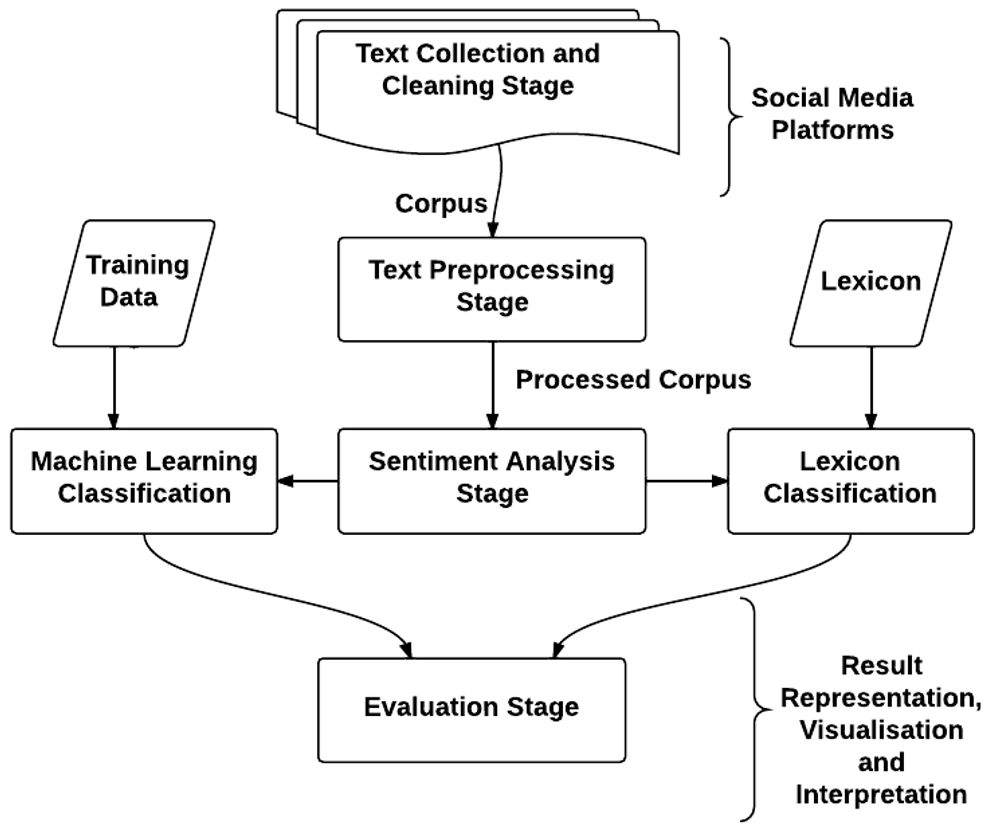 Fig 1: The framework architecture, moving from raw social streams to actionable sentiment scores.
Experiments and Key Findings
The study evaluated three major cosmetic/drug brands (Anonymized as X, Y, Z).
- The Prize Bias: Brand X showed an overwhelming positive ratio (1:175 negative to positive) because the data was linked to a promotional giveaway. This highlights a critical finding: incentivized posts can "mask" safety signals.
- Product Sensitivity: Through granular analysis, the authors found that "Soap" products generally enjoyed more stable positive sentiment compared to "Creams" or "Deodorants," which had higher instances of negative feedback (potentially related to skin sensitivities).
- Classifier Accuracy: The Naive Bayes model achieved 83% accuracy. Interestingly, the model was much more conservative in labeling neutral sentiments compared to the lexicon approach, as shown in the cross-method comparison.
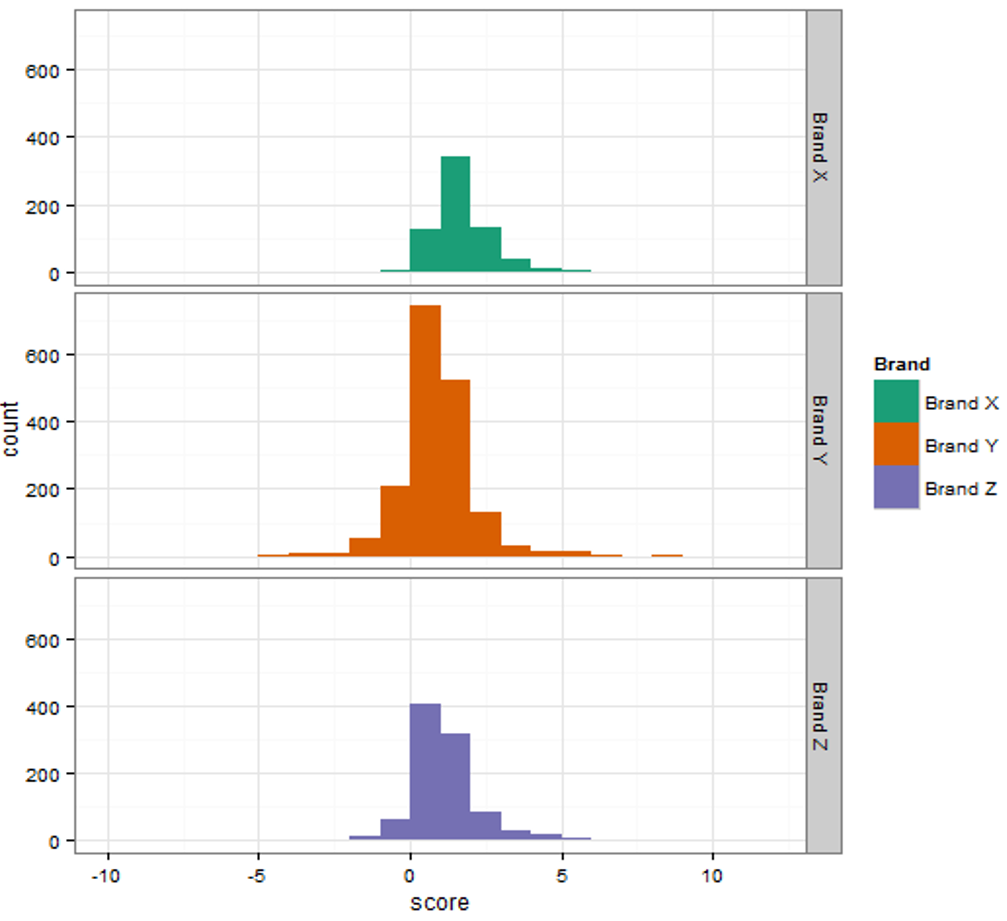 Fig 2: Sentiment distribution across different brands, showing the variance in consumer experience.
Critical Insight & Future Outlook
The most valuable contribution of this work isn't just the 83% accuracy—it's the Temporal and Spatial potential. The authors suggest that by clustering these negative sentiments by location, agencies could pinpoint exactly where a batch of counterfeit medicine has entered the market.
Limitations:
- The study uses Naive Bayes, which assumes feature independence—a known limitation in linguistics where word order matters.
- Sarcasm Detection: The current framework may struggle with cynical or sarcastic tweets, which are common on Twitter.
Conclusion
This framework transforms social media from a marketing tool into a public safety utility. For manufacturers and regulators, "listening to the crowd" is no longer optional—it is a technical necessity for modern consumer protection.