
Re-imagining STEM Inclusion: Avatars and E-Mentoring as Literacy Bridges
Social Media, Avatars, and Virtual Worlds: Re-imagine an Inclusive Learning Environment for Adolescents and Adults with Literacy Barriers
The paper introduces BreakThru, an inclusive virtual learning ecosystem designed by the University of Georgia and Georgia Tech to support students with disabilities (SwD) in STEM. It integrates e-mentoring, Second Life (SL) virtual islands, and social networking based on Universal Design (UD) principles to bypass literacy barriers.
TL;DR
The "BreakThru" project, a collaboration between the University of Georgia and Georgia Institute of Technology, leverages virtual worlds (Second Life) and social media to create an inclusive environment for students with disabilities. By focusing on Universal Design (UD), the project moves beyond simple "assistive technology" to create a social ecosystem where avatars and e-mentoring help bypass cognitive-based literacy barriers in STEM education.
The Problem: The "Textual" Barrier in STEM
For many brilliant minds with ADHD, learning disabilities, or brain injuries, the primary obstacle to a STEM career isn't the math—it's the medium. Traditional education relies heavily on printed text for instructions, networking, and mentorship. When these students enter virtual learning environments, they often face a new form of "info-exclusion" because many platforms are designed without screen readers or voice-output support.
The authors argue that we must move away from retrofitted accommodations (fixing things after they break) and toward Proactive Universal Design, where accessibility is baked into the architecture of the learning world.
Methodology: The BreakThru Theory of Change
The core of the BreakThru model is a systematic process designed to transform student anxiety into STEM persistence.
1. The Mentoring Islands
The project utilizes "Mentoring Islands" within Second Life (SL). While SL has inherent accessibility flaws (like lack of native screen readers), the project overcomes this by:
- Using avatars to reduce social anxiety and facilitate role-playing.
- Integrating Text-to-Speech (TTS) and voice-recognition applications.
- Providing "safe zones" with student-approved content.
2. Universal Design Instruction (UDI)
The researchers expanded traditional UD concepts into a comprehensive rubric. They focused on sensory perception, tolerance for error, and low physical effort.
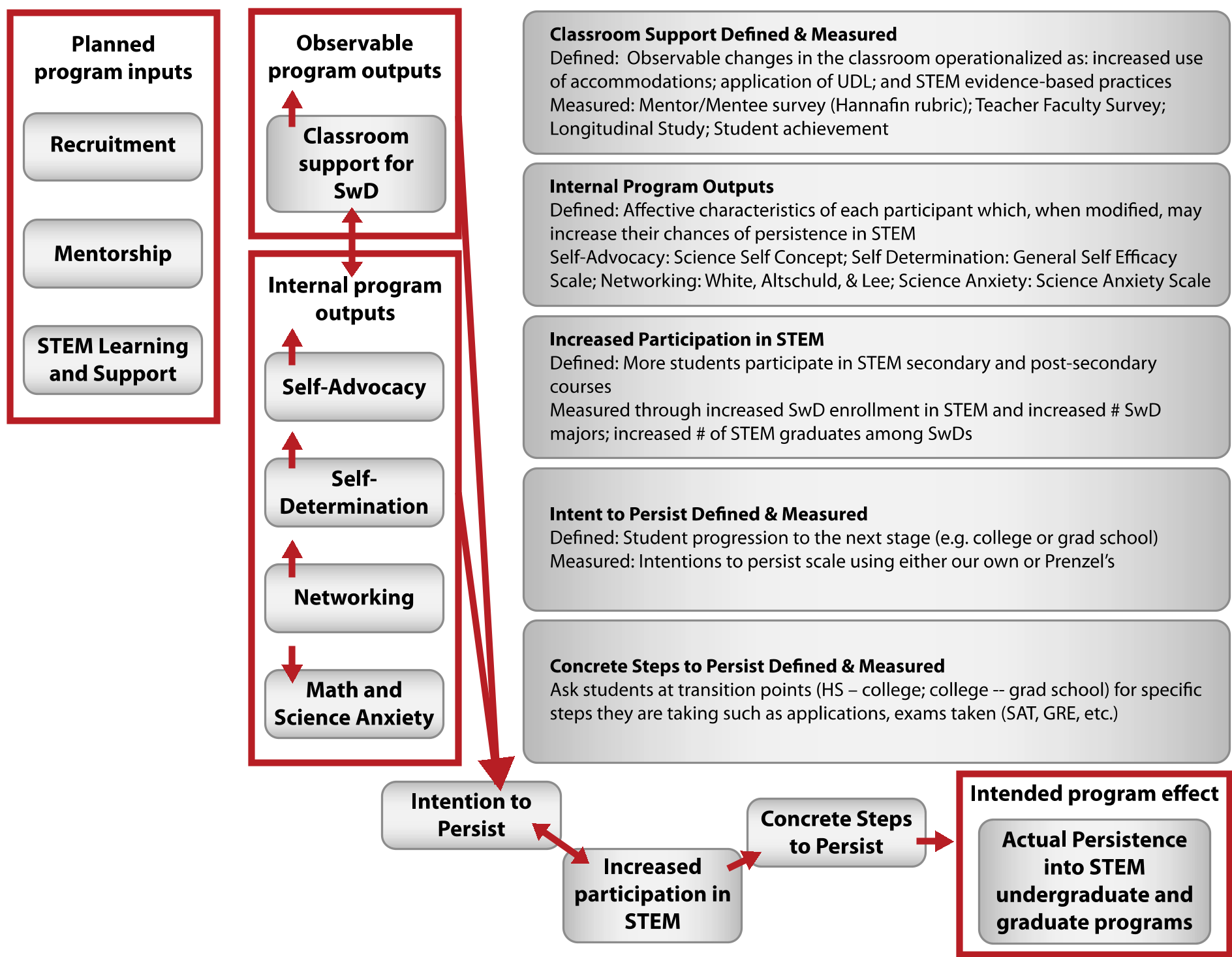 Figure 1: The BreakThru Theory of Change model illustrating the pathway from e-mentoring to STEM graduation.
3. Case-Based Reasoning (CBR)
To help students navigate complex social and academic scenarios, the platform offers video cases. These allow students with literacy barriers to observe and imitate successful strategies through visual and auditory cues rather than manuals.
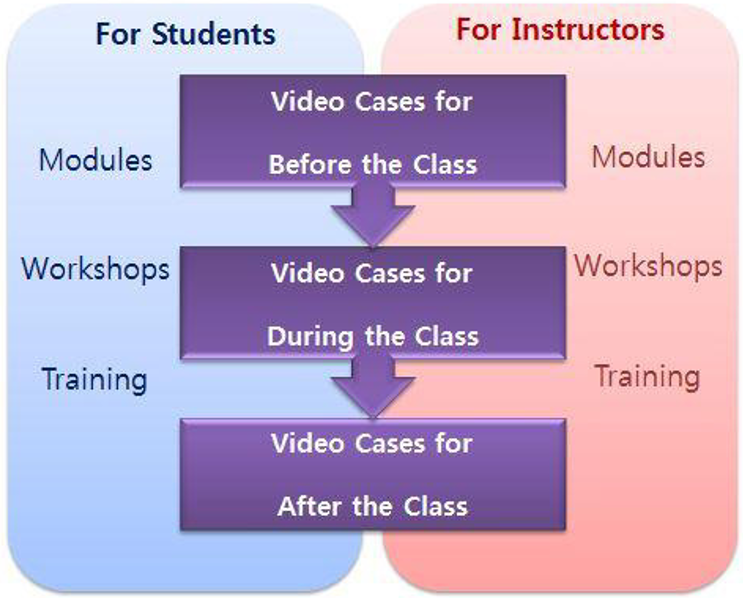 Figure 2: Example of video-based learning modules used to scaffold knowledge.
Key Insights: Why E-Mentoring Works
The paper highlights a critical sociological finding: individuals from non-dominant groups (like those with disabilities) are more likely to seek e-mentoring than face-to-face mentoring.
E-mentoring offers:
- Asynchronicity: Students can process information at their own pace.
- Reduced Social Friction: Communicating through avatars or social media tools (Facebook/Twitter) lowers the stakes of interaction and reduces "math and science anxiety."
- Global Reach: Connects students with specialized STEM mentors regardless of geographic location.
Experimental Framework & Principles
The effectiveness of the BreakThru model is evaluated through a strict UDI rubric. The researchers mapped specific literacy barriers to UDI principles as shown below:
| Principle | Description | Implementation in BreakThru |
|---|---|---|
| Equitable Use | Useful for diverse abilities | Access via multiple social tools (texting, iPADs, blogs). |
| Flexibility | Accommodates preferences | Choice between text-chat, voice-to-text, or video cases. |
| Instructional Climate | Welcoming and inclusive | Use of avatars to create a non-judgmental "Community of Learners." |
Critical Analysis & Future Outlook
While the BreakThru model is a significant step forward, it acknowledges a major limitation: the dependency on third-party platforms. When a platform like Second Life updates its software, it can inadvertently break the custom accessibility tools built by researchers.
The Takeaway: The future of inclusive education isn't just better "Screen Readers." It is the creation of Personalized Virtual Learning Environments (PVLE) where the medium—be it an avatar, a video, or an automated text-to-speech feedback loop—dynamically adjusts to the user's cognitive profile.
As we move toward a more "Metaverse"-driven education system, the BreakThru model serves as a vital blueprint for ensuring that the digital divide doesn't become a permanent barrier for the next generation of STEM innovators.