
COVID-19 on Twitter: Public Health Crisis or Political Battleground?
Social Media During the COVID-19 Pandemic: A Public Health Crisis or a Political Battle?
This study utilizes network analysis to identify influential information sources on Twitter during the early stages of the COVID-19 pandemic in the US. By analyzing 13,492 interactions over a 24-hour period, the researchers identified 11 key influencers across political, news, and personal categories who drove the discourse amidst high public uncertainty.
TL;DR
In the early days of the COVID-19 pandemic, social media became more than a news source; it became a theater for political conflict. A study from the University of Central Florida reveals that the most influential voices on Twitter during this period weren't just health experts, but political actors and commentators who leveraged fear and anger. While news organizations provided updates, politically charged arguments and memes drove the highest levels of engagement, proving that polarization is a fundamental hurdle for crisis communication.
The Core Conflict: Information vs. Ideology
When a global pandemic hits, one might expect the public to flock to scientists and health agencies. However, this research highlights a different reality. The authors argue that the high degree of uncertainty and anxiety during June 2020 led users to seek not just "What is happening?" but "Who is to blame?"
Existing literature on information diffusion suggests a three-part process: sender, receiver, and medium. During COVID-19, this medium (Twitter) became a feedback loop where political identity often dictated the credibility of the information sender.
Methodology: Mapping the Interaction Network
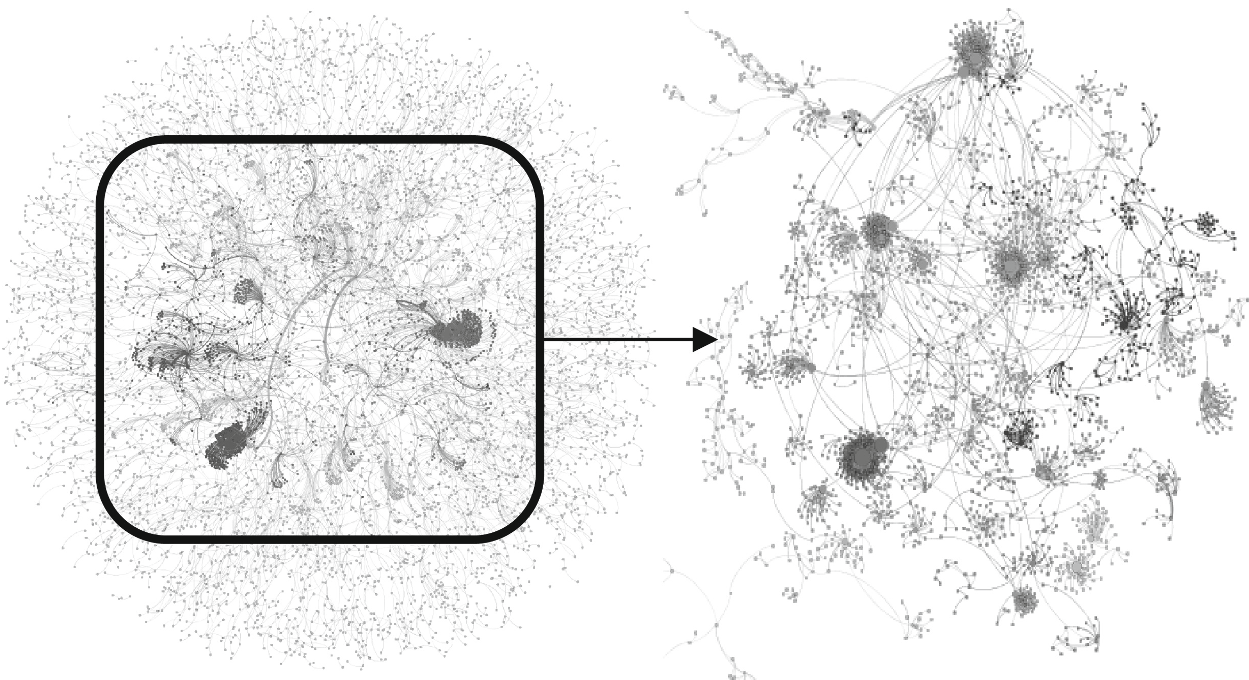
The researchers used Gephi to map an "Information Diffusion Network" based on 13,492 interactions over 24 hours (June 16–17, 2020). By treating users as nodes and interactions (mentions, retweets, quote tweets) as directed edges, they could mathematically identify who was at the "center" of the conversation.
Decoding the Influencers
The study identified 11 major influencers, categorized into three types:
- Political Authorities: High-profile figures like @realDonaldTrump and @SenSanders.
- News Organizations: Outlets like @TheHill and @AP.
- Personal Accounts: A mix of public figures (e.g., actor Ron Perlman) and anonymous individuals.
Key Findings: The Power of Polarization
The most striking discovery was that Political and Personal accounts were the dominant influencers, often overshadowing official health organizations.
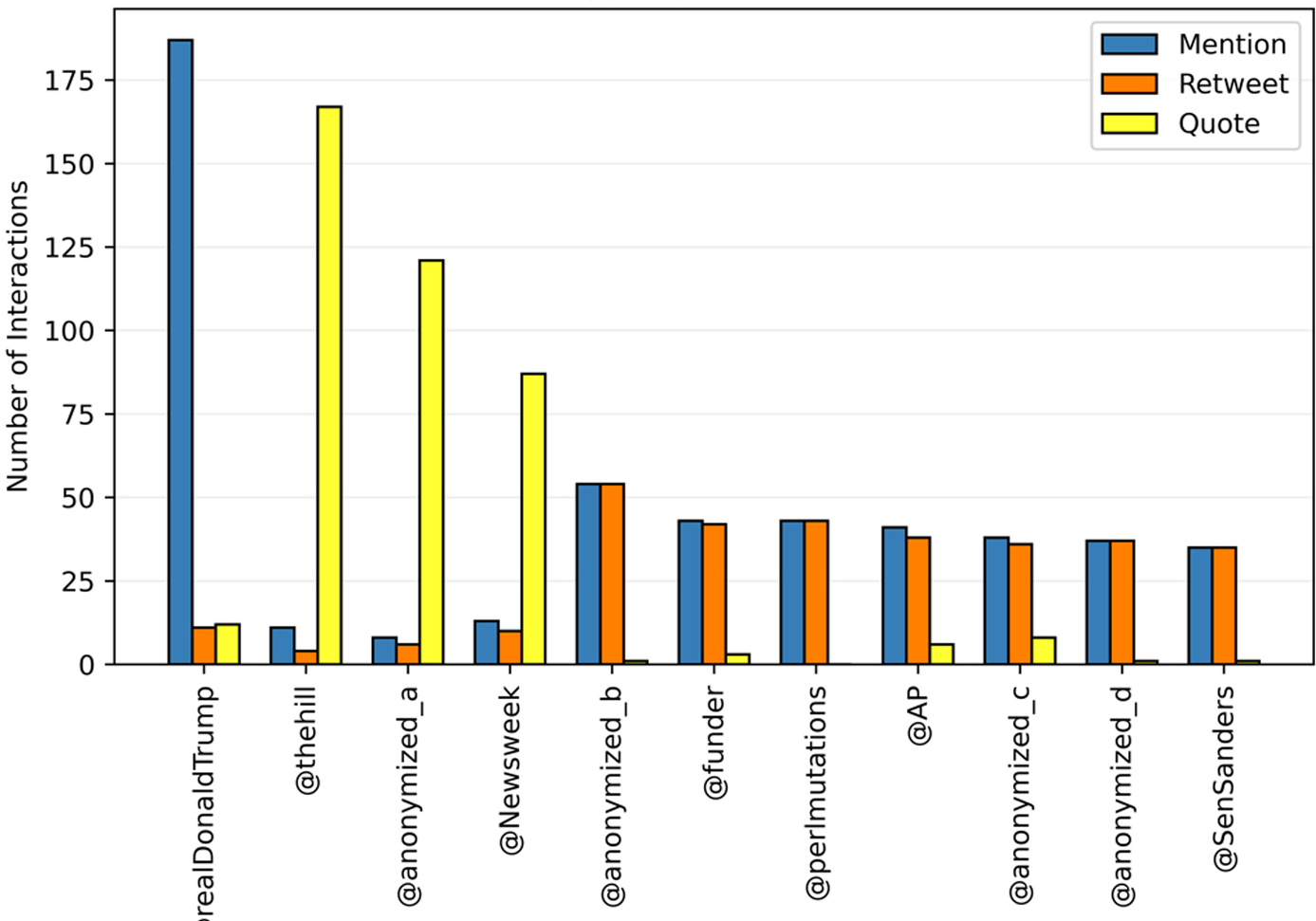
- The Trump Centricity: Donald Trump's account was the most influential node, characterized by a massive volume of "mentions" (direct replies or tags), often reflecting heated debate or controversy rather than simple information sharing.
- The "Micro-Influencer" Anomaly: Interestingly, the study found that a large following isn't always a prerequisite for influence. An anonymized personal account with only 660 followers became a top influencer by using humor and memes to mock government responses, garnering over 8,000 retweets.
- Content Drivers: Updates on case numbers and news were common, but "strongly contested political arguments" received the highest total interactions.
Analysis: Why "Mentions" Matter
The research found a clear distinction in how people interact with different accounts:
- News accounts received a high proportion of Quote Tweets, suggesting users wanted to add their own partisan "spin" or commentary before sharing.
- Political accounts (specifically Trump) were hit with a barrage of Mentions, indicating a desire for direct confrontation or immediate response to specific administrative actions.
Critical Insights & Future Outlook
The study concludes that the US response to COVID-19 on social media was inextricably linked to the 2020 election cycle and partisan divide.
Takeaways for Public Health:
- Credibility is Partisan: Health agencies cannot assume a "neutral" stance will reach all audiences.
- Emotional Resonances: The most viral content used fear, anger, or humor. Public health communication needs to find ways to be engaging without sacrificing accuracy.
- The Suspension of Trump: The authors note that the permanent suspension of Donald Trump's account in 2021 represents a massive shift in how information will flow in future crises.
Limitations: The study is a 24-hour "snapshot" and focuses only on English-language US Twitter. Future work must look at platform-wide changes over months and the impact of the Biden administration's transition on these same networks.
Conclusion
COVID-19 was not just a medical emergency; it was a digital information war. This study serves as a stark reminder that in the age of social media, the scientist's voice is just one of many in a crowded, noisy, and highly polarized room.