
From Social Feeds to Health Insights: Leveraging OSNs for Daily Health Observations
Leveraging online social media for capturing observations of daily living and ecological momentary assessment
This paper proposes a framework to leverage Online Social Networks (OSNs) to capture Observations of Daily Living (ODLs) and perform Ecological Momentary Assessment (EMA). By utilizing third-party applications and cloud-based Big Data processing, the method transforms user-generated content into actionable health insights for Personal Health Records (PHRs).
TL;DR
This research explores the transformative potential of Online Social Networks (OSNs) as tools for continuous health monitoring. By capturing Observations of Daily Living (ODLs) and performing Ecological Momentary Assessment (EMA) through third-party apps, the author proposes a system that integrates our digital footprints directly into Personal Health Records (PHRs), turning "likes" and "check-ins" into clinical data.
Background: Beyond the Clinic Walls
Healthcare is undergoing a paradigm shift towards patient-centricity. However, a major hurdle remains: clinicians only see patients during brief, infrequent visits. What happens in the "natural environment"—what we eat, how we sleep, and who we interact with—is often lost to memory or omitted.
Traditional Ecological Momentary Assessment (EMA)—the repeated sampling of behavior in real-time—is powerful but often burdensome for the patient. The author's insight is elegant: why ask patients to keep a new diary when they already document their lives on social media?
Methodology: The ODL-Cloud Architecture
The paper outlines a robust architecture for gathering "behavioral traces" without intruding on the user's routine. The process follows a specific pipeline:
- Consent & Authentication: Users grant permission to a third-party ODL app within their social network (Facebook, Google+, etc.).
- Data Extraction: The app fetches content (posts, photos) and metadata (timestamps, geo-locations).
- Cloud Aggregation: Data from multiple OSNs are sent to a centralized "ODL Cloud."
- Big Data Processing: Unstructured data (e.g., a photo of a meal) is processed into structured ODLs (e.g., "High-calorie intake at 8 PM").
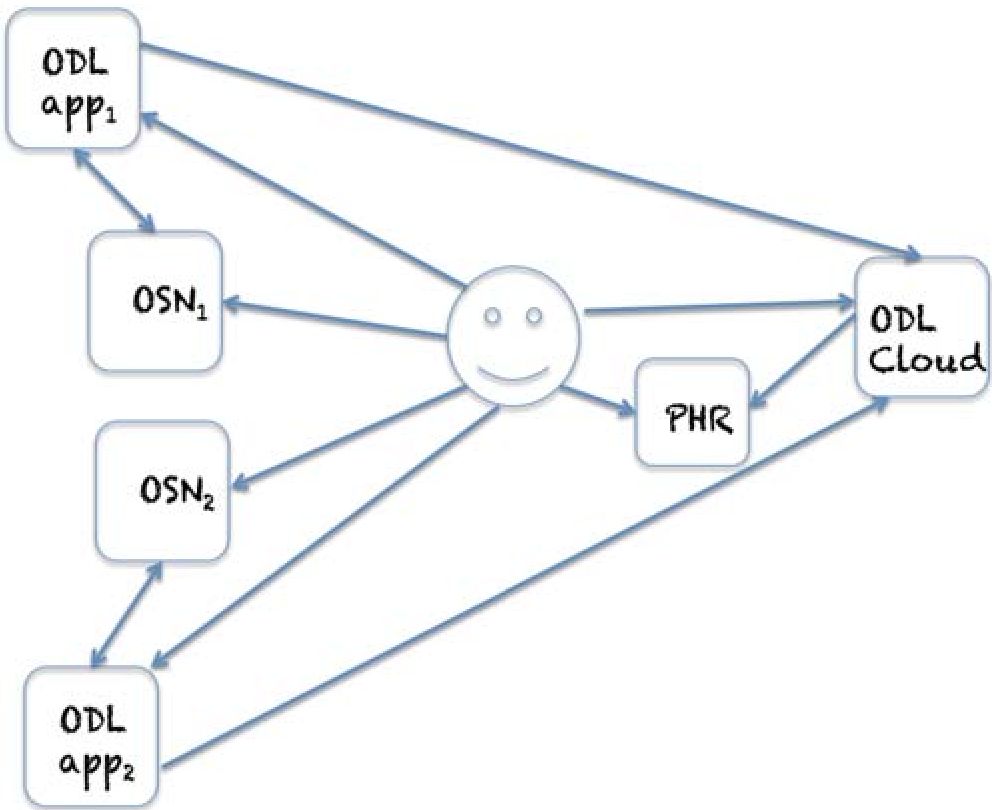 Figure 1: Proposed architecture for capturing Observations of Daily Living via OSN interaction.
Turning Metadata into Medicine
How does a tweet become a health metric? The paper provides a clear mapping of OSN activity to health observations:
- Mood & Mental Health: Gauged through status messages, microblogs, and wall posts.
- Sleep Patterns: Inferred from log-in and log-out timestamps (e.g., late-night activity suggesting insomnia).
- Physical Activity: Captured via check-ins at gyms or photos/videos of exercise.
- Obesity Monitoring: Analyzing eating venue atmospheres and durations via check-in/check-out data.
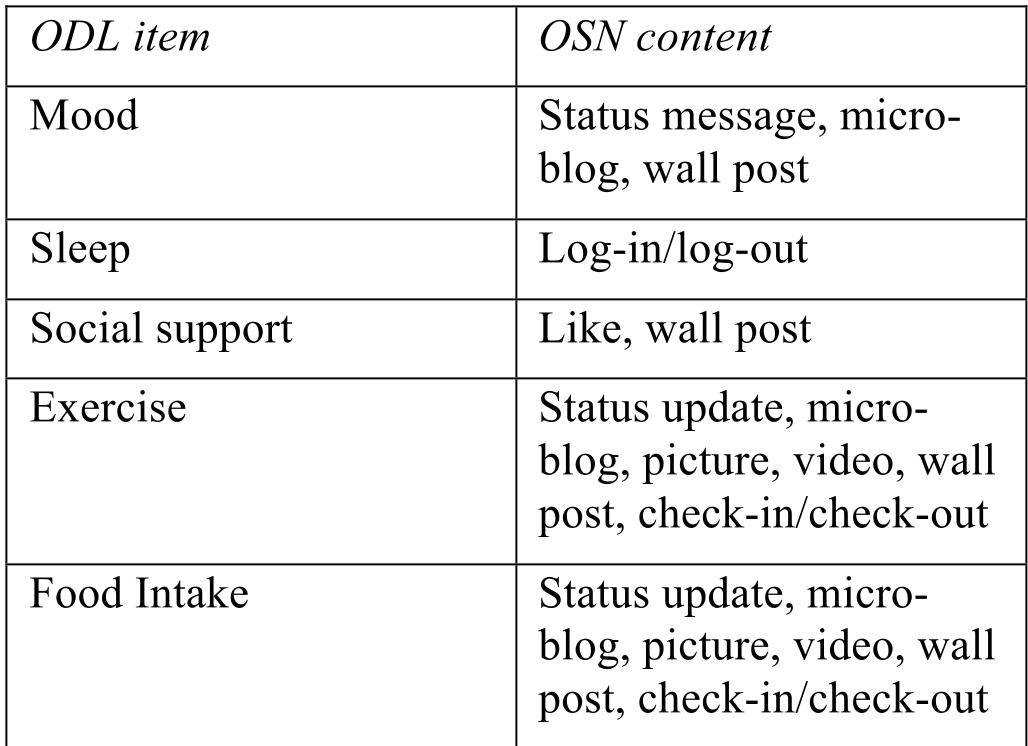 Table 1: Mapping daily observations to specific social media content types.
Challenges: The Privacy Paradox
Despite the potential, two major "elephants in the room" exist: Participation and Privacy.
- Introversion vs. Extroversion: Not everyone shares their feelings online. The data is naturally biased toward active social media users.
- Security Concerns: Users may be reluctant to share ODLs with clinicians for fear of judgment (e.g., an obese patient hiding a fast-food check-in).
- The "Shadow" Data: Posts often include others (friends/family) who haven't consented to their data being used for health assessments.
Critical Insight & Conclusion
The author concludes that while OSNs should not be the primary source of clinical data, they represent a high-frequency, low-effort supplement to traditional care. The true value lies in the unstructured metadata—the created_at timestamps and place tags—which provide an objective timeline of a patient's life that manual reporting simply cannot match.
As we move deeper into the era of Big Data, this work serves as an early blueprint for a future where our digital "Timeline" is as vital to our doctor as our blood pressure reading.
Takeaways
- Inductive Bias: Social media is a proxy for the human "natural environment."
- Future Work: Integration with wearable sensors (IoT) and AI-driven sentiment analysis will likely be the next step for this ODL-Cloud framework.