
Beyond the Feed: How Social Media Rewired Emergency Collaboration in the Shanghai Metro Crisis
Collaboration with social media in emergency response: a case study in China
This paper presents a case study on the 2011 Shanghai Metro collision to evaluate the role of social media (specifically microblogging/Sina Weibo) in emergency response. It identifies how a multi-stakeholder ecosystem comprising government agencies, SOEs, NGOs, and citizens achieved SOTA-level collaborative efficiency during a crisis.
TL;DR
In the wake of the 2011 Shanghai Metro collision, social media (Sina Weibo) did more than just broadcast news—it functioned as a decentralized nervous system for crisis management. This study reveals how microblogging bypassed traditional bureaucratic bottlenecks, allowing State-Owned Enterprises (SOEs), government bureaus, and NGOs to collaborate voluntarily and effectively, ultimately redefining the "citizen-government" relationship through transparency and real-time interaction.
Background: The Limits of Bureaucracy
In traditional administrative systems, especially within the Chinese context, emergency response is typically characterized by a rigid, top-down hierarchy. Information silos often prevent real-time coordination between transport authorities, hospitals, and the public. The 2011 Shanghai Metro collision served as a "black swan" event that tested whether social media could provide the Inductive Bias needed for a more agile, horizontal collaboration model.
Methodology: Mapping the Digital Response
The researcher analyzed the digital footprint of the crisis through 301 core microblogging posts and interviews. The study categorized the actors into a matrix of institutional and individual accounts, tracking their behavior across three dimensions: Who collaborated, What actions they took, and When they engaged.
The Actor Matrix
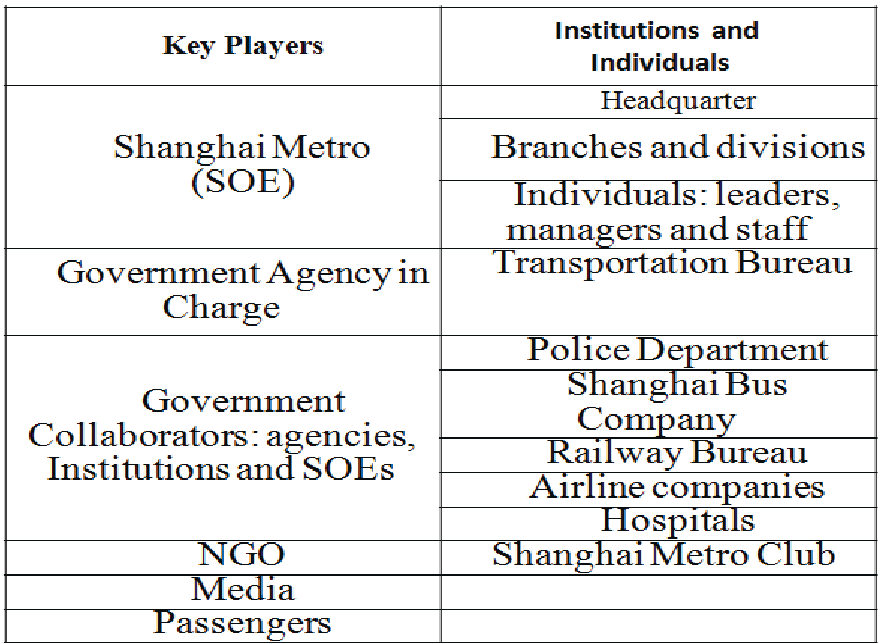
As shown in the table below, the response wasn't just a government effort; it was a multi-layered ecosystem involving the Transportation Bureau, the Metro company, police, hospitals, and even independent NGOs like the "Shanghai Metro Club."
Core Insight: The "Attitude" Alpha
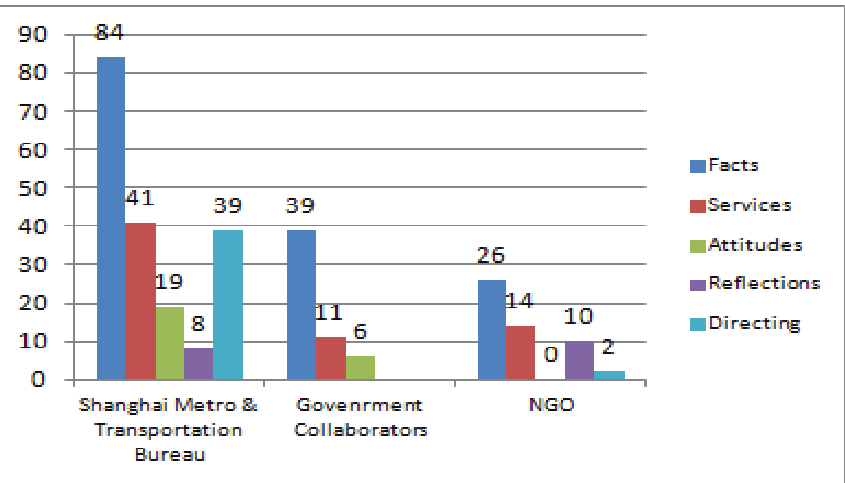
One of the most profound findings of this research is the disconnect between volume and impact. While most posts (over 50%) focused on reporting facts or providing service redirections, the most influential piece of content was a single post expressing an apology and a commitment to compensation.
- Fact Reporting: High frequency, essential for situational awareness.
- Service Delivery: Crucial for operationalizing the response (e.g., redirecting passengers).
- Expressing Attitude: Low frequency, but highest viral impact (20,000+ shares).
Temporal Dynamics: From Crisis to Reflection
Managing a crisis is a race against time. The study identifies a clear shift in social media usage:
- During Crisis: Focus was strictly on Information and Service (reporting facts and evacuating passengers). This period saw the highest public engagement and forwarding rates.
- Post-Crisis: The narrative shifted toward Reflection and Attention Directing (investigating causes and highlighting "heroic" stories of rescuers).
Critical Analysis: Voluntary vs. Planned Collaboration
The most striking takeaway is that this collaboration emerged voluntarily. In a system known for top-down coordination, social media allowed agencies to bypass upper-level government approval to synchronize their efforts in real-time. This "bottom-up" emergence suggests that social media provides a boundary-spanning platform that can temporarily suspend bureaucratic friction.
Limitations & Future Outlook
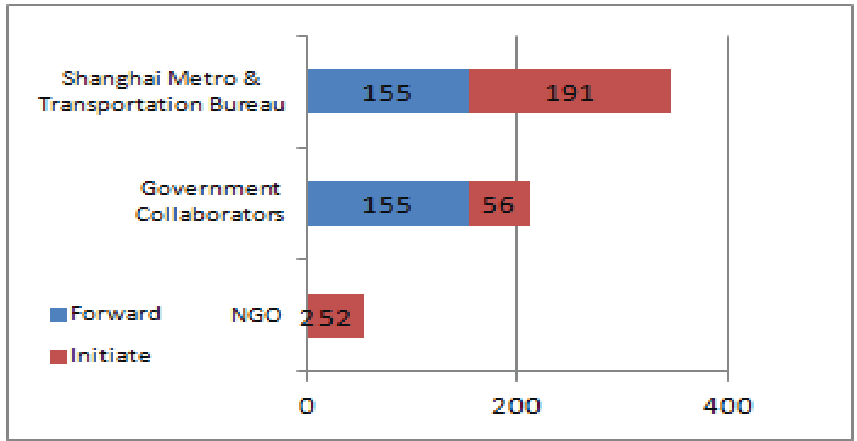
While the study highlights a "successful" collaboration, it also notes that NGOs maintained a strictly independent role, rarely forwarding government posts. This suggests that while boundaries were crossed, a "trust gap" still exists. Future research must look at how automated AI tools and predictive analytics might further streamline this "voluntary" collaboration before the next crisis hits.
Conclusion
The Shanghai Metro case study proves that social media is not just a "coolness factor" for government agencies; it is a critical infrastructure for collective intelligence. By crossing vertical (hierarchy) and horizontal (agency-to-agency) boundaries, microblogging transformed a tragic collision into a blueprint for modern, collaborative governance.