
Social Media: The "Silent" Source in Technology Scouting? An Empirical Reality Check
The Importance of Social Media as Source of Information in the Technology Identification in Dependence of External and Internal Factors
This study investigates the role of Social Media as a strategic source for technology identification within the "Open Innovation" paradigm, utilizing a quantitative survey of 178 technology-driven companies. Despite the hype surrounding digital transformation, the research finds that social media currently ranks at the bottom of the hierarchy of information sources, significantly trailing traditional channels like customers and competitors.
TL;DR
In the era of Open Innovation, one might assume social media is a goldmine for spotting the "Next Big Thing." However, this study reveals a surprising reality: technology-driven companies rank social media at the very bottom of their information hierarchy. Regardless of a firm's size or R&D budget, social media is currently viewed as a secondary, low-credibility channel compared to traditional heavyweights like customer feedback and patent analysis.
The "Open Innovation" Paradox
Since the shift toward Open Innovation, companies have aggressively expanded their "organizational radar" to capture external knowledge. Silicon Valley narratives often suggest that digital platforms are the front lines of this movement. The motivation for this study was to test a specific intuition: If technology changes fast (Technology Turbulence) and social media provides real-time data, shouldn't high-tech firms value social media more?
The author, Christian W. Scheiner, posits that while social media—encompassing blogs, wikis, and social networking sites—provides unprecedented access, its utility in professional Technology Identification remained an unproven assumption.
Methodology: Testing the Internal and External Drivers
The study analyzed 178 responses from sectors like mechanical engineering, automotive, and IT. To ensure a robust analysis, the author looked at several variables that should theoretically increase a firm's reliance on social media:
- Technology Turbulence: The "flux" of the industry.
- Scanning Alertness: How vigilant the company is.
- R&D Intensity: The percentage of revenue spent on research.
- Company Size: Whether SMEs use it as a "low-cost" alternative to expensive market research.
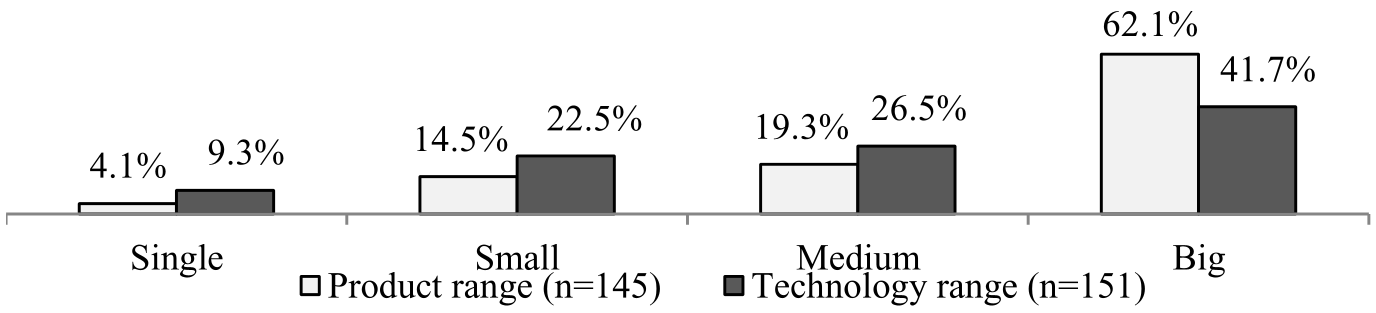 Figure 1: Distinguishing characteristics of the surveyed companies, showing a focus on high turbulence and high alertness environments.
The Findings: A Hierarchy of Trust
The results provide a sobering look at the hierarchy of information. Customers, Competitors, and Market Research remain the "Big Three."
Key highlights from the data:
- Bottom-Tier Status: Social Media (Score: 2.9) sits in the "unimportant" zone alongside trend scouts and consulting agencies.
- The Kruskal-Wallis Verdict: There was no statistically significant difference in how social media was valued, regardless of the company's size, revenue, or technological range.
- Universal Skepticism: Even companies with "Very High Alertness" did not view social media as more important than those with "Low Alertness."
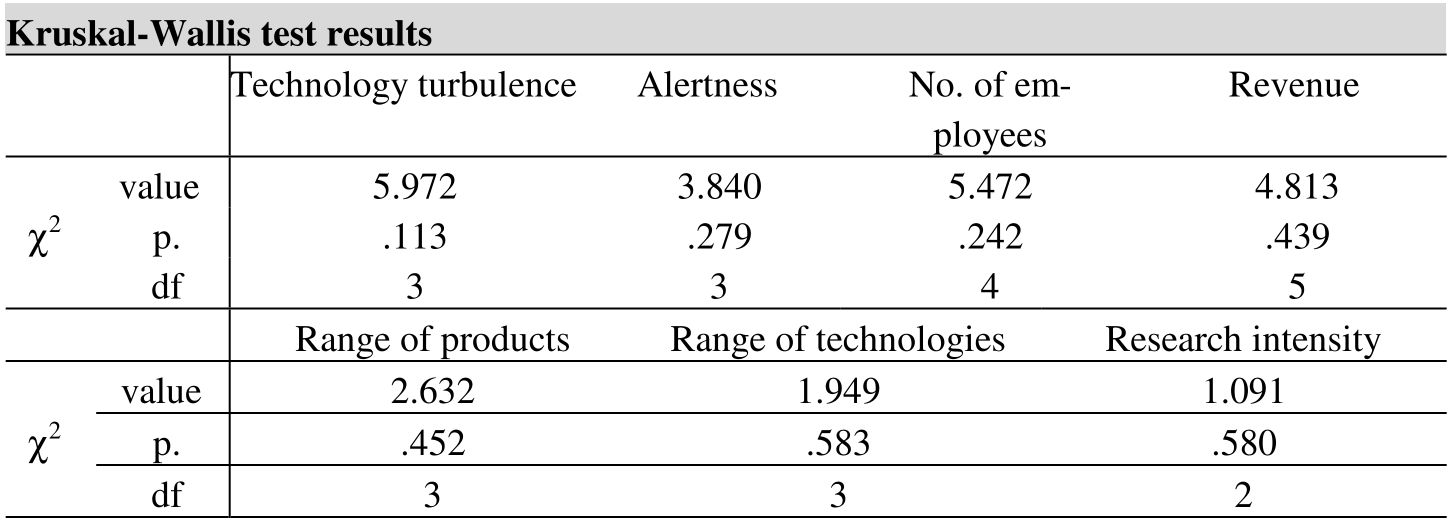 Table 1: Statistical analysis proving that neither internal nor external factors significantly change the low valuation of social media.
Why is Social Media Failing the "Tech Scout" Test?
The author suggests three powerful insights into why these platforms haven't conquered the tech world yet:
1. The Maturity Gap
Social media is still in an "evolutionary" phase for professional use. Unlike patents or trade journals, which have structured data, social media is often fragmented and lacks a "sophisticated level" of technical detail.
2. The Credibility Fog
In the fog of innovation, accuracy is everything. When information is complex, the perceived low credibility of social platforms acts as a barrier. The "uncertainty of complex information" makes practitioners hesitant to base multi-million dollar R&D decisions on a blog post or a tweet.
3. Organizational Inertia
Search routines are hard to change. Companies have optimized their processes for "absorbing" knowledge from universities and suppliers over decades. Exploring new sources requires breaking these established routines—a feat many organizations are not yet ready to achieve.
Final Takeaway: A Call for Better Scouting Tools
The study doesn't say social media is useless; it says it is currently underutilized and undervalued. For the tech industry, the lesson is clear: current social media feeds are too "noisy" for serious technology identification.
Future Outlook: For social media to become a primary source, we need better filtering tools and better "integration routines." Until then, the most valuable insights for your next product will likely still come from talking to your customers or watching your competitors—not from scrolling through your social feed.