
The Digital Shift: How Social Media is Redefining Leadership and Culture in Romanian SMEs
Social Media, Leadership and Organizational Culture: The Case of Romanian Leaders
This paper explores the intersection of social media usage, leadership styles, and organizational culture within 45 Romanian SMEs during the COVID-19 pandemic. By applying Blake and Mouton’s Managerial Grid and Goffee and Jones’s Social Architecture matrix, the study identifies a shift toward team-oriented leadership and communal organizational cultures facilitated by digital platforms.
TL;DR
A study of 45 Romanian SME leaders reveals a significant transformation in the corporate landscape: the pandemic has forced a shift from "Mercenary" cultures to "Communal" ones. By leveraging social media—specifically Facebook and WhatsApp—leaders are maintaining high levels of both task efficiency (Solidarity) and human connection (Sociability), effectively adopting a "Team Leadership" style to survive the VUCA environment.
Contextual Positioning
This research moves beyond traditional management theory by treating social media not just as a communication channel, but as a primary mediator of Organizational Culture. It situates itself as a localized empirical validation of the "Humanistic Management" trend accelerated by global crises.
Problem & Motivation: The Disruption of Presence
The core challenge identified is the erosion of traditional hierarchy. Historically, leaders were the gatekeepers of information. Today, "Followership" is a choice driven by transparency and engagement. In the Romanian context, SMEs have traditionally leaned toward a Mercenary culture—high on results, low on friendship. The authors argue that the pandemic created a "forced progress" where leaders had to find digital ways to restore the social fabric of their companies or risk total fragmentation.
Methodology: Mapping the Social Architecture
The researchers utilize two classic lenses to evaluate modern digital behavior:
- Blake and Mouton’s Managerial Grid: Measuring "Concern for People" vs. "Concern for Performance."
- Goffee and Jones’s Matrix: Assessing "Sociability" (friendship/empathy) vs. "Solidarity" (shared objectives/competition).

The study’s methodology emphasized that in SMEs, the "family-like" atmosphere (high informality) allows know-how to flow faster through informal networks than through formal e-mails.
Results: The Reign of the Communal Culture
The data suggests a surprising homogeneity in response to the COVID-19 crisis. Romanian leaders are increasingly becoming "Team Leaders" (9,9 on the grid).
Key Findings:
- Decision Participation: 91% of leaders encourage team participation in decision-making.
- Platform Dominance: Despite the professional nature of the work, Facebook (82%) and WhatsApp (69%) are the tools of choice for professional interaction, outperforming LinkedIn and traditional e-mail.
- Culture Shift: There is a distinct movement toward a Communal Organizational Culture, where risks and rewards are shared, and employees identify deeply with the organization’s mission.
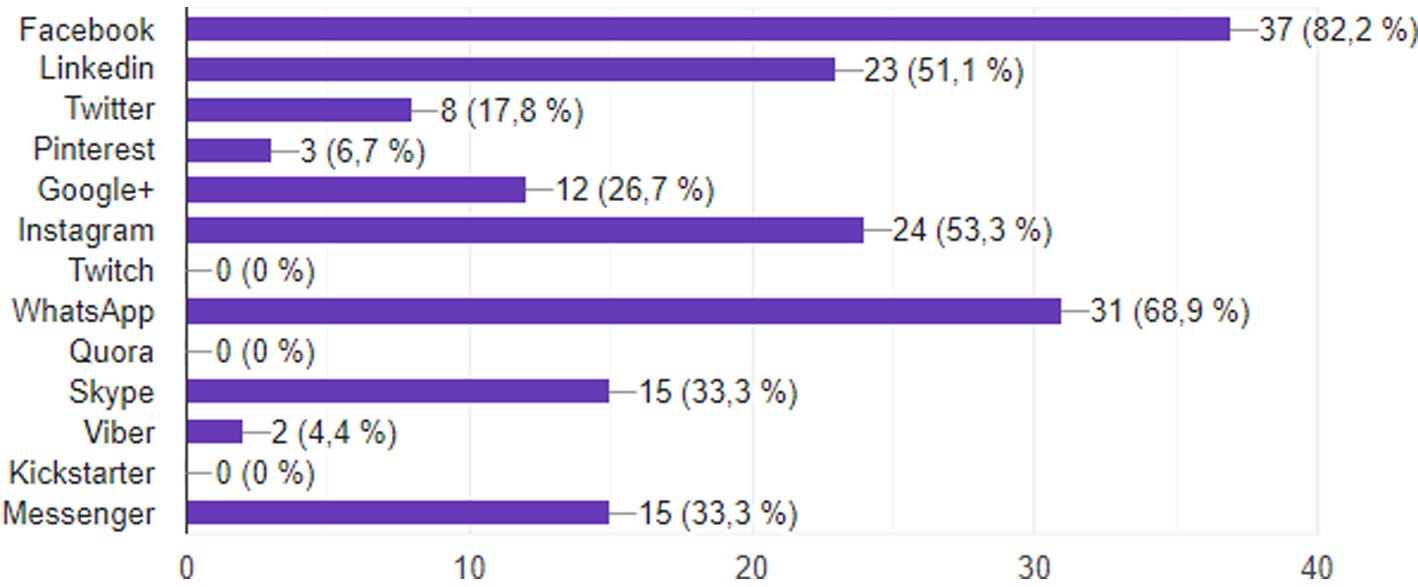
Table Summary of Leadership Values: The survey shows that while leaders are slightly more task-oriented (Solidarity), they have significantly increased their "Sociability" efforts to prevent team burnout during the pandemic.
Critical Insight: The "Must-Have" of Social Media Leadership
The most profound takeaway is the "Virtualization of Management." The study notes that leaders who engage on social media are perceived as more effective and trustworthy. Social media acts as the digital "water cooler"—a place where sociability is maintained through WhatsApp groups and Facebook interactions when face-to-face coffee meetings are impossible.
Limitations and Future Outlook
While the sample size (45 SMEs) is small, the study provides a critical snapshot of a transition economy under pressure. The authors predict that the "Humanistic Management" focus—treating employees as complex individuals rather than just task-executors—will be the defining characteristic of successful leadership in the coming years.
Conclusion
The Romanian case demonstrates that Communal Culture and Team Leadership are no longer just "ideal states"—they are survival mechanisms. For the modern leader, mastering social media is no longer about personal branding; it is about building the digital architecture of the company’s heart.