
Uniqlo Indonesia: How Social Media Marketing Converts Awareness into Sales
The Impact of Social Media Marketing on Brand Awareness, Engagement, and Purchase Intention
This study investigates the impact of Social Media Marketing (SMM) on consumer behavior for fashion titan Uniqlo in Indonesia. Using Structural Equation Modelling (SEM-PLS), the researchers establish that SMM significantly drives Purchase Intention through the critical mediating roles of Brand Awareness and Consumer Brand Engagement.
TL;DR
Is a like worth a sale? This study decodes the digital chemistry of Uniqlo's marketing in Indonesia. It reveals that while Social Media Marketing (SMM) is a powerhouse for building Brand Awareness, the real engine behind Purchase Intention is Consumer Brand Engagement—the emotional and interactive bond a user forms with a brand window.
Background & Positioning
In the hyper-competitive fashion retail landscape of Indonesia, "digital presence" is a given. However, the authors identify a "participation paradox": Uniqlo is highly visible, yet engagement remains selective. This research acts as a diagnostic tool, moving beyond vanity metrics to understand the psychological path from seeing a post to clicking "buy."
The Engagement Gap: Problem & Motivation
The researchers identified a troubling trend: while 56.7% of surveyed consumers remembered Uniqlo, only 10% were willing to participate in brand activities, and only 30% intended to buy. This suggests a breakdown in the marketing funnel where Information Delivery and Emotional Resonance are failing to bridge the gap between "knowing the brand" and "wanting the product."
Methodology: The SEM-PLS Framework
To solve this, the study utilized Structural Equation Modelling (SEM-PLS). This allows researchers to see not just if SMM works, but through which channels it exerts its influence.
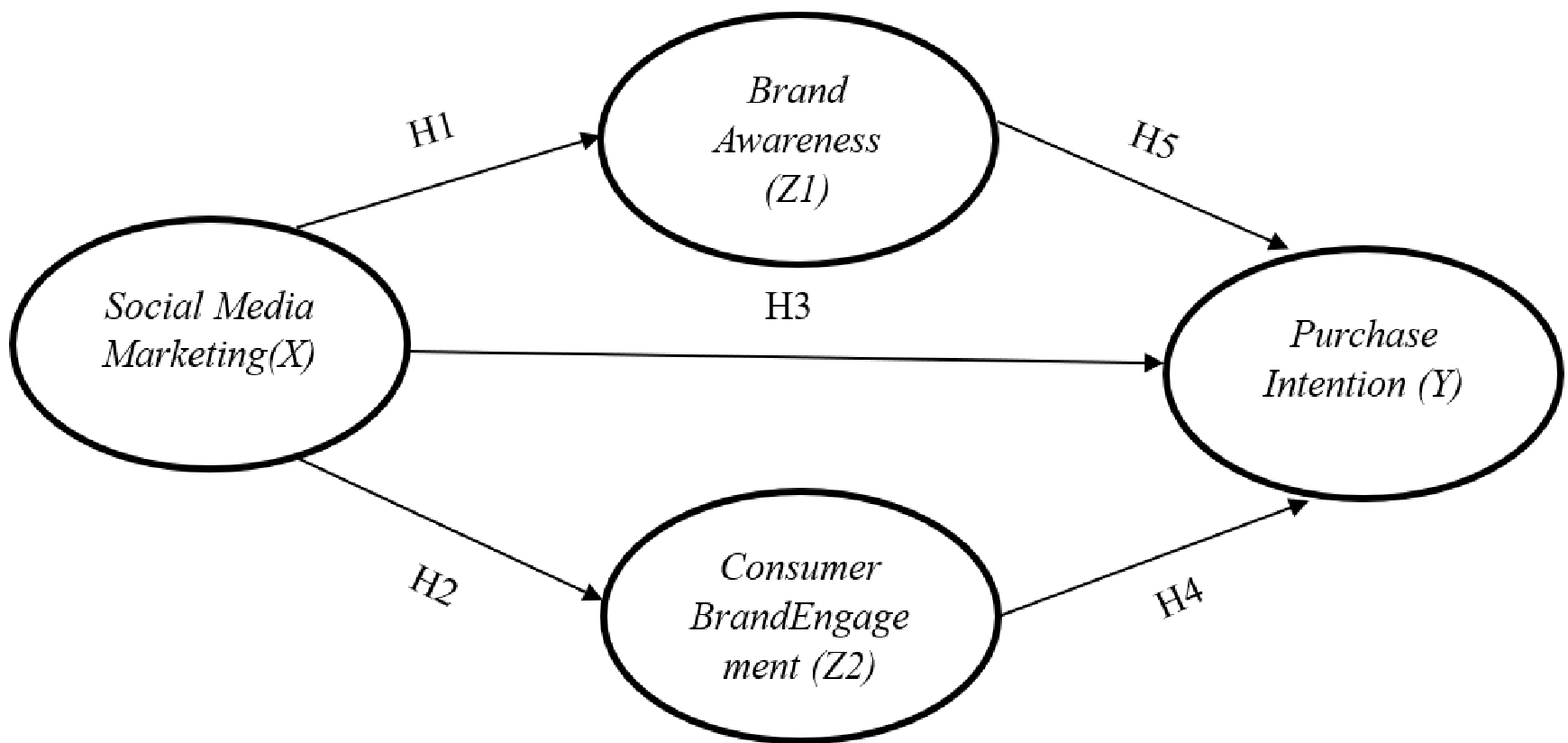
The Research Model
The study treats Social Media Marketing as a trigger that feeds into two psychological states:
- Brand Awareness: The cognitive ability to recognize and recall the brand.
- Consumer Brand Engagement (CBE): The emotional and behavioral involvement (likes, shares, comments).
Cracking the Code: Key Results
The findings provide a clear hierarchy of impact for marketing managers:
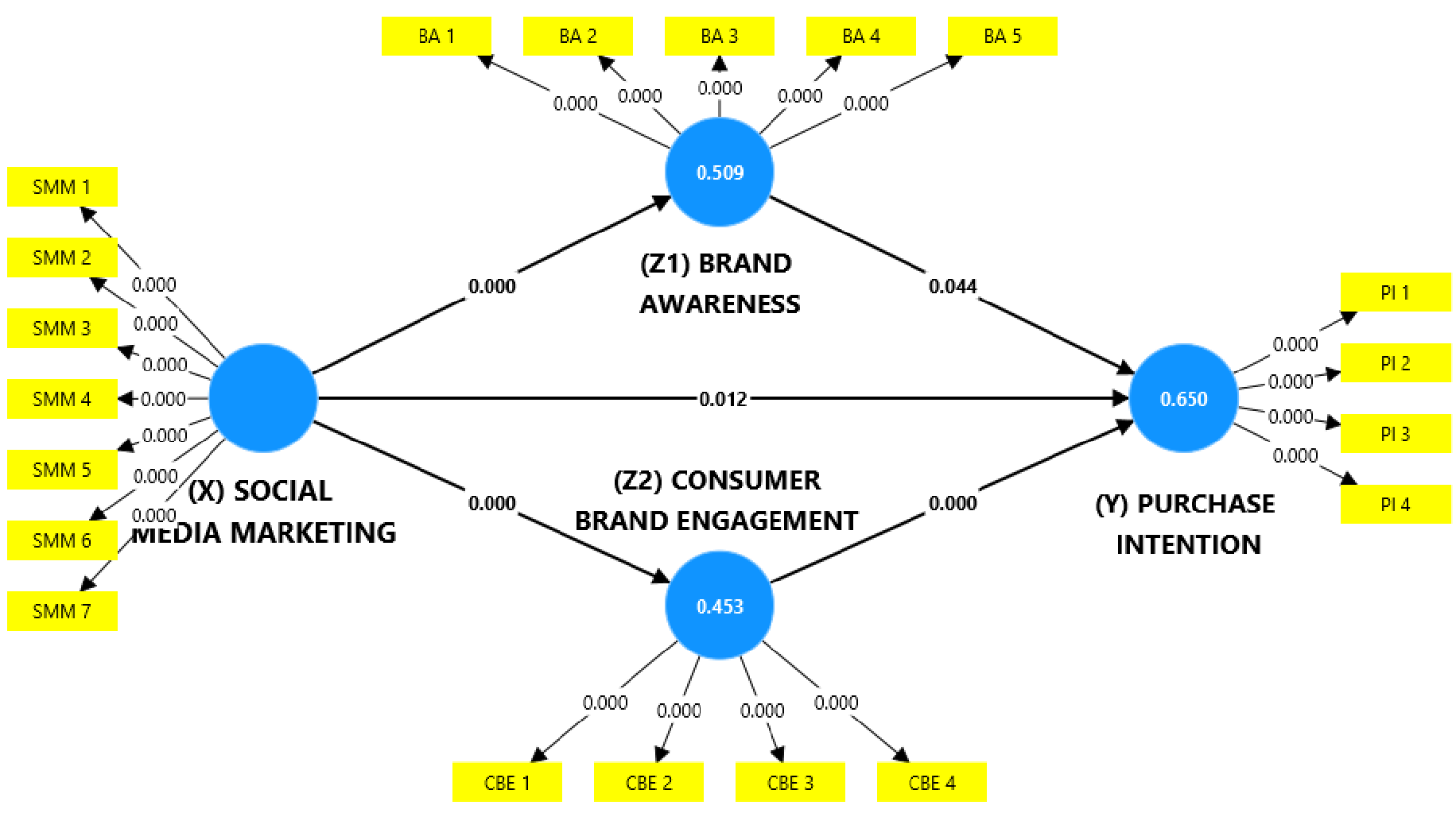
- The Power of Awareness: SMM is incredibly effective at making people aware of Uniqlo (). If you post, they will see you.
- The Engagement Engine: SMM drives engagement (). However, Engagement is much more predictive of Purchase Intention () than simple Awareness ().
- Total Explanatory Power: Combined, these factors explain 65% of why a consumer decides to buy, marking the model as highly robust.
Path Coefficient Analysis
The "Bootstrapping" results validate that every hypothesized path in the model is statistically significant, proving that SMM works both directly and as an indirect catalyst.
Professional Insight: Why This Matters
The core takeaway is the dominance of Engagement over Awareness. In the Indonesian market, consumers are savvy; they recognize global logos easily. However, a purchase is an emotional and social act. The study suggests that SMM efforts that focus purely on "reach" (Awareness) are less efficient than those focusing on "interactivity" (Engagement).
Practical Recommendations for Brands:
- Prioritize Dialogue: Moving from "broadcasting" to "narrowcasting" by using interactive stories or community-driven content.
- Emotional Storytelling: Using social causes (like Uniqlo's clothing donation drives) to trigger the emotional component of CBE.
- Consistent Information: Addressing the 43.3% dissatisfaction rate by ensuring social media isn't just "pretty" but also "informative" regarding product utility and availability.
Conclusion & Limitations
While the study provides a robust roadmap for fashion retailers, it is concentrated primarily in West Java (74% of respondents). Future research should explore if these digital behaviors hold true in less urbanized regions of Indonesia or across different product categories like luxury goods versus fast fashion.
Final takeaway: In the digital age, a brand's value is no longer just its logo, but the quality of the conversation it has with its followers.