
Beyond the Official Profile: Why University Social Media Marketing in Peru is Failing Students
Impact of Social Media Marketing on University Students - Peru
This study investigates the impact of Social Media Marketing (SMM/MMS) on university students in Peru using a mixed-methods approach. By integrating quantitative surveys and qualitative focus groups, the research identifies a deficient level of institutional marketing engagement despite high student connectivity.
TL;DR
A mixed-methods study of Peruvian university students reveals a stark paradox: while students are "permanently connected" via Facebook, Instagram, and WhatsApp, the institutional Social Media Marketing (MMS) is ranked as deficient by over 50% of the population. The research highlights a critical need for universities to move beyond static postings toward real-time, emotional, and interactive engagement.
Academic Positioning: This work serves as a regional diagnostic study (SOTA in the context of Peruvian Higher Education) that utilizes concurrent triangulation to bridge the gap between quantitative metrics and human behavior.
Problem & Motivation: The "Static Profile" Trap
Most universities treat social media as a secondary notice board rather than a dynamic ecosystem. The authors argue that while students have evolved into "content publishers" (as per Solis's democratization theory), academic institutions remain stuck as "silent readers."
The existing pain point is clear: Engagement Disconnect. Students rely on their online circles for advice and socialization, yet universities fail to participate in these circles effectively, leading to:
- Wasted visibility (posts that don't convert to interaction).
- A loss of loyalty (failure to retain students through emotional branding).
- Ineffective communication of events and administrative doubts.
Methodology: The Mixed-Model Approach
The study utilizes the Concurrent Triangulation Design (DITRIAC), allowing researchers to collect and analyze quantitative and qualitative data simultaneously for a holistic view.
1. The Quantitative Lens
Using a sample of 110 students, the researchers evaluated MMS across three dimensions based on Jadhav et al. (2012):
- Visibility: Brand recognition via publication volume.
- Interaction: Truthful, transparent dialogue.
- Loyalty: Transitioning students from one-time users to brand advocates.
2. The Qualitative Lens: The Gesell Chamber Focus Group
18 volunteers were observed behind polarized glass to record non-verbal cues and candid perceptions. This provided "interpretative richness" that numbers alone could not capture.
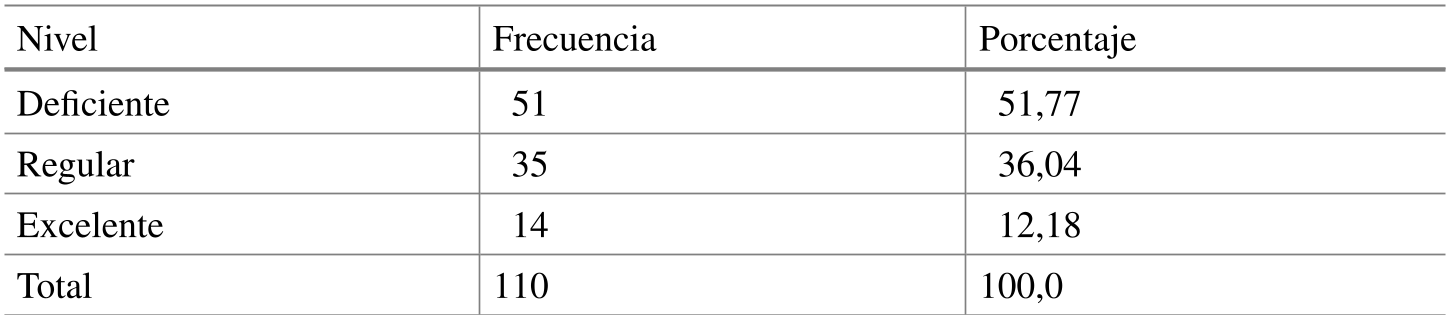 Table 1: Quantitative results showing the "Deficient" (Deficiente) status of current MMS efforts.
Key Results & Insights
The "Deficient" Verdict
The data suggests a crisis in institutional marketing:
- 51.77% of students classified the university's MMS as Deficient.
- Only 12.18% consider it "Excellent."
- Reliability: A Cronbach’s Alpha of 0.974 indicates the survey instrument was highly robust.
Behavioral Shifts
The focus groups revealed fascinating socio-cultural adaptations:
- Fashion & Jargon: Students use social media to adopt international trends (e.g., memes and slang from Mexico) and define their dressing styles.
- The Emoji Displacement: A concerning trend where face-to-face communication is being replaced by "virtual icons" and gestures to convey emotions, even within the home.
- Connectivity: Facebook and WhatsApp remain the dominant giants for university-related coordination and information sharing.
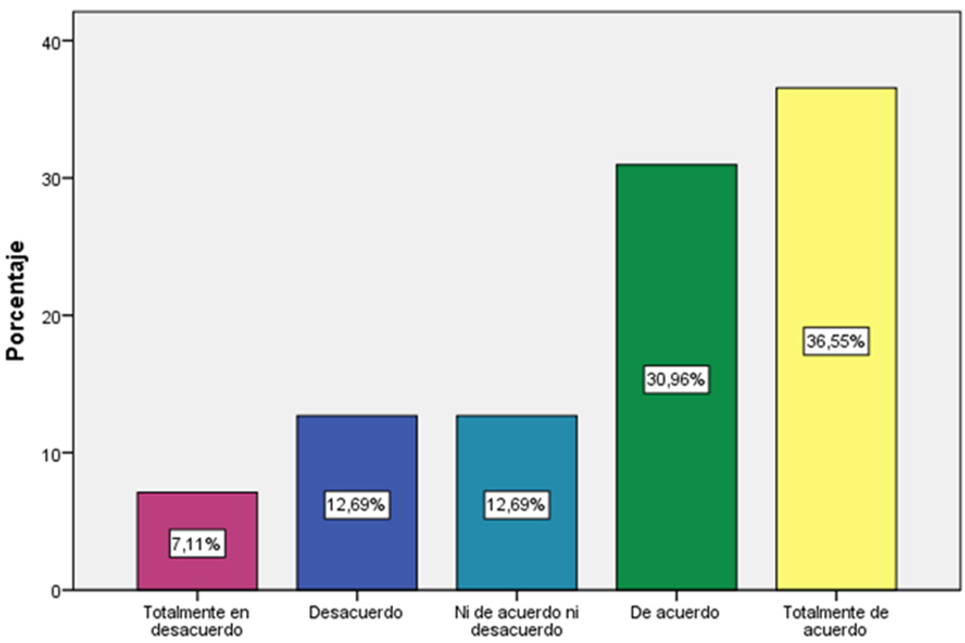 Fig 3: Evidence showing high frequency of social media use for peer communication and group work.
Critical Analysis & Conclusion
Takeaway
The impact of Social Media Marketing is absolute, but the quality of that impact is currently lacking. Universities must transition from being "messengers" to "value exchangers." It is not enough to have a Twitter or Facebook account; these profiles must be managed by professionals who understand real-time communication and sentiment extraction.
Limitations & Future Work
The study focuses primarily on Facebook, which—while dominant—is seeing a shift in younger demographics toward TikTok and video-first platforms. Future research should explore "Sentiment Extraction Tools" (as discussed by Kübler, 2020) to automate the understanding of student frustrations on an even larger scale.
Final Thought: If a university is only present on screen but absent in the dialogue, it has effectively lost its connection to the modern student.