
Social Media for the Unemployed: Support System or Virtual Trap?
The Supportive Role of Social Media Networks for those Out of Work
The study examines the inclusionary potential of social media for unemployed individuals, using a Structural Equation Model (SEM) based on data from 809 Facebook users. It identifies a "double-edged sword" effect where social media involvement (INVSM) only reduces social exclusion when virtual contacts are successfully transformed into real-life social activities.
TL;DR
Unemployment isn't just a loss of income; it’s a loss of social fabric. This research investigates whether Facebook helps the unemployed stay connected or pushes them further into isolation. The findings reveal a critical nuance: social media is only beneficial if it acts as a "bridge" to real-world interaction. Without that bridge, it can actually increase feelings of being left behind.
Contextualizing Social Inclusion in a Digital Age
In the hierarchy of social psychology, the loss of a job is a "life breaking point." It severs the Inductive Bias of daily routine and colleague interaction, often leading to a downward spiral of depression and "perceived exclusion."
The authors position this work within the debate of Social Compensation: Can digital "resources" compensate for real-world deficits? While some argue the internet provides a safe haven for the stigmatized, others fear the "Internet Paradox"—where online time reduces social involvement and psychological well-being.
Methodology: A Structural Lens
The study utilized a Structural Equation Model (SEM) to map the relationships between five latent constructs:
- INVSM: Social Media Involvement (Value as a member).
- WBNET: Online Well-being (Social comfort in the web).
- INVREAL: Real-life Involvement (Frequency of visits/calls).
- EXCLU: Perceived Exclusion (Feeling useless/left behind).
- WBREAL: General Mental Health (Anxiety/Depression levels).
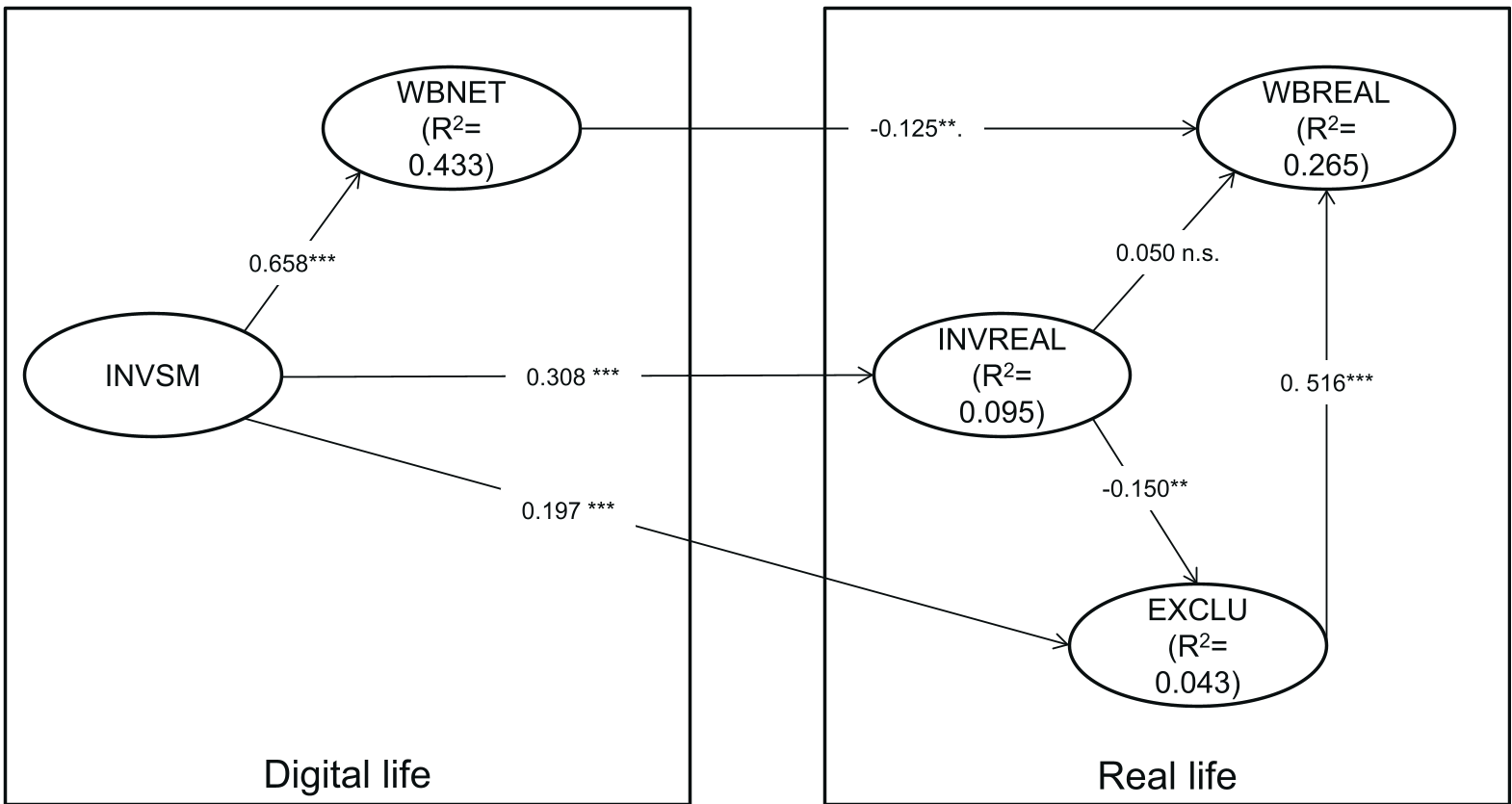 Figure 1: The structural paths showing how social media involvement influences exclusion and well-being.
The Core Insight: The "Double-Edged Sword"
The most provocative finding is the path from INVSM → EXCLU.
- The Direct Risk: Simply "belonging" to a social media group was found to increase the feeling of exclusion (β=0.177). This suggests that watching others' curated lives while being out of work can amplify the sense of being "useless."
- The Indirect Reward: However, the path INVSM → INVREAL → EXCLU is negative (-0.041). When users leverage their digital network to trigger real-life meetings or phone calls, the feeling of exclusion drops significantly.
The Urban-Rural Divide
The study highlights that context is everything. Urban dwellers generally find it easier to transform virtual "pokes" into coffee dates, thanks to proximity and infrastructure.
In contrast, rural users face a harder road:
- They value offline components higher.
- If they do feel excluded, the impact on their mental well-being is significantly harsher than their urban counterparts.
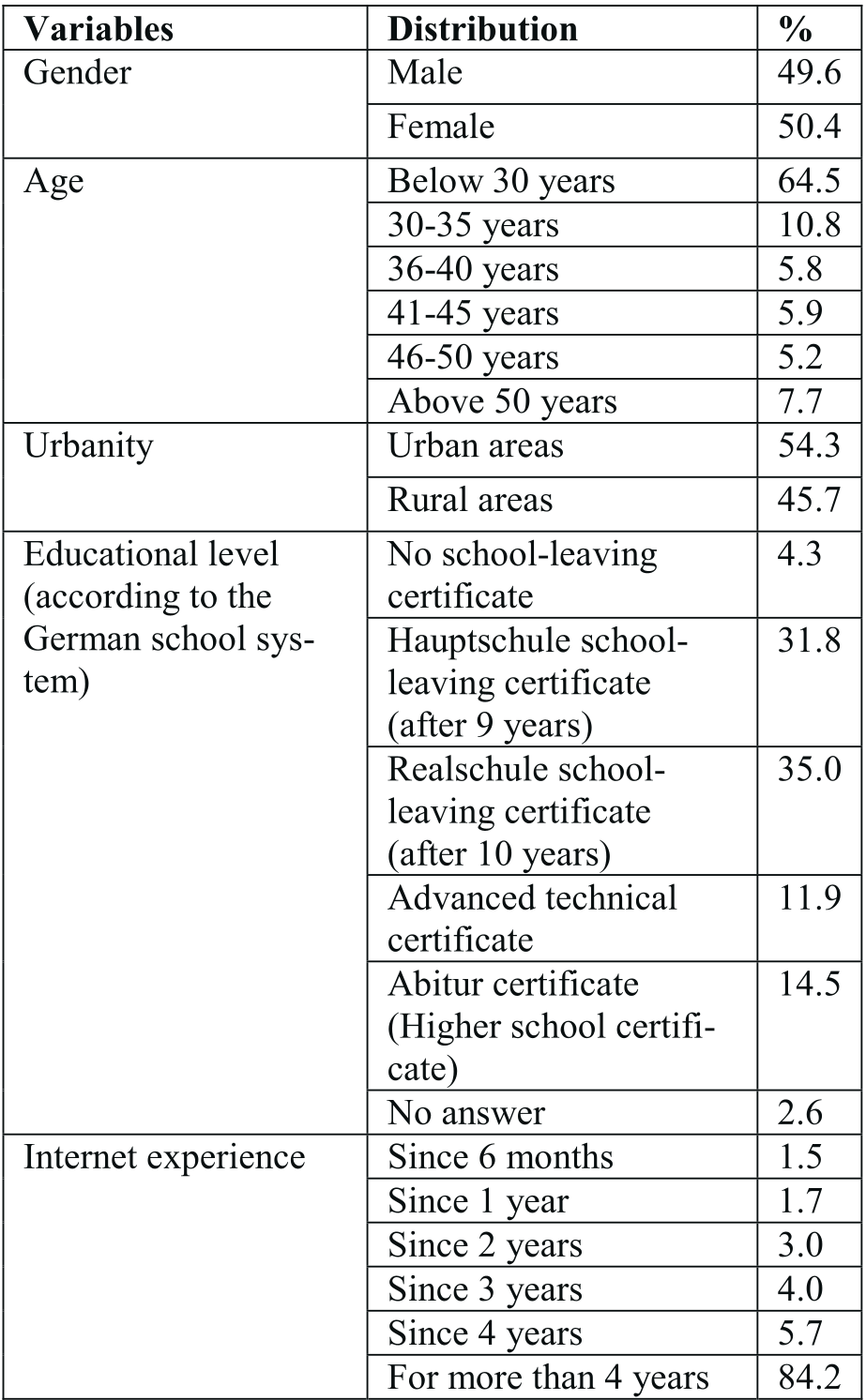 Table 1: The demographic breakdown of the 809 active Facebook users studied.
Critical Analysis & Conclusion
This paper offers a sobering Takeaway for the "Digital Wellbeing" era. It successfully deconstructs the myth that "any connection is good connection."
Limitations: The study relies on self-reported data and is cross-sectional (a "snapshot" in time). It cannot definitively prove that social media causes exclusion, only that they are linked. Furthermore, the 2012 context focused on Facebook; today’s algorithmic "short-video" platforms (TikTok/Reels) might have even more isolating effects due to their passive consumption nature.
Future Outlook: Policymakers and employment agencies should not just encourage "networking" but specifically "bridge-building." Digital literacy for the unemployed should focus on Involvement Control—using the platform as a tool for real-world mobilization rather than a space for passive social comparison.