
AR Meets Social Proof: Bridging the In-Store Information Gap with Augmented Reviews
Effect of Social Media Product Reviews on Buying Decision When Presented in Augmented Reality
This paper introduces an innovative mobile application that leverages Augmented Reality (AR) to consolidate and project social media product reviews directly onto physical packaging. By integrating optical character recognition (OCR) and sentiment analysis from platforms like Facebook and Twitter, the system provides real-time decision support for in-store shoppers.
TL;DR
Researchers from Worcester Polytechnic Institute have developed an AR application that scans product boxes and instantly overlays consolidated reviews from Facebook, Twitter, and Amazon. The study proves that while social media is an untapped goldmine for unbiased "word-of-mouth," the delivery mechanism—Augmented Reality—faces a "novelty vs. usability" trade-off that designers must navigate carefully.
Background: The Fragmented Shopper's Journey
Despite the rise of e-commerce, in-store shopping remains a primary mode for electronics. However, shoppers often find themselves "digitally stranded"—standing in an aisle, juggling a product box in one hand and a smartphone in the other, desperately Googling for reviews. This research identifies that while we trust our "social ties" on Facebook and Twitter, we rarely use them for product research because the data is too messy to find in real-time.
Methodology: Transforming Packaging into a Social Interface
The authors developed a prototype that bridges the gap between the physical product and the digital social cloud. Their pipeline follows three critical steps:
- OCR Extraction: The app identifies the product by scanning text on the packaging.
- Sentiment Aggregation: It fetches posts from Facebook and Twitter, categorizing them into positive/negative trends.
- AR Projection: Instead of a "boring" list of links, the reviews are projected onto the box, creating a sense of direct interaction.
 The proposed concept: Turning a standard product box into an interactive data hub.
Experiments: AR vs. QR
To test the effectiveness of this approach, the team conducted a between-subject study comparing two versions:
- The AR App: Reviews float in 3D space around the product.
- The QR App: Scanning a code opens a clean, static 2D page of consolidated reviews.
Key Findings:
- Review Utility: Regardless of the UI, users found consolidated social media reviews highly useful for making confident "Buy/No Buy" decisions.
- The Usability Paradox: Curiously, the QR app was rated as easier to use. Why? Because holding a phone perfectly still to read floating text in AR is physically tiring.
- The Novelty Factor: Despite the fatigue, the AR group reported a slightly higher "Overall Experience," suggesting that the "Cool Factor" and intuitive spatial mapping of data provide a psychological boost.
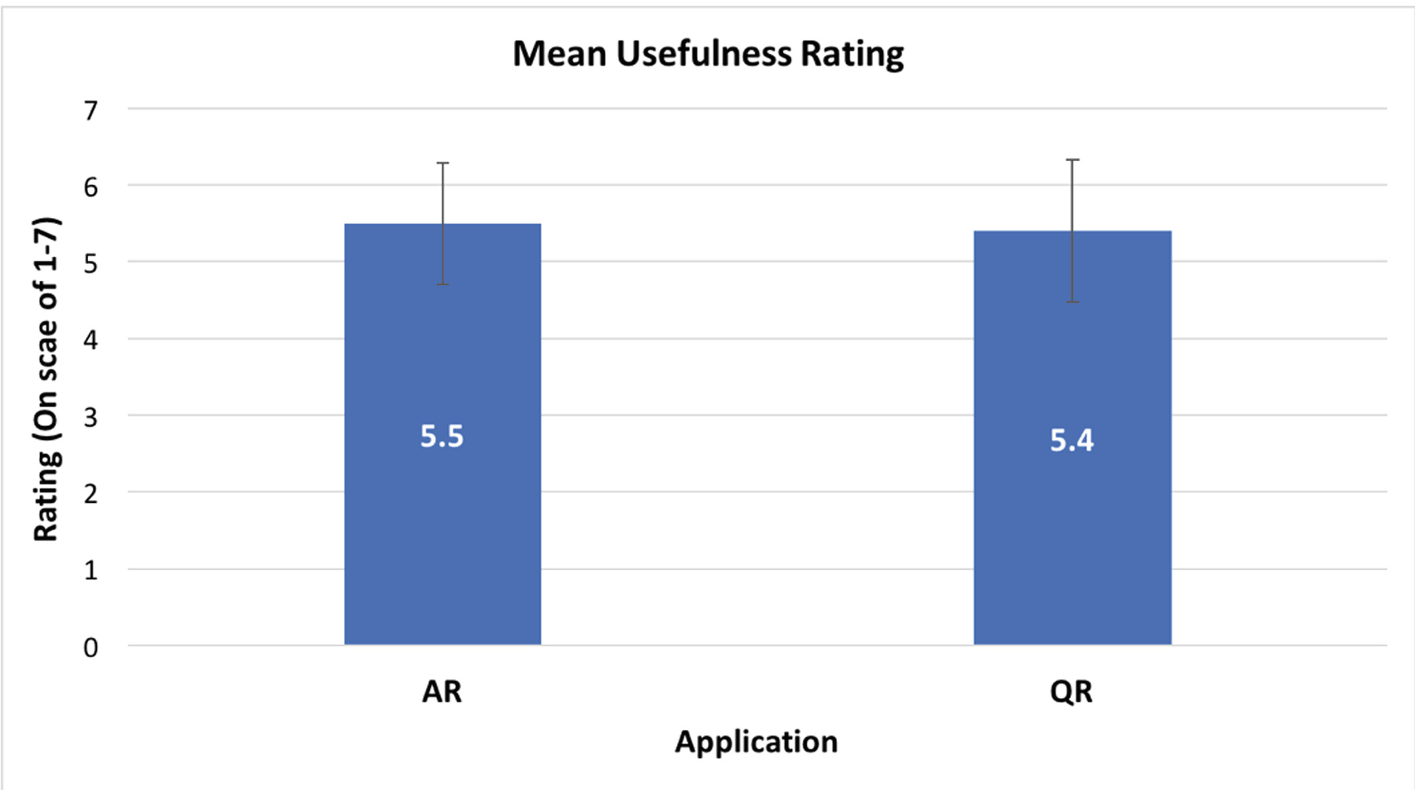 The comparison showed that while AR was perceived as high-value, the gap in usefulness between AR and traditional web views (QR) was narrow.
Critical Insight: The "Capture and Still" Solution
The most profound takeaway from this study isn't about the data, but the ergonomics of AR. Participants noted that "non-steady augmentations" made reviews hard to read. This highlights a critical Inductive Bias in AR design: we often assume "live" tracking is better, but for text-heavy information, a "scan-and-freeze" (Capture) mechanism is likely superior for user comfort.
Future Outlook
This work sets the stage for a "Socially Augmented" retail world. Imagine walking through a store where every product box highlights what your actual friends think of it, rather than just anonymous experts. However, for this to become a daily tool, developers must:
- Solve Jitter: Use better SLAM (Simultaneous Localization and Mapping) to anchor text.
- Filter Sarcasm: Use more advanced NLP to ensure "This speaker is so good it woke up my neighbors" is correctly tagged as a positive review.
Conclusion
Social media reviews are a potent, underutilized resource for physical retail. While Augmented Reality is the most "intuitive" way to display this data, the industry needs to move past the "wow factor" and solve the fundamental ergonomics of reading in a mixed-reality environment.
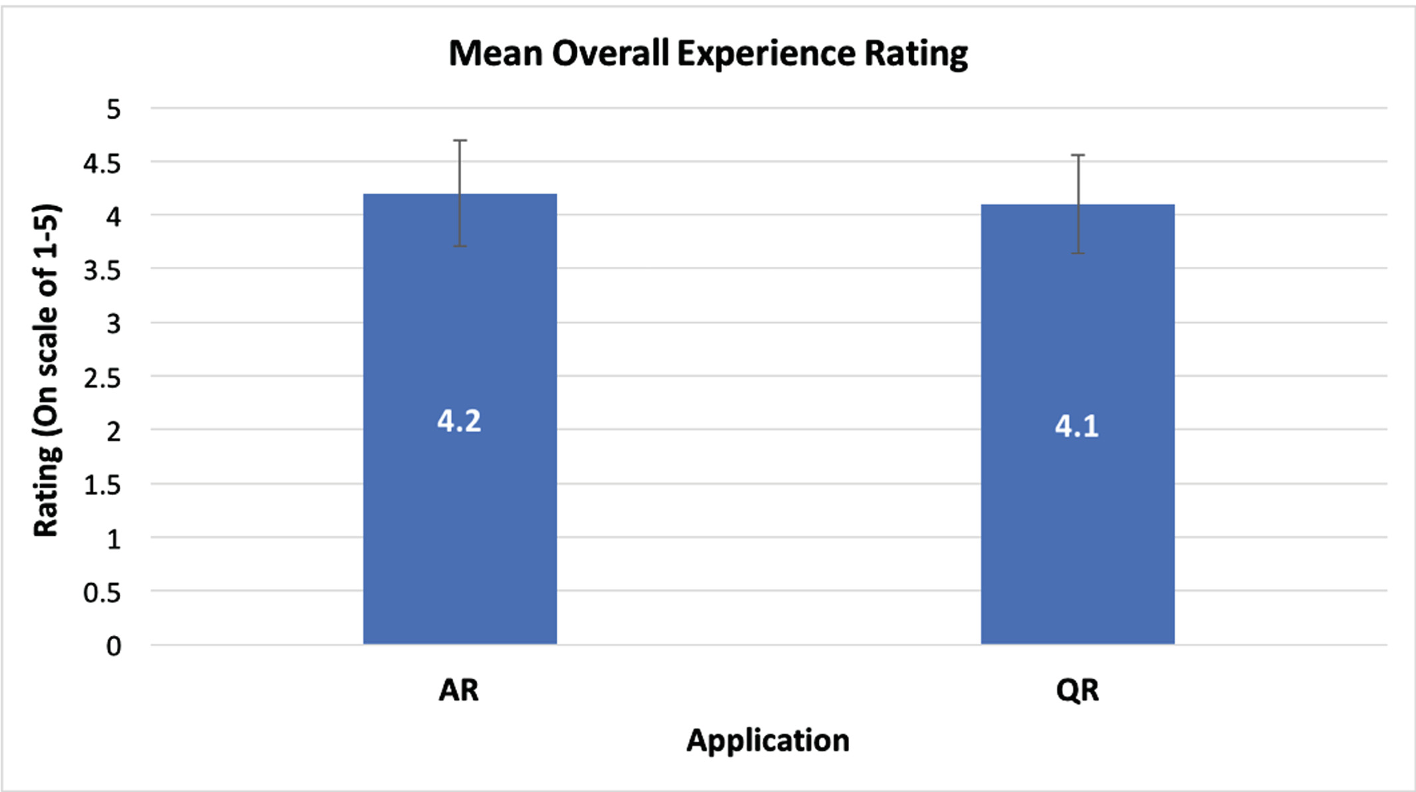 Overall experience was positive across both groups, reinforcing the value of consolidated social evidence.