
I Need Your Encouragement!: Bridging the Anxiety Gap via Social Media
I Need Your Encouragement!: Requesting Supportive Comments on Social Media Reduces Test Anxiety
This research investigates "I Need Your Encouragement!", a social media-based intervention designed to mitigate test anxiety in students solving open-ended programming problems. By comparing social support (Facebook posts) against expressive writing and traditional studying, the study identifies a novel way to leverage digital social networks to equalize performance between high and low-anxiety students.
TL;DR
Test anxiety is a silent performance killer, especially in open-ended fields like Computer Science. A study from the University of Illinois reveals that a simple Facebook post asking for encouragement can reduce state anxiety by 21% for high-anxiety students. While social support allows these students to perform at the same level as their low-anxiety peers, the study also highlights a "social friction" — students feel awkward asking for help in public digital spaces.
The "Open-Ended" Anxiety Trap
Most anxiety research focuses on multiple-choice questions. However, programming is inherently open-ended. Mistakes made early can cascade, compilation errors trigger immediate stress, and there is no "guessing" a correct algorithm. Prior work suggested Expressive Writing (writing about your fears) as a cure, but this study asks a more modern question: Can our digital "tribes" provide a better safety net?
Methodology: Testing the Buffer
The researchers compared three distinct interventions:
- Social Support: Participants posted a specific template on Facebook: "Hi friends, I need your encouragement..." and read the replies before the test.
- Expressive Writing: A 7-minute session of venting deep-seated worries.
- Control: Reading technical notes (simulating the common "last-minute cram").
The researchers used the Cognitive Test Anxiety (CTA) scale to segment students and the State-Trait Anxiety Inventory (STAI) to measure in-the-moment fluctuations.
Key Insights: Messages vs. Likes
The results were striking. For high-anxiety students, the social support didn't just feel good—it worked.
- The "Message" Effect: Reduction in anxiety was strongly correlated with substantive messages (comments and PMs), while passive "Likes" had almost no impact on stress levels.
- The Equalizer: Under the control condition, high-anxiety students performed significantly worse than low-anxiety ones. Under the Social Support and Expressive Writing conditions, that gap disappeared.
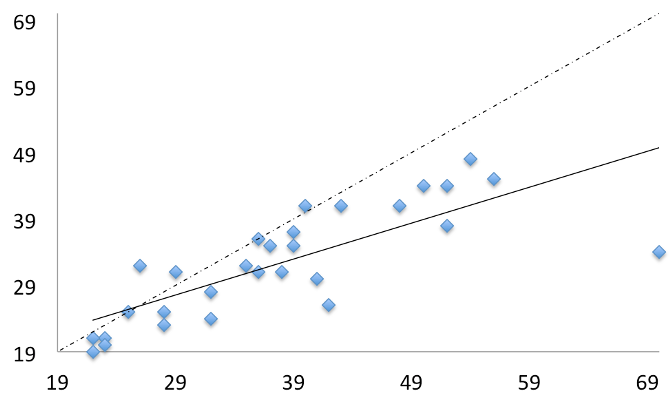
However, a "side effect" was discovered: Expressive Writing actually increased the anxiety of low-anxiety students by 61%. For those who aren't naturally worried, being forced to think about failure makes them... well, worried.
The Social Paradox: "I want it, but I won't ask for it."
Despite the clear performance benefits, students hated the process of asking for help on Facebook.
- Theme: "Attention Seeking": Students felt that broadcasting a need for encouragement violated social norms and made them look "annoying."
- Theme: "Vulnerability": In the competitive world of CS, admitting you are stressed can feel like showing a weakness to future colleagues or group mates.
Critical Analysis & Future Outlook
This paper proves that Social Support is a superior intervention because it helps those who need it without harming those who don't (unlike expressive writing). However, the implementation is the bottleneck.
Future Directions for EdTech:
- Controlled Disclosure: We need platforms that allow for "micro-broadcasts"—sharing the need for support only with a "Close Friends" list or a specific study group.
- Ephemerality: Using platforms like Snapchat where the "cry for help" disappears might reduce the social cost of vulnerability.
- Instructor Intervention: Could an automated system from an instructor (recalling a student's past successes) mimic the social support effect without the social media baggage?
Conclusion
The study concludes that while we have the digital tools to solve test anxiety, we haven't yet mastered the social etiquette of digital support. To help students perform at their best, we must design systems that allow for vulnerability without the stigma.