
Social Media Surveillance: A Digital Eye for Search and Rescue (SAR)
The role of social media surveillance in search and rescue missions
This paper investigates the integration of social media surveillance into Search and Rescue (SAR) missions, focusing on the Mediterranean refugee crisis. It proposes a methodology where data from platforms like Facebook, Instagram, and blogs are used as "visual search" cues to assist first responders in locating individuals in need.
TL;DR
In the high-stakes environment of Search and Rescue, the difference between life and death is often measured in minutes. This research demonstrates how "listening" to social media—extracting cues like a Facebook post about smoke or an Instagram photo of an abandoned boat—can fundamentally optimize a rescuer's visual attention. Through a sophisticated 3D simulation in ARMA 3, researchers proved that social media data acts as a cognitive bridge, allowing volunteers to locate targets in complex environments significantly faster and more accurately.
Contextualizing the Crisis: The Mediterranean Route
The Mediterranean Sea remains one of the most dangerous migration routes globally. With over 18,300 deaths recorded since 2014, the sheer scale of the humanitarian crisis overwhelms traditional authority resources. This paper positions social media not just as a communication tool, but as a surveillance asset that can guide NGOs and volunteers who fill the gaps left by state agencies.
The Core Insight: Why Cues Matter
The authors leverage Visual Search Theory, specifically:
- Feature Comparison Model: Recognizing a target based on specific attributes (e.g., "Look for the yellow boat").
- Template Matching Theory: Recognizing an object by comparing it to a known mental image (e.g., knowing what "smoke from a small fire" looks like).
Without social media data, a rescuer scans the horizon randomly—an inefficient "search in the dark." With a lead from a fisherman’s blog or a local’s live stream, the search transforms from a broad scan into a targeted investigation of specific visual patterns.
Methodology: High-Fidelity Simulation
To test their hypothesis, the researchers built a custom scenario in ARMA 3, a military-grade simulation engine known for its realistic terrain (based on the actual Greek islands of Lemnos and St. Efstratios).
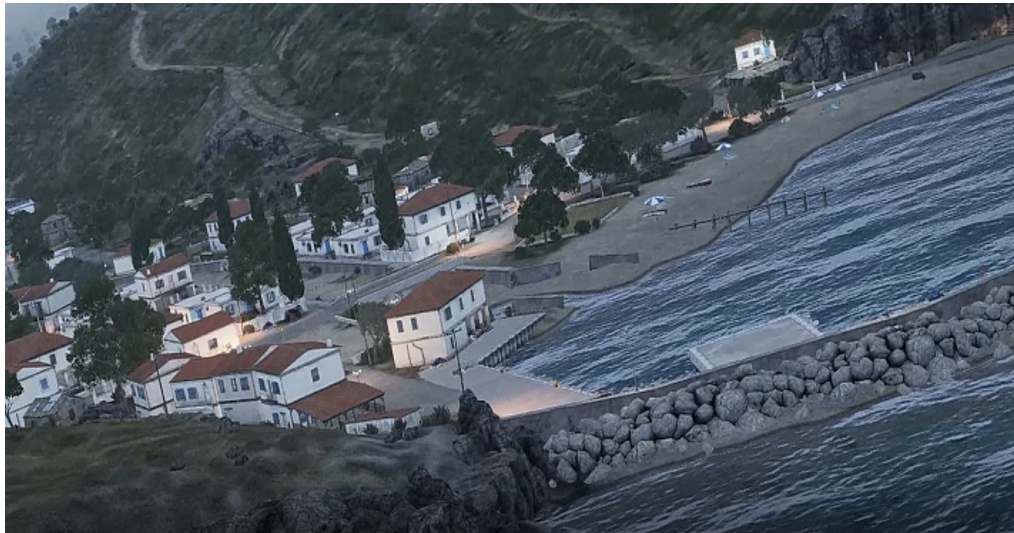 Fig. 1: The virtual environment of the island used for the SAR simulation.
The Experiment:
- Sample: 24 student volunteers.
- Groups: Group A received "social media intelligence" (e.g., "A blog reported an abandoned boat at X beach"); Group B received no prior information.
- Task: Locate 7 groups of refugees in various states of distress from a moving helicopter within 15 minutes.
Results: The Power of Informed Vision
The quantitative results were striking. The informed group showed a much higher "locating rate."
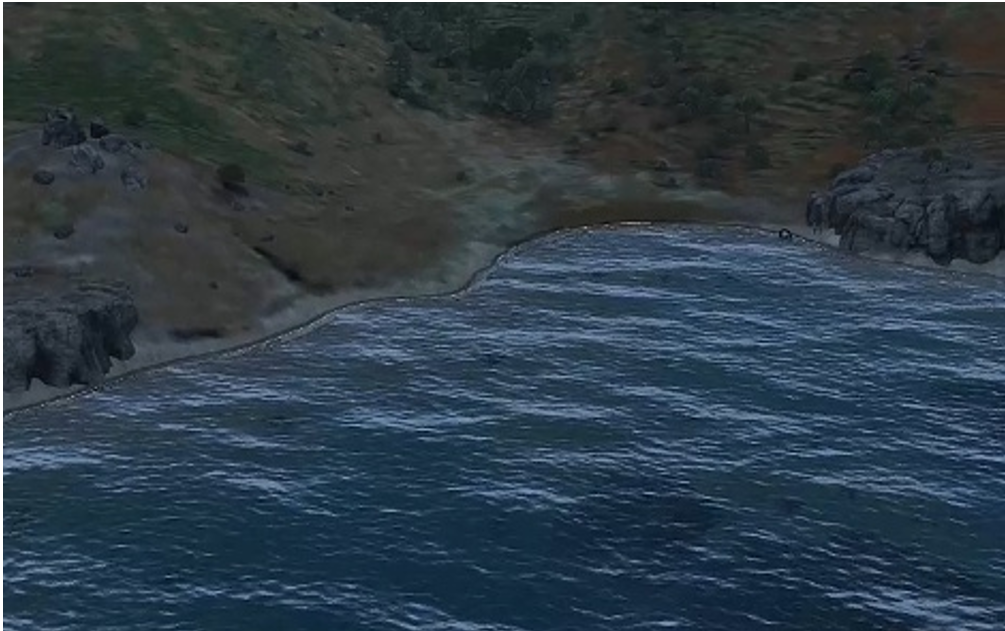 Fig 2: A column of smoke as seen from the rescuer's perspective—informed participants identified this immediately as a point of interest.
Key Findings:
- Confidence & Action: Informed participants were "more confident," immediately using binoculars to zoom into areas suggested by social media posts.
- Clustering Success: Hierarchical clustering showed that while some "natural" experts existed in both groups, the most consistent high-performers were those with access to social media data.
- Specific Success (Case 2 & 7): In scenarios where refugees were obscured, the informed group's success rate was nearly 91% (10/11), compared to a significantly lower rate in the uninformed group.
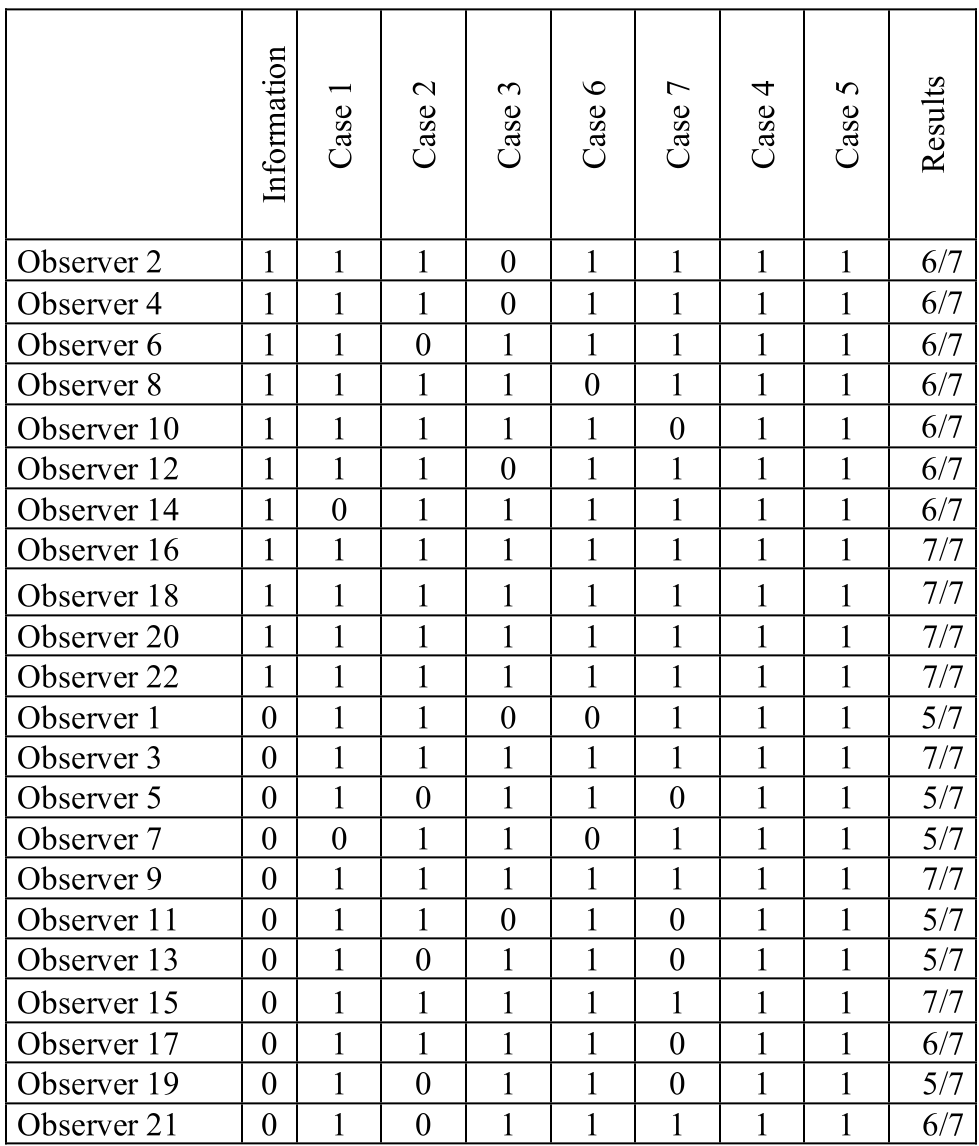 Table 1: Comparison of detection success across the 7 cases between informed (Class 1) and uninformed (Class 3) observers.
Critical Analysis & Conclusion
Takeaway
This research transitions social media from a "passive echo chamber" to an "active sensor network." By treating public posts as visual priors, SAR missions can move from exhaustive searching to precision rescue.
Limitations & Future Work
The study acknowledges that the current scenario assumes 100% accurate information. In the real world, rescuers must deal with:
- Fake News/Rumors: Deliberate or accidental misinformation.
- Privacy & Ethics: The surveillance of individuals, even for rescue, raises significant legal questions.
- Infrastructure: Rural or disaster-stricken areas often lack the internet connectivity required for real-time social updates.
Future Outlook: The next logical step is integrating AI to filter and verify these social media posts automatically, creating a real-time "heat map" of potential targets for SAR pilots.