
Digital Diplomacy or Digital Brochures? Decoding the Russian Government's SNS Strategy
Use of Social Media by the Federal Government in Russia
This paper investigates the adoption of Social Media (SNS) by Russian federal authorities and high-ranking officials to promote e-Governance and transparency. By analyzing 2015 data, the study identifies that while approximately two-thirds of federal bodies maintain a social media presence (favoring Twitter and Facebook), the majority fail to engage in meaningful interactive dialogue with citizens.
TL;DR
In the mid-2010s, the Russian Federation attempted to modernize its governance by embracing the "Social Media phenomenon." While the majority of federal agencies established accounts on Twitter and Facebook, a 2015 study reveals a significant gap: only 10% of these officials actually interacted with citizens. Most agencies treated social media as a glorified "e-book," failing to leverage the interactive potential of Web 2.0.
The "Electronic Brochure" Trap
The transition from traditional e-Government to social-integrated governance is more than just opening a Twitter account. The authors, Bundin and Martynov, argue that Russian official websites have historically suffered from being "static." Even after the 2013 Open Government initiative, a fundamental misalignment remained: citizens use social media for human connection, while the state uses it for "dry, impersonal" announcements.
The problem is two-fold:
- Technological Inertia: Replacing interactive dialogue with mass-broadcasting news feeds.
- Regulatory Vacuum: A lack of specific legal objectives for SNS use, leading to "fear-based" withdrawal or depersonalization of accounts by officials since late 2014.
Methodology: Mapping the Russian Digital Footprint
The researchers analyzed 75 federal executive authorities and 20 other major state organs (including the State Duma and the Supreme Court). They focused on platform preference and the "human-centeredness" of the content provided.
Key Technical Finding: There was a notable divergence between citizen preference and state choice. While Russians favored "Odnoklassniki" and "Vkontakte," the state prioritized Twitter and Facebook, signaling a strategy aimed at international visibility or high-influence "metropolitan" circles rather than the broad domestic base.
Key Results: The Engagement Gap
The data from 2015 presents a landscape of widespread adoption but shallow practice:
- Reach: Prime Minister Dmitry Medvedev emerged as the "Influencer-in-Chief" with over 4.2 million followers, surpassing President Vladimir Putin’s reach on Twitter.
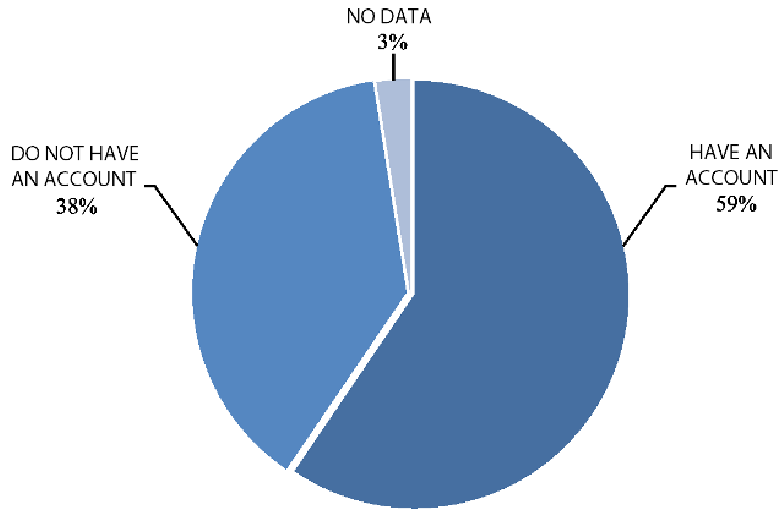
- Activity vs. Quality: 63% of agencies were present on SNS, yet 61% remained "alien" to the platforms’ social culture, offering no real feedback loop to users.
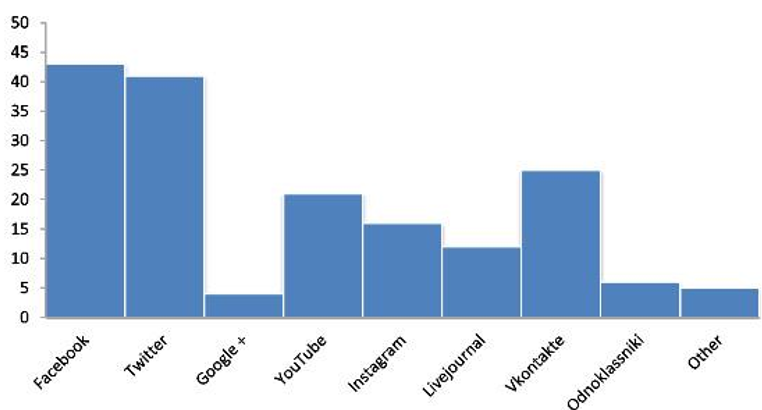
As shown in the platform breakdown, Facebook and Twitter dominated the institutional landscape, despite the domestic popularity of local networks.
Critical Analysis & Conclusion: The Need for Relational Regulation
The authors conclude that for e-Governance to be anything more than a facade, the state must move beyond the "Guidelines on the Implementation of the Principles of Openness."
The Takeaway: The "human side" of administration is not just a stylistic choice; it is a prerequisite for loyalty. When state officials behave like bots, they lose the trust of the 18-24 demographic—the most active and prosperous segment of the digital population.
Future Outlook: Since this paper was published in 2016, the Russian social media landscape has undergone seismic shifts due to geopolitical changes and stricter domestic internet regulations (the "Sovereign Internet"). The findings here serve as a crucial baseline for understanding how government-citizen communication can stagnate when technical adoption outpaces cultural and legal evolution.