
Social Mpower: Crowdsourcing Energy Efficiency through Self-Organising Serious Games
Social Mpower: A Serious Game for Self-Organisation in Socio-technical Systems
This paper introduces Social Mpower, a digital serious game designed for Decentralised Community Energy Systems (dCES). It leverages social networking and visualisations of Ostrom’s Common-Pool Resource (CPR) principles to foster collective awareness and self-organisation among energy "prosumers."
TL;DR
The transition to decentralized smart grids requires more than just hardware; it requires a fundamental shift in human behavior. Social Mpower is a serious game that gamifies the management of energy as a "Common-Pool Resource." By visualizing Elinor Ostrom's Nobel-winning economic principles, the game teaches users to self-organize, communicate, and synchronize their consumption to prevent grid failure.
The "Commons" Crisis in Modern Energy
As we move away from centralized power plants toward localized generation (like rooftop solar), the electricity grid becomes a socio-technical system. The core problem is the Tragedy of the Commons: if every household consumes energy whenever they want, the shared local storage depletes, leading to blackouts.
Existing solutions often rely on complex pricing or automated demand response, which can feel opaque to users. The authors argue that the missing ingredient is Collective Awareness—the individual's realization that they are part of a larger, interdependent system. Without this awareness, users have no incentive to follow community norms or adjust their behavior.
Methodology: Ostrom’s Principles Meet Game Design
The Social Mpower platform is built on three pillars:
- Algorithmic Self-Governance: Using the work of Pitt et al., the system translates social rules (Ostrom’s principles) into game mechanics that define who can use resources and how rules are changed.
- Visual Real-time Feedback: Players control avatars in a virtual residence. Turning on an appliance provides immediate feedback on the "Global Capacity" of the community.
- Tiered Social Networking: To facilitate self-organization, the game provides three layers of communication: Local Chat (spatial awareness), Group Chat (strategic planning), and Instant Messaging (private negotiation).
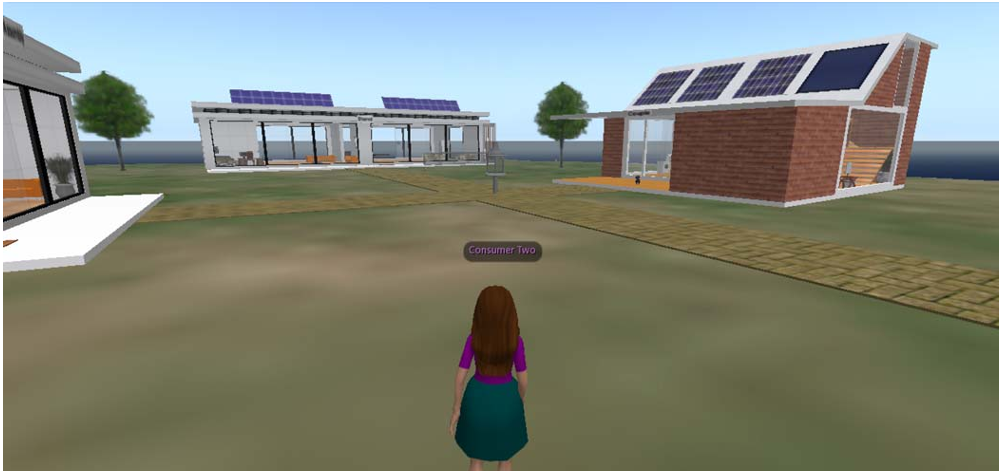 Fig 1: The Social Mpower environment where virtual residential solar panels supply a common energy pool.
Collective Action in Scarcity
The game intentionally introduces "Collective Action problems," such as low solar generation or high peak demand. Unlike traditional games where the goal is to "beat" others, the win condition here is Sustainability. Players must use the chat interface to negotiate who runs their virtual oven or washing machine at what time to avoid a total system blackout.
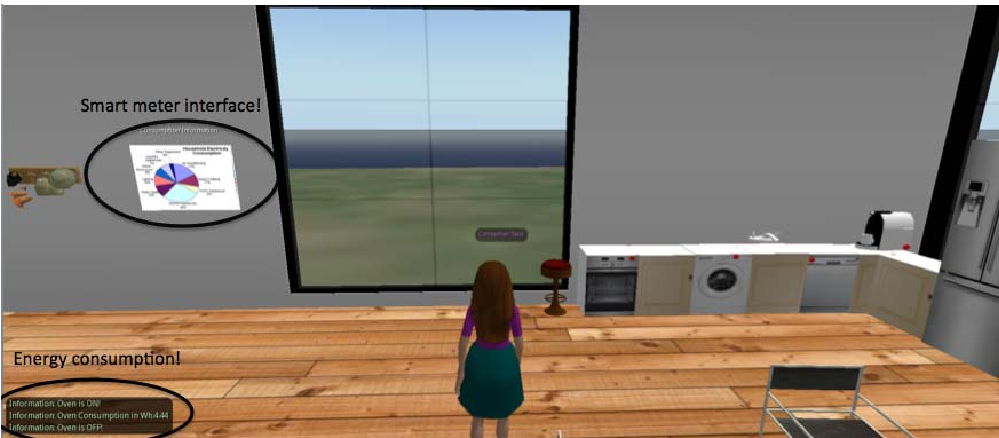 Fig 2: Avatars interacting with appliances, requiring real-time synchronization with community energy levels.
Key Insights from Field Trials
The authors' beta tests revealed that:
- Engagement creates Awareness: By managing virtual energy, players developed a "discerning eye" for their real-world consumption patterns and the limitations of the network.
- Communication is the Catalyst: The move from individual action to collective action was almost always preceded by social interaction via group chats.
- Self-Organisation is Feasible: Players successfully adapted their strategies to handle volatile supply, proving that human-centric demand-side management is a viable alternative to purely automated systems.
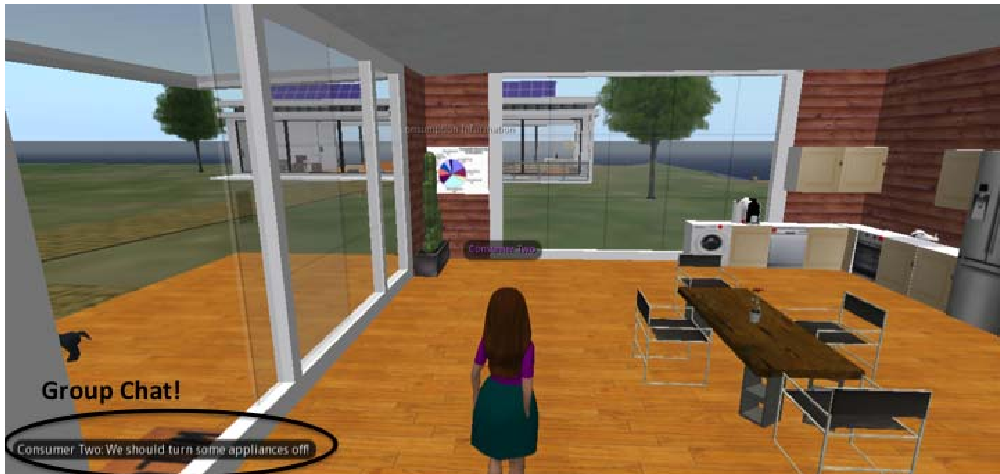 Fig 3: Group chat interface allowing users to negotiate rules and coordinate consumption.
Critical Analysis & Future Outlook
While Social Mpower demonstrates the potential of serious games, the leap from a virtual environment to real-world smart meter control remains a challenge. The primary value of this work lies in its psychological infrastructure: it prepares citizens for a world where energy is no longer an infinite commodity but a community-managed asset.
Future Research Directions:
- Integrating real-time IoT data from users' actual homes into the game environment.
- Exploring how financial incentives (tokenization/blockchain) could augment the social rewards pioneered in this game.
- Extending the "Social Mpower" framework to other resource management tasks, such as community water systems or local carbon credit trading.
Conclusion
Social Mpower proves that by treating energy as a social common rather than just a technical utility, we can unlock new levels of efficiency. It transforms the "passive consumer" into an "active prosumer," capable of the self-organization required for the next generation of smart grids.