
Beyond Utility: Why Status Seeking is the Secret Engine of Social Networks
The acceptance of social network: The role of status seeking on TAM
This study investigates the adoption of online social networks among Thai university students by integrating "Status Seeking" (SS) into the classic Technology Acceptance Model (TAM). Using Structural Equation Modeling (SEM) on a sample of 350 students, the research identifies social influence and intrinsic psychological motives as primary drivers of platform engagement.
TL;DR
Why do we post? Is it because Facebook is "useful" or because we want to look good in front of our peers? This study explores the "Status Seeking" (SS) drive within the Technology Acceptance Model (TAM). By surveying 350 Thai students, the researchers found that our desire for reputation and social influence (Subjective Norms) far outweighs the simple "ease of use" when it comes to why we actually use social media.
The "Utility" Trap in Social Media Research
For decades, the Technology Acceptance Model (TAM) has been the gold standard for predicting why people use software. It boils down to two things: Perceived Usefulness (PU) and Perceived Ease of Use (PEOU). If it’s helpful and easy, people use it.
However, social media isn't an Excel spreadsheet. The authors argue that traditional TAM is too "utilitarian." It ignores the social fabric of these platforms. In Thailand, where social media usage has exploded among young people, the motivation isn't just about efficiency—it's about class, equality, and social standing.
Methodology: Mapping the Social Ego
The researchers proposed an extended framework (Fig 1) that treats Status Seeking (SS) as an intrinsic psychological motive. They hypothesized that if a platform makes you feel important (SS), you will perceive it as more useful (PU) and have a higher intention to use it (BI).
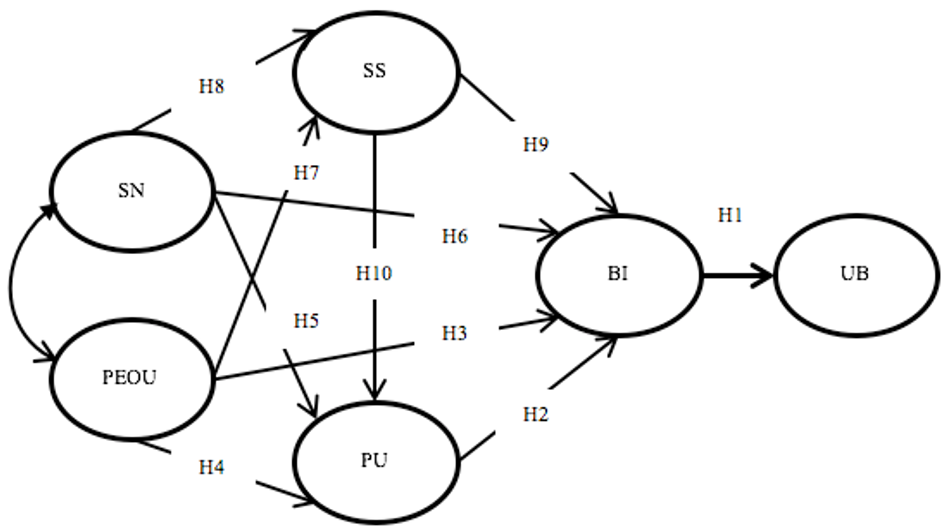
Key constructs measured:
- Subjective Norm (SN): "Do my friends think I should use this?"
- Status Seeking (SS): "Does sharing this make me look good or important?"
- Behavioral Intention (BI): "Do I plan to keep using this?"
Key Insights: Status > Ease of Use
Using Structural Equation Modeling (SEM), the study produced several striking results:
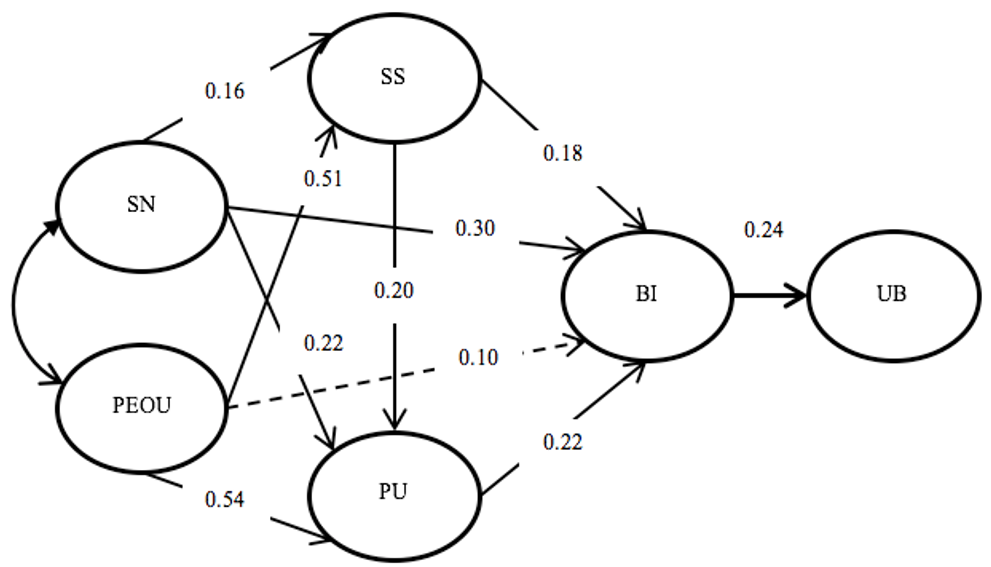
- The "Ease of Use" Paradox: Surprisingly, the path from PEOU to Behavioral Intention was not significant. This suggests that for today’s "digital natives," a social network being easy to use is a baseline requirement, not a reason to use it.
- Status Fuels Perception: Status Seeking (SS) significantly correlates with Perceived Usefulness. If a user feels they gain "social capital" or reputation, they find the platform significantly more beneficial to their lives.
- The Social Pressure: Subjective Norm (SN) was the strongest driver of intention (). In Thai student culture, the fear of missing out (FOMO) and the influence of peers are the ultimate gatekeepers of adoption.
Critical Analysis: The Limits of Intent
While the model successfully explains why people intend to use these platforms, it struggles to explain the Actual Use Behavior (UB), with an of only 0.06.
This low predictive power suggests a "Gap of Intention":
- Habit vs. Choice: Much of our social media usage is habitual or "mindless scrolling," which Behavioral Intention (a conscious choice) doesn't capture.
- The "90-9-1" Rule: Status seekers comprise a small percentage of users but create 90% of the content. This study suggests these "super-users" are the ones keeping the community alive by providing the "lively content" others consume instantaneously.
Conclusion
This research shifts the focus from the tool to the human. For developers and researchers, the takeaway is clear: intrinsic rewards matter. A platform that doesn't offer a way to build reputation or signal status will likely fail, regardless of how "easy" or "useful" its features are. Future research must look beyond TAM to include "Habit" and "Psychological Flow" to truly decode the addictive nature of our digital social lives.