
The Digital Loneliness Trap: How Social Network Addiction Erodes Academic Engagement
The Influence of Social Network Addiction and Loneliness on Learning Engagement
2021-10-22
Summary
Problem
Method
Results
Takeaways
Abstract
This research investigates the causal relationships between Social Network Addiction (SNA), loneliness, and learning engagement among college students. Using a structural equation model (SEM) on data from 521 students, the study identifies that SNA acts as a significant positive predictor of loneliness, which subsequently diminishes academic engagement.
## TL;DR
While social networks promise connection, they often deliver the opposite. This study uncovers a troubling paradox: excessive social media use among college students increases subjective loneliness, which in turn acts as a primary suppressor of learning engagement. By analyzing 521 students, the researchers demonstrate that the "digital high" of social networks comes at a direct cost to academic focus and emotional well-being.
## Problem & Motivation
The modern campus is hyper-connected, yet students are reporting higher levels of isolation. Previous research has often grouped all "Internet addiction" into one category, but this paper argues that **Social Network Addiction (SNA)** is a distinct beast. Unlike gaming addiction, SNA is fueled by the need for communication, participation, and social validation.
The authors sought to bridge a gap in the literature: although we know that being addicted to your phone is "bad" for grades, we didn't fully understand the *psychological pathway*. Does the phone distract you directly, or does it change your emotional state in a way that makes learning impossible?
## Methodology: Mapping the Psychological Path
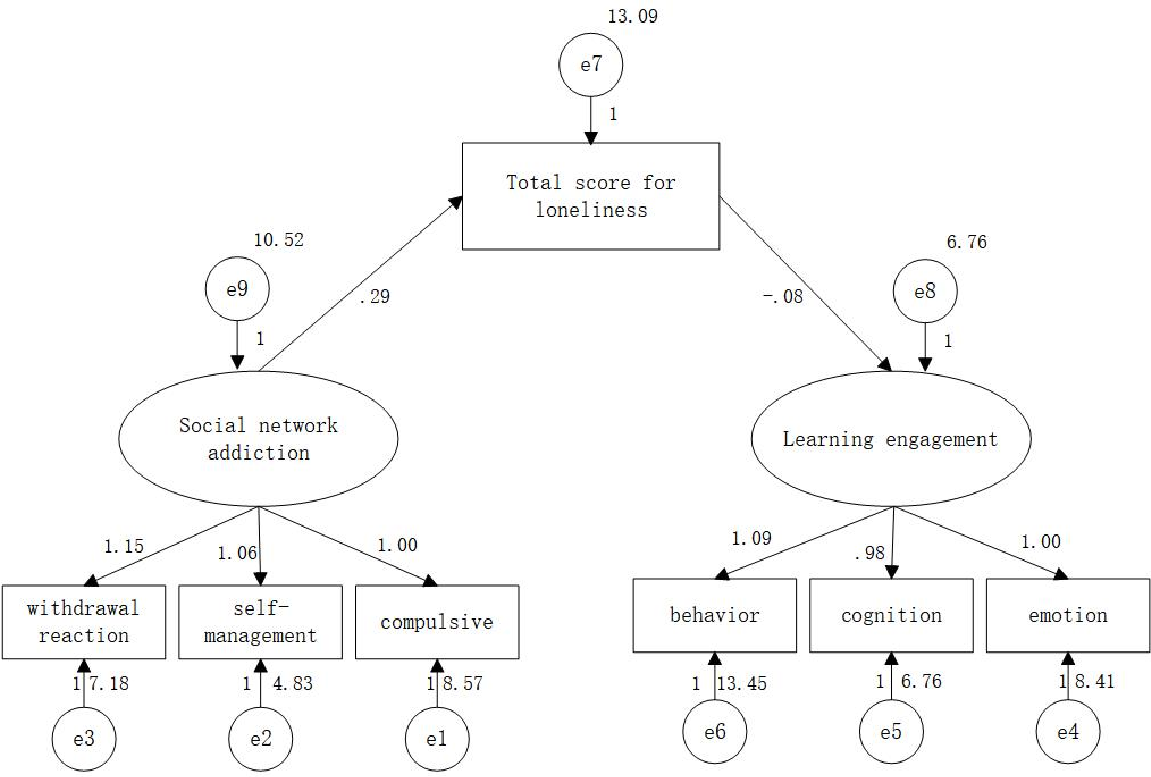
The researchers utilized Structural Equation Modeling (SEM) to test the interactions between three key pillars:
1. **Social Network Addiction**: Measured via withdrawal reactions, self-management, and compulsive behaviors.
2. **Loneliness**: The subjective feeling of social isolation.
3. **Learning Engagement**: A multi-dimensional construct involving behavior, emotion, and cognition.
### Structural Model Overview
The study utilized AMOS software to create a path analysis model (Figure 1), proving that SNA doesn't just happen in a vacuum—it feeds into loneliness, which then drains the energy required for academic commitment.
## Key Insights from the Results
The data provides several critical takeaways for educators and psychologists:
* **The Gender Nuance**: While boys and girls showed similar overall addiction scores, **female students spent significantly more time** on social networks. The authors suggest this is due to a higher need for emotional communication and "online satisfaction."
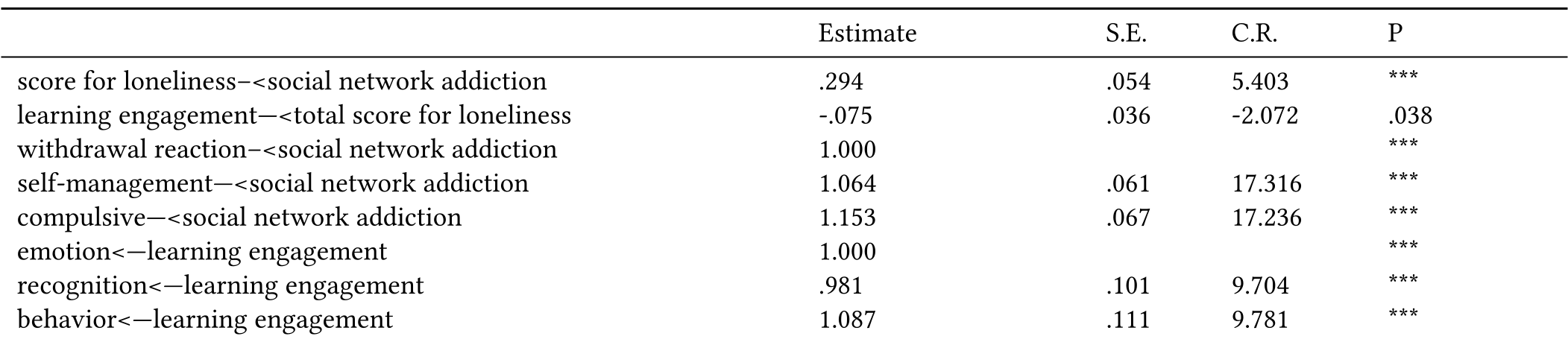
* **The Loneliness Bridge**: The correlation analysis confirmed that SNA is positively correlated with loneliness ($P < 0.05$). This suggests that the more time you spend in virtual social circles, the less social quality you perceive in real life.
* **Impact on Engagement**: Loneliness was found to be a significant negative predictor of learning engagement. Specifically, when students feel socially isolated, their "cognitive and behavioral investment" in their studies drops.
## Critical Analysis & Conclusion
This research moves the needle by identifying **loneliness as a mediator**. It suggests that the "distraction" of social media is only half the story; the real damage is done to the student's emotional foundation.
### Takeaway for Educators
To improve student performance, schools cannot simply "block the apps." They must address the underlying social needs of students. Reducing loneliness through real-world community building may be a more effective academic intervention than simple screen-time management.
### Limitations & Future Work
The study relies on self-reported questionnaires, which can be subject to bias. Future research should look into *which specific activities* (e.g., passive scrolling vs. active chatting) contribute most to loneliness. Furthermore, exploring the role of "FoMO" (Fear of Missing Out) could provide a deeper layer to this structural model.
**Final Thought**: In an era where students are "connected" 24/7, the greatest threat to their education might not be the technology itself, but the isolation it masks.