
Deciphering Pirates of the Modern Age: A Network Science Approach to Illegal Fishing
Social Network Analysis of Global Transshipment: A Framework for Discovering Illegal Fishing Networks
This paper introduces a formal framework for analyzing Illegal, Unreported, and Unregulated (IUU) fishing by modeling maritime transshipment encounters as a social network. Using Automatic Identification System (AIS) data and Social Network Analysis (SNA), the authors propose a novel "Criminal Centrality" metric to pinpoint vessels deeply embedded in illicit networks, even if not yet officially blacklisted.
TL;DR
Illegal, Unreported, and Unregulated (IUU) fishing is an $23.5 billion global crisis. This paper moves beyond traditional "dot-on-a-map" tracking by applying Social Network Analysis (SNA) to maritime transshipment encounters. By quantifying the "social circles" of vessels, the researchers developed a Criminal Centrality metric that unmasks the hidden infrastructure of illicit marine trade.
Positioning: This work bridges the gap between maritime AIS (Automatic Identification System) data mining and criminology, moving from reactive vessel monitoring to proactive network disruption.
The "Transshipment" Shell Game
The biggest hurdle in maritime enforcement isn't just finding a boat; it's proving its catch is illegal. Criminals use reefers (large refrigerated transport vessels) as mobile hubs. An illegal fishing boat meets a reefer in the middle of the ocean, offloads its catch, and mixes it with legal products. The reefer then docks at a "Port of Convenience" where regulations are lax.
Previous research focused on identifying "dark vessels" (those turning off their AIS transponders). However, many sophisticated criminals stay "visible" but hide in plain sight. This paper’s core insight is that participation in a criminal network leaves a structural footprint in the encounter data that is harder to fake than a location.
Methodology: From Encounters to Graph Theory
The authors constructed a global graph where:
- Nodes: Individual vessels (identified by MMSI numbers).
- Edges: Potential transshipment encounters (defined by proximity over time).
- Edge Weights: The frequency of meetings between specific pairs.
The Engine: Criminal Centrality
The most significant contribution is the Criminal Centrality (CC) metric. While standard "Degree Centrality" tells you how many neighbors a node has, CC specifically weighs those neighbors by their criminal status.
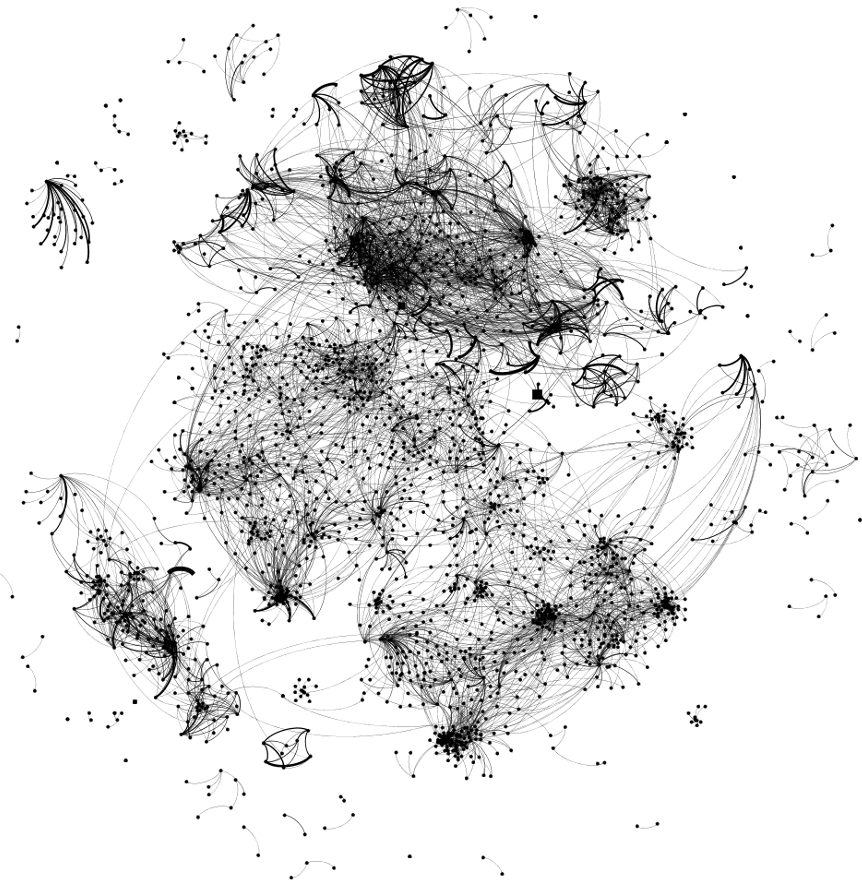 Fig 1: The Global Transshipment Network using the OpenOrd layout, revealing distinct clusters and disconnected components.
This logic is simple but powerful: if a reefer's entire "clientele" consists of blacklisted fishing vessels, that reefer—even if not yet blacklisted itself—is almost certainly a critical node in a criminal operation.
Experimental Results & Case Study
The researchers identified 68 communities within the global network. By layering a "Standardized Known Offender List" (curated from Interpol and TMT) onto the graph, they were able to color-code the network to reveal criminal "hotspots."
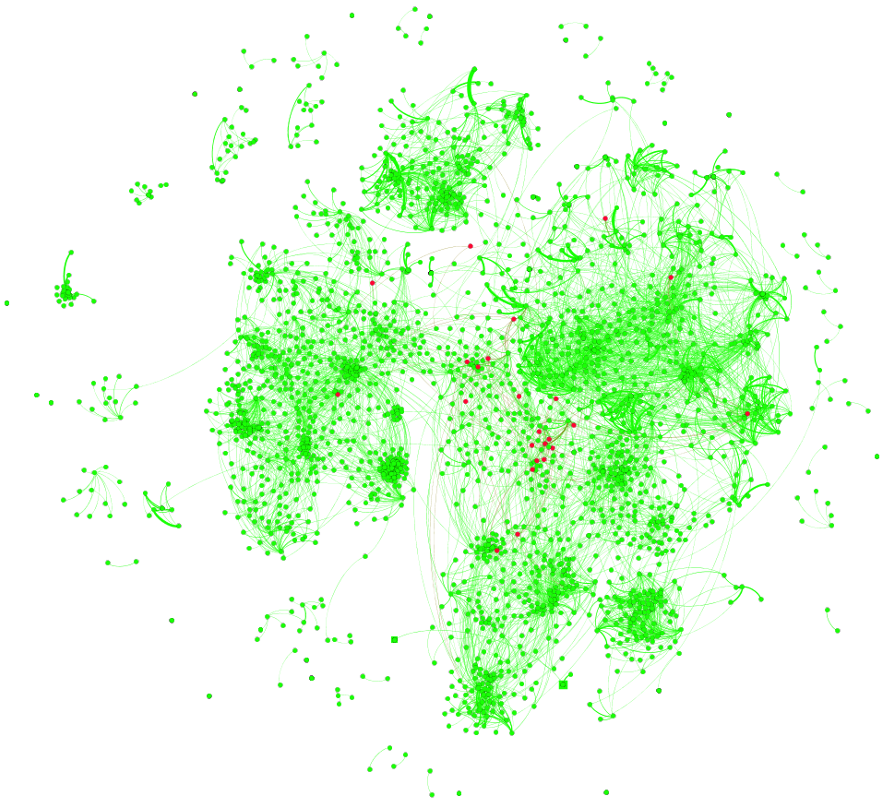 Fig 2: Communities detected via the Louvain Modularity method, showing the macro-structure of global maritime interactions.
The "Non-Offender" Hub
In their case study, they identified a vessel that was not on any official offender list but had the highest Criminal Centrality in its cluster. Deep-diving into its "Ego Network" (its direct connections) showed it served 20 different known-offender fishing vessels.
Further analysis of this specific network revealed:
- Flags of Convenience: Most vessels were flagged in Panama, a common tactic to avoid oversight.
- Geographic Mismatch: Despite the flags, the vessels were primarily operating in Asian waters.
Critical Insight & Future Outlook
Takeaway: This framework shifts the burden of proof. Instead of needing to catch a vessel "in the act" of illegal fishing, authorities can prioritize inspections based on a vessel's relational risk profile.
Limitations: The framework currently relies on AIS data, which can still be spoofed or turned off. Furthermore, "encounters" are defined by proximity—while GFW data is robust, some interactions might be coincidental rather than transactional.
The Future: The authors suggest incorporating Temporal Analysis. Seeing how a network evolves after a major apprehension could help enforcers understand how "crime displacement" works—essentially watching the network "repair" itself in real-time. This methodology is a blueprint that could easily be adapted for monitoring human trafficking and drug smuggling at sea.