Dynamic Connectivity: Mastering Social Network Analysis in Mobile Data Streams
Social Network Analysis of Mobile Streaming Networks
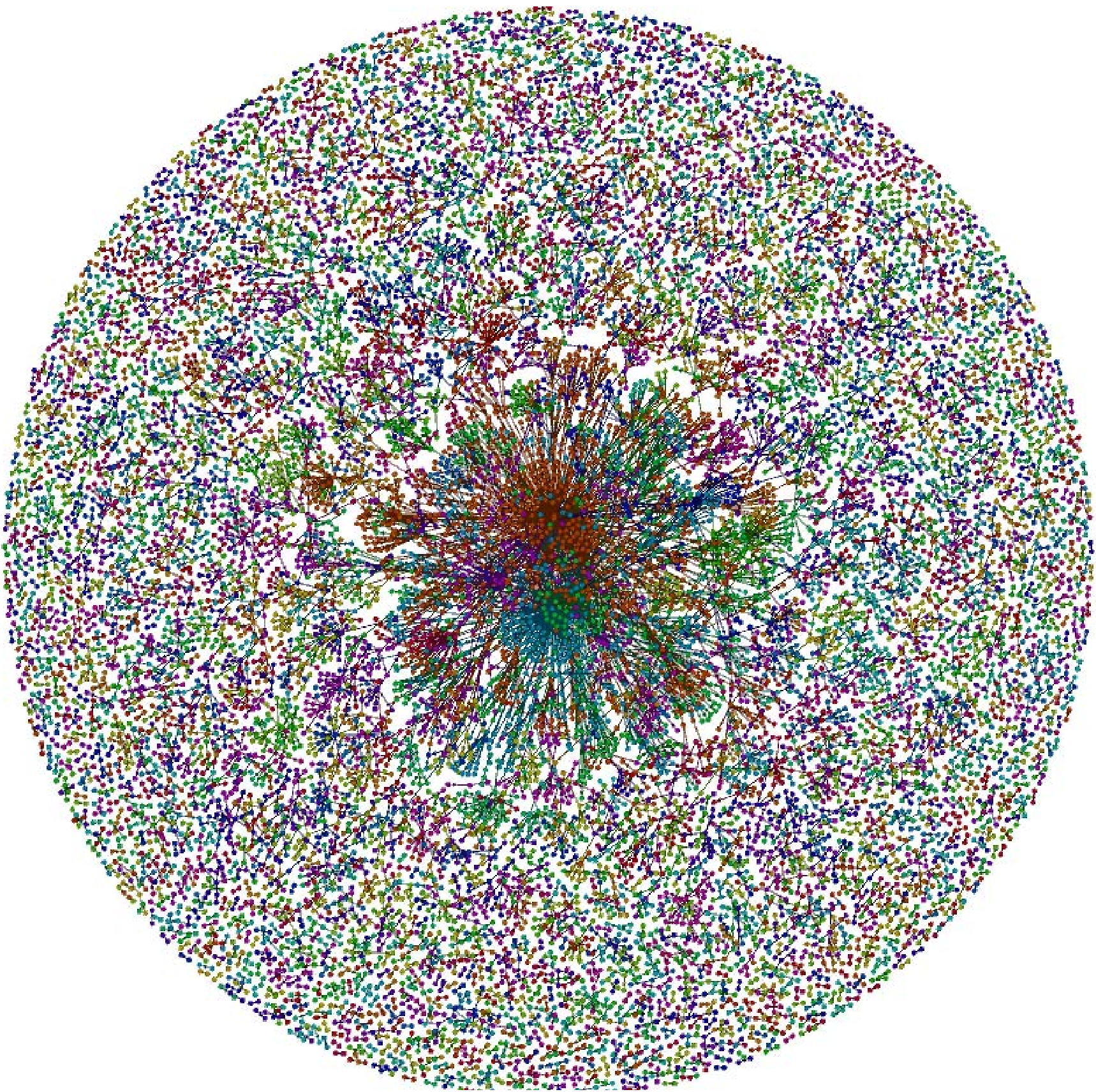
The paper presents a comprehensive framework for Social Network Analysis (SNA) of massive mobile call data streams using spatio-temporal evolutionary modeling. Key methodologies include Biased Random Sampling (BRS) and Sampling Ego-centric networks with Forgetting Factor (SEFF) to handle high-velocity, unbounded data streams.
TL;DR
This research tackles the challenge of analyzing massive, high-velocity mobile call streams by treating them as evolving spatio-temporal graphs. By introducing Biased Random Sampling (BRS) and Sampling with Forgetting Factor (SEFF), the author provides a way to extract real-time social insights (like community structures and family influence) from hundreds of millions of calls without the overhead of massive data warehousing.
Problem & Motivation: The Velocity Trap
Mobile call data is not just big; it's fast and constantly changing. Traditional "batch" processing faces a latency-cost trade-off: by the time you've stored and processed a month's worth of data, the social dynamics have already shifted.
The author identifies a critical flaw in existing sampling techniques like standard Reservoir Sampling (RS). Because RS treats all data points with equal probability over time, it becomes increasingly dominated by "stale" historical data, failing to capture the emergence of new social hubs or the decay of old relationships—a phenomenon known as concept drift in network topology.
Methodology: Sampling the Evolution
The core innovation lies in two distinct sampling strategies designed for real-time stream processing.
1. Socio-Centric Sampling (Global View)
The paper compares three algorithms for global stream sampling:
- Space Saving (SSA): Focuses on the "heavy hitters" or most frequent callers.
- Reservoir Sampling (RS): Uniformly samples but suffers from staleness.
- Biased Random Sampling (BRS): Every new edge enters the reservoir, replacing an old one selected at random. This biases the sample toward the most recent activity.
2. SEFF: The Ego-Centric "Memory" Decay
For ego-networks (the localized network around a specific person), the author proposes SEFF (Sampling Ego-centric networks with Forgetting Factor). It uses a decay formula to manage tie strength: If a tie strength drops below a threshold due to inactivity, it is pruned. This mimics human social memory—prioritizing active contacts while gradually "forgetting" dormant ones.
Experiments & Real-World Insights
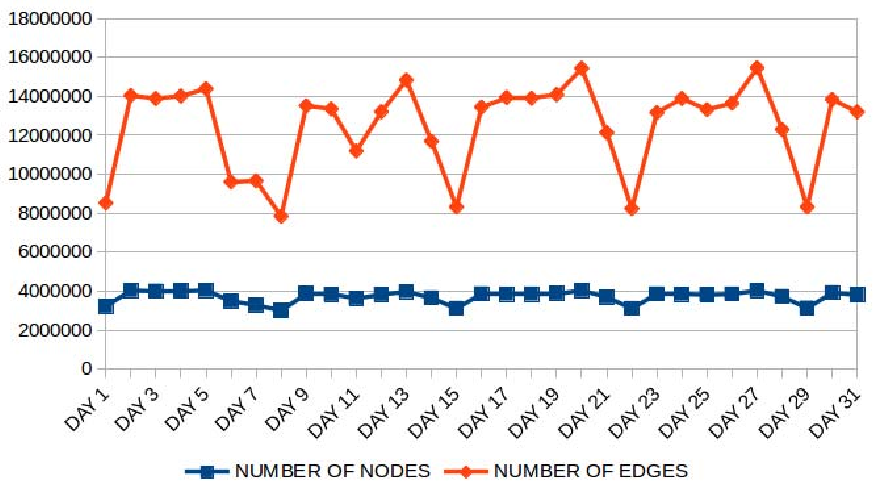
Using a dataset of 300 million calls from 11 million subscribers, the study revealed striking patterns. Call activity peaks during the day and drops at midnight, with notable "Friday peaks" and decreased activity on weekends or public holidays.
Performance Comparison
The results demonstrated that:
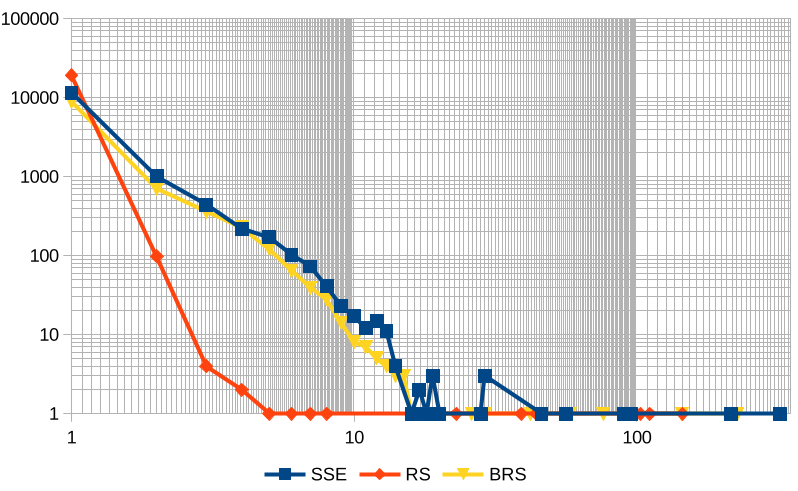
- BRS and SSA are superior at capturing community structures (high average degree centrality) compared to RS.
- RS tends to capture low-degree "peripheral" nodes, making it less useful for influence analysis.
- SEFF successfully reduced the massive redundancy of active users' networks while maintaining the "efficiency" of the graph.
Critical Analysis & Future Outlook
The most intriguing takeaway is the concept of Family Influence. By combining spatial data with network topology, the author suggests that "families" (people sharing geographical locations and frequent contacts) act as cohesive units. In the telecommunications industry, this is vital for churn prediction: if one family member quits a network, the "influence" often causes others to follow.
Limitations
While the sampling methods are efficient, the paper acknowledges that we still need more scalable ways to compare these samples against the "ground truth" of the full massive stream. Furthermore, the selection of the attenuation factor is currently heuristic and may need to be adaptive in future iterations.
Conclusion
This work moves us closer to a "living" social network analysis where patterns are detected as they happen. By shifting from static snapshots to evolutionary streams, we can better understand the pulse of human interaction in the mobile age.