
Disconnected Governance: Using Social Network Analysis to Diagnose Conservation Gaps
A social network approach to diagnose public participation in protected areas management : Insights from a Natura 2000 case study
This study investigates the governance efficiency of the Iron Gates Natural Park in Romania using a dual approach of public perception surveys and Social Network Analysis (SNA). It specifically examines the role of NGOs within the Natura 2000 management framework, identifying a significant gap between rising public awareness and the actual marginalization of non-governmental actors in decision-making.
TL;DR
Conservation is as much a social challenge as it is an ecological one. This study of Romania’s Iron Gates Natural Park reveals a striking "participation paradox": while the public is becoming more aware of protected areas, the organizations meant to represent them—NGOs—remain structurally marginalized and powerless within the official management network.
Background: The Natura 2000 Challenge
The Natura 2000 network is the world's largest coordinated conservation effort. However, in regions with complex political histories like Romania, "coordination" often defaults to a top-down, state-centric approach. When local communities and NGOs are excluded from real decision-making, it creates a breeding ground for conflict between environmental protection and economic development (tourism, hydropower, etc.).
The "Participation Paradox": Insight vs. Reality
The authors identified two conflicting trends:
- Rising Awareness: Between 2012 and 2016, public knowledge of the park’s administration increased by over 21%.
- Structural Exclusion: Despite this awareness, Social Network Analysis (SNA) shows that NGOs are virtually invisible in the halls of power.
Methodology: Mapping the Power Grid
By interviewing stakeholders and reviewing legal documents, the researchers mapped 99 organizations. They didn't just look at "who knows who," but measured Centrality:
- Degree Centrality: Who has the most "direct" connections?
- Betweenness: Who acts as a "bridge" between different groups?
- Closeness: How quickly can an actor reach everyone else in the network?
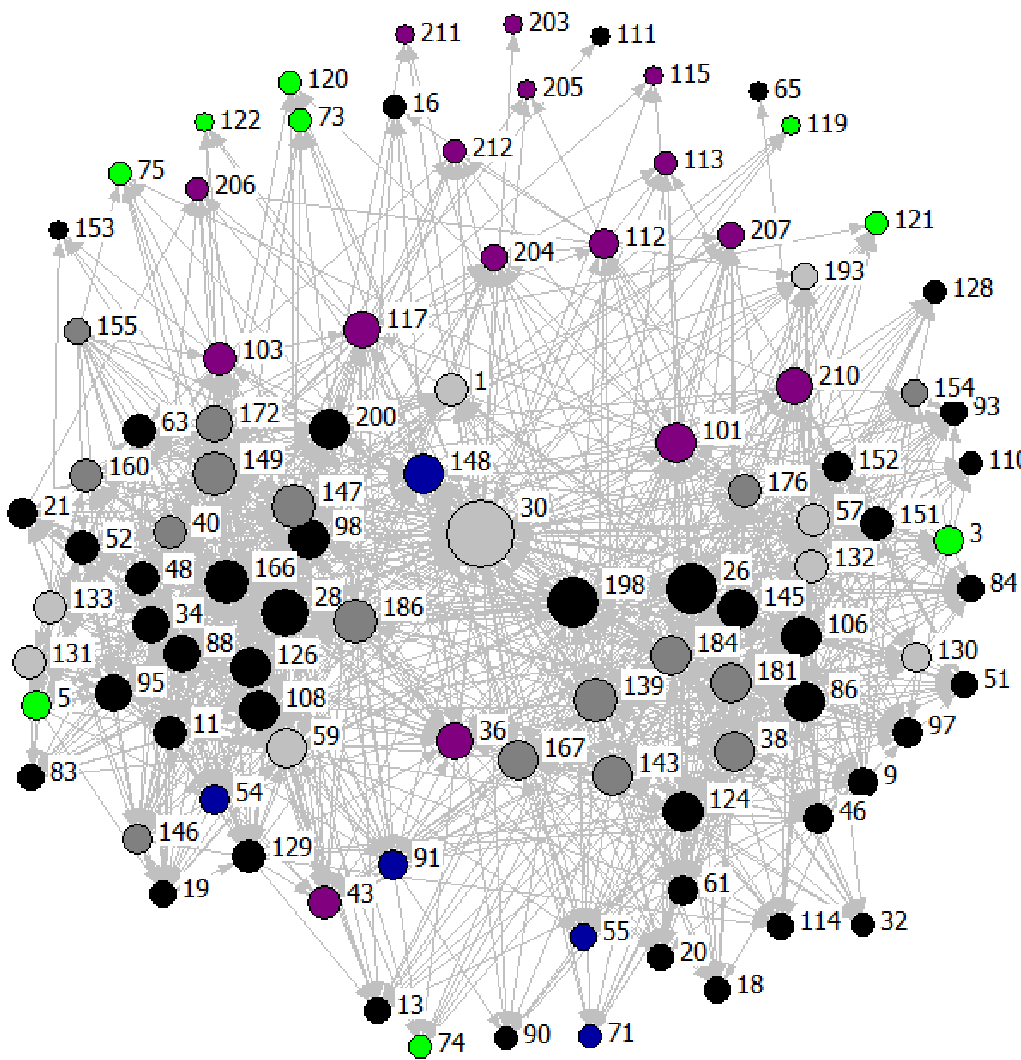 Fig 1: The network visualization shows public agencies (black) and administrative bodies (grey) at the core, while NGOs (green) are pushed to the extreme periphery.
Key Results: Where are the NGOs?
The results were stark. The IGNP Administration (ID 30) sits at the absolute center (Degree: 0.88), while the highest-ranked NGO (ID 3) languishes far down the list with a degree of 0.20.
More concerning is the Tie Density:
- Public agencies have a high density of internal collaboration.
- NGOs recorded a 0% internal tie density, meaning they aren't even talking to each other, let alone influencing the state.
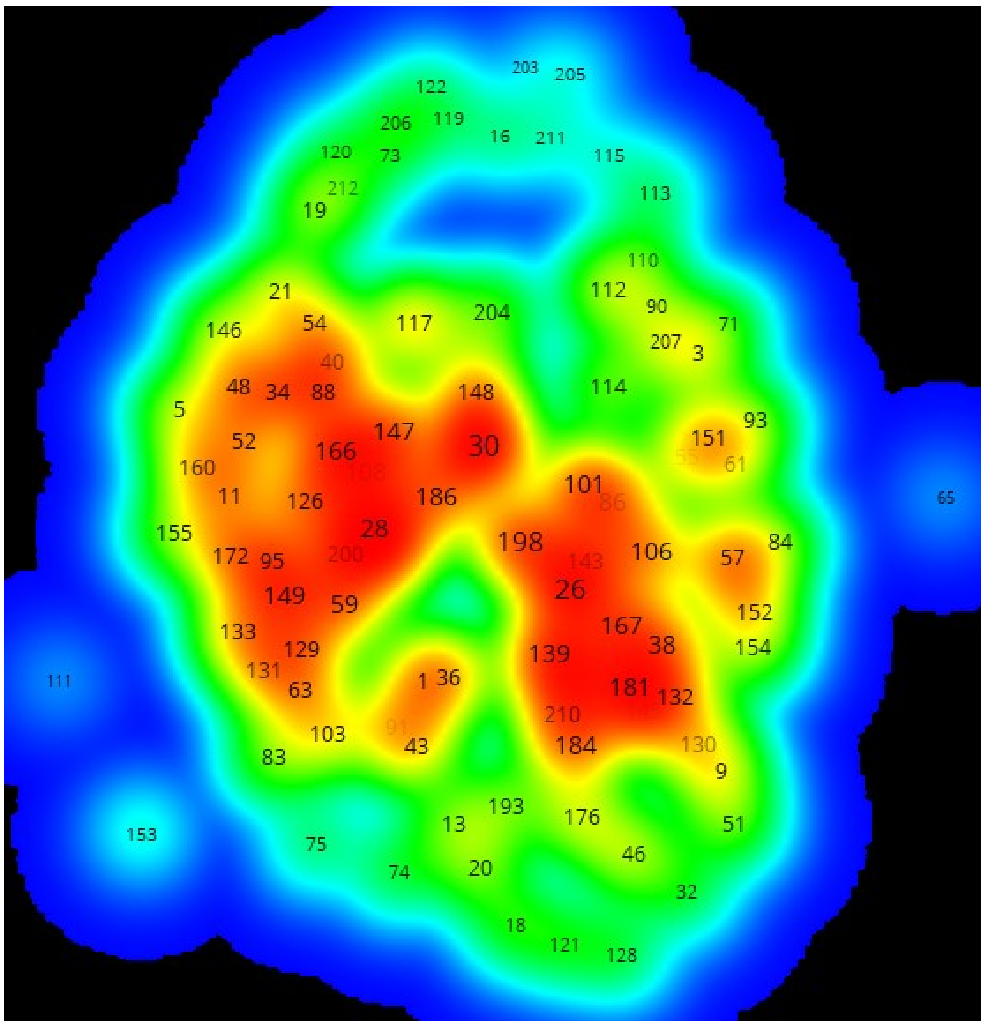 Fig 2: Heatmap of influence. The "hot" zones are dominated entirely by state enterprises and agencies. There is no major "bridging hub" led by civil society.
Critical Insight: Why This Matters
The study concludes that the current management style is a "wasted collaboration potential." Public bodies enjoy the "illusion" of participation because they conduct surveys, but the SNA proves that NGOs have no structural advantage or "bridging" power.
The Takeaway: To ensure the long-term viability of Natura 2000, managers must move beyond top-down mandates. True sustainability requires creating "conservation hubs" where NGOs aren't just notified of decisions but are structurally positioned to facilitate them.
Future Outlook
This research provides a template for using SNA as a "diagnostic tool" for environmental policy. Future studies should investigate whether international NGOs (like WWF) carry more weight in these networks than the local associations studied here, and how legislative changes could mandate a more balanced network topology.