
Ontology Evolution Wiki: Bridging the Gap Between Community Intelligence and Formal Knowledge
Towards social network based ontology Evolution Wiki for an ontology evolution
The paper proposes the "Ontology Evolution Wiki," a collaborative framework that integrates social network dynamics with Semantic MediaWiki to manage the lifecycle of ontologies. It introduces a dual-wiki system—one for community-driven discussion (Evolution Wiki) and one for expert-verified updates (Refined Wiki)—to ensure consensus-based ontology maintenance.
TL;DR
Ontologies—the backbone of the Semantic Web—are notoriously difficult to keep up-to-date. This paper introduces a Social Network-based Ontology Evolution Wiki, a system that leverages the collaborative power of a community to propose, discuss, and refine changes to domain ontologies. By separating raw community feedback from expert-curated taxonomies, the authors create a sustainable lifecycle for shared conceptualizations.
Problem & Motivation: The Sclerosis of Static Ontologies
In the world of Knowledge Engineering, an ontology is a "formal, explicit specification of a shared conceptualization." However, the "shared" part is often where things break down. Most ontologies are created by a small group of experts and then left to languish.
The Pain Points:
- Pace of Change: Domains like Software Engineering or Biomedicine evolve faster than a few curators can manage.
- Lack of Consensus: Without a platform for debate, users may not agree with the ontology's structure, leading to poor adoption.
- High Barrier to Entry: Modifying OWL files (Web Ontology Language) requires specialized tools and expertise that the broader user community lacks.
Methodology: The Dual-Wiki Architecture
The authors’ core insight is that ontology evolution is a social process. They propose a bifurcated architecture designed to balance freedom of expression with technical rigor.
The Two-Tiered System
- Ontology Evolution Wiki: A "playground" for community members. Here, users can import OWL files and view them as interactive tree structures. They can submit proposals for new classes, properties, or relationships and engage in documented discussions.
- Ontology Refined Wiki: The "source of truth." Only domain experts have write-access here. Once a proposal in the Evolution Wiki reaches a consensus, experts update the formal ontology in the Refined Wiki.
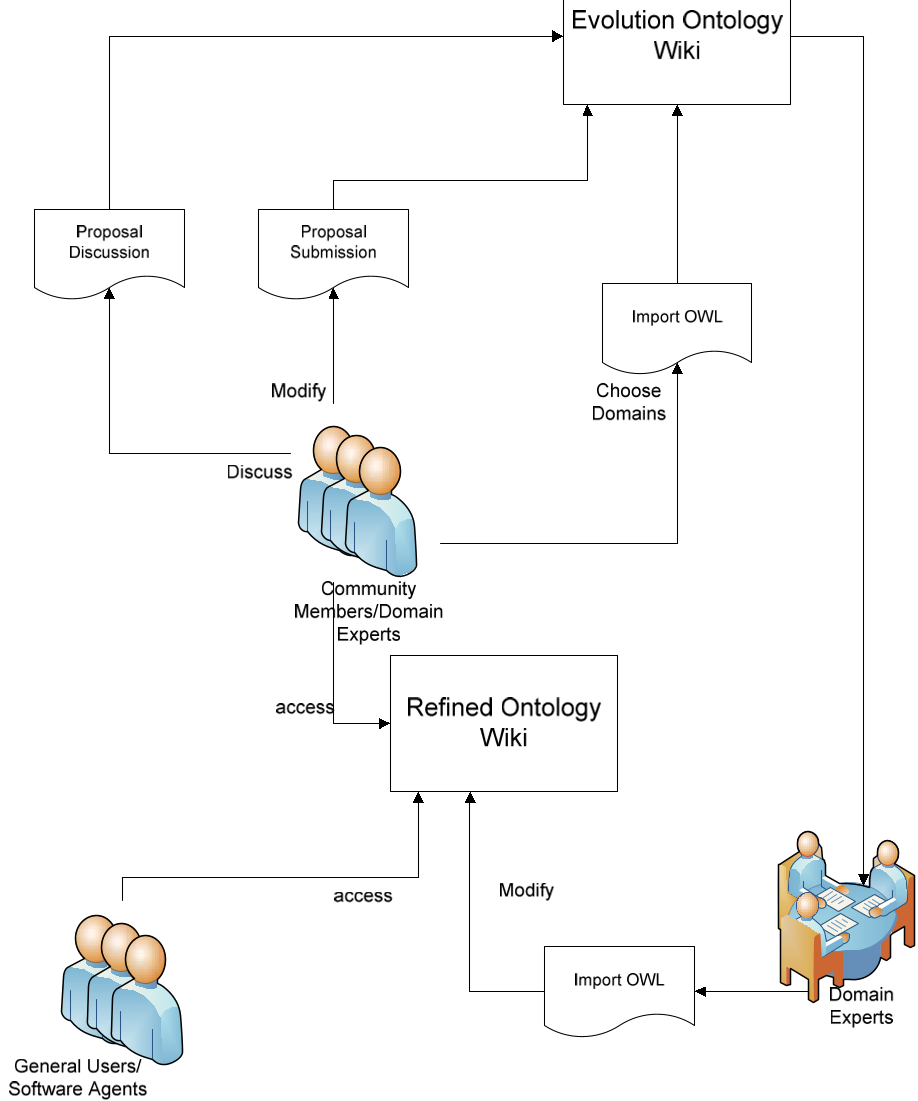 Figure 1: The system architecture showing the flow from submission to refinement.
User Roles & Privileges
- General Users: Can view and benefit from the refined ontology.
- Community Members: Propose changes and participate in brainstorming.
- Domain Experts: Act as moderators and final decision-makers, ensuring the technical integrity of the OWL structure.
Implementation: Visualizing the Abstract
One of the primary hurdles in ontology management is visualization. The authors implement the system as a plugin for MediaWiki and Semantic MediaWiki. By using the TreeAndMenu extension, they transform complex RDF/OWL data into a human-readable tree-like structure. This allows non-experts to navigate hierarchies without needing to understand the underlying XML or Turtle syntax.
 Figure 2: Example of a Software Engineering ontology visualized within the Wiki environment.
Critical Analysis & Conclusion
The Ontology Evolution Wiki represents a significant shift from "Ontology as a Product" to "Ontology as a Process." By grounding the technical evolution in the philosophy of Wikis, the authors bridge the gap between human intelligence and machine-processable semantics.
Takeaways:
- Interoperability: The use of standard OWL files ensures that the output is usable by software agents and external systems.
- Scalability: Crowdsourcing the "detection" of concept drifts allows the ontology to scale with the domain's growth.
Limitations: While the social framework is robust, the paper leaves the automatic text analysis and refreshing mechanisms as areas for future refinement. In a modern context, integrating LLMs to summarize long discussion threads could significantly speed up the expert's job in the Refined Wiki.
Future Work: The authors aim to involve software agents more directly in the evolution process, creating a hybrid ecosystem where both humans and AI collaborate to define the boundaries of knowledge.