
Social Network-Based Recommendation: Beyond Collaborative Filtering
Social Network Based Recommendation Systems: A Short Survey
This survey explores the landscape of Social Network-Based Recommendation Systems, highlighting how integrating social graphs (friends, trust, and annotations) significantly enhances traditional Collaborative Filtering. It summarizes state-of-the-art algorithms like FolkRank and Bayesian-inference models, emphasizing advancements in accuracy and coverage.
TL;DR
Recommendation systems are moving beyond isolated user-item interactions. This survey highlights how Social Network Data acts as a powerful catalyst for Recommendation Systems (RS), solving chronic issues like "Cold Start" and data sparsity. By integrating social trust, tagging, and friend circles, modern RS can achieve higher accuracy and better serendipity than traditional methods.
Background: Why Traditional RS is Falling Short
Since the mid-90s, the "Netflix Prize" era defined RS through Collaborative Filtering (CF) and Content-Based Filtering. However, these paradigms hit a ceiling:
- The Cold Start Problem: If you are a new user, the system knows nothing, and you get poor suggestions.
- The Sparsity Problem: In a sea of millions of items, most users rate less than 1%, leaving huge gaps in the data matrix.
- Over-Specialization: CF often traps users in a "bubble," recommending only what they have already liked.
The authors argue that the "Social Graph" is the missing link. In real life, we trust friends more than algorithms; why should our digital recommenders be any different?
Methodology: The Social Infusion
The survey categorizes recommendation techniques into a clear grid, distinguishing between Heuristic-based (simple similarity) and Model-based (complex machine learning) approaches.
The Core Framework
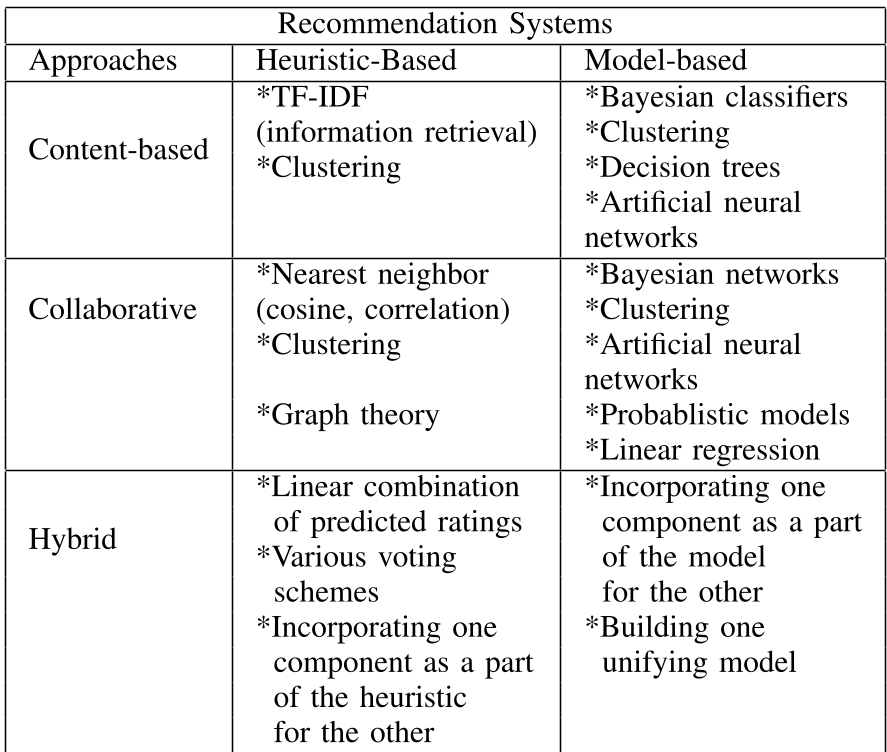
The breakthrough comes from Hybridization. By combining social tagging (folksonomy) with graph theory, researchers have developed:
- FolkRank: An adaptation of PageRank that ranks items based on social tagging structures.
- Random Walk models: Navigating the user-item-tag graph to find hidden associations.
- Bayesian Inference: Estimating unrated items by treats friends' ratings as conditional probabilities.
Evaluating Success: More Than Just Accuracy
A critical insight from the paper is that Accuracy (MAE/RMSE) isn't the only metric that matters. To truly optimize for the user, one must measure:
- Coverage: What percentage of items can the system actually predict?
- Novelty & Serendipity: Does the system surprise the user with something they didn't know they'd like?
- Confidence: How "sure" is the system of its output?
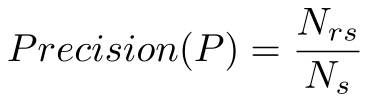
The authors provide the mathematical backbone for these evaluations, emphasizing Precision and Recall as the industry standard for retrieval-based tasks.
Deep Insights: The Future of Trust
The survey highlights "Crowd-recommendation" and "Trust-based" models. Notably, when a user’s taste is eccentric (divergent from the average), social trust data proves far more effective than global popularity trends.
The Dual Challenge: Privacy vs. Personalization
While social data is transformative, it is held captive within "walled gardens" like Facebook and LinkedIn. The authors conclude that the next frontier is a Privacy-Preserved RS, where user data remains protected while still fueling the knowledge-discovery tools we rely on daily.
Conclusion
Social Network Based Recommendation Systems are not just an "add-on"—they represent a fundamental shift towards more "human" AI. By leveraging the Inductive Bias that "friends share preferences," researchers can build models that are faster to learn, more accurate, and more resilient to data sparsity.
Final Takeaway: The future of recommendation is not just in the data you generate, but in the community you belong to.