
Deciphering the Deep-Sea Social Graph: Trans-Atlantic Sperm Whale Connectivity
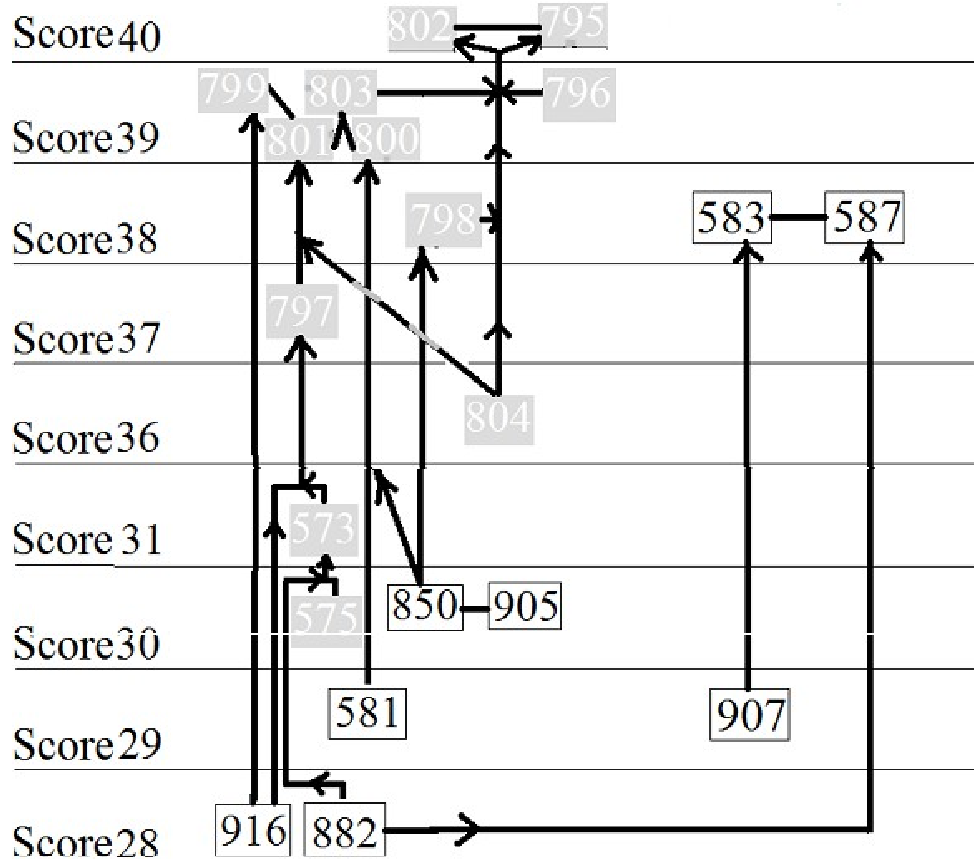
12267_The Social Network Induced by the Common Knowledge of Proverbs.
This study investigates the population structure and social organization of sperm whales (Physeter macrocephalus) across the Atlantic, specifically focusing on the Azores archipelago and its connective links to New England and California. By utilizing photographic identification and social network analysis, the researchers mapped "cliques" and kinship circles to determine site fidelity and migration patterns.
TL;DR
This research unveils the complex social architecture of sperm whales (Physeter macrocephalus) across the Azores and the broader Atlantic. By classifying social units into "Cliques" and "Extended Circles," the study identifies critical residency hubs and migration corridors, providing a quantitative map of how individual social units connect populations across thousands of miles.
Problem & Motivation
Whales are not solitary wanderers; they live in highly structured societies. However, identifying these structures is notoriously difficult due to their pelagic nature. Previous work often focused on either broad genetic clusters or localized sightings. The gap lies in understanding the connectivity—how a whale in New England is socially linked to a "clique" in the Azores. Understanding these "Inner" and "Extended" circles is vital for determining whether a localized threat (like regional ship strikes) impacts just a few individuals or destabilizes a massive trans-oceanic network.
Methodology: Tiered Social Mapping
The authors move beyond simple sighting frequency by introducing a tiered social hierarchy:
- Cliques: The fundamental social unit, often matrilineal.
- Inner Circle: Immediate associates seen frequently across different years.
- Extended Circle: Weak ties that represent broader population connectivity and migration overlap.
The researchers calculated a Real/Estimated Occurrence Ratio. A ratio >100% indicates that the whales are returning to a specific site (like Flores) more often than random movement would predict, signifying high Site Fidelity.
Experiments & Results: The Hubs of the Azores
The data revealed a stark contrast between islands in the Azores.
| Location | Inner Circle Contacts | Extended Circle Contacts | Real/Estimated Ratio |
|---|---|---|---|
| Flores | 6 (+1) | 13 (+2) | 142.0% |
| St. Michael | 0 (+4) | 2 (+10) | 148.5% |
| St. Mary | 0 | 0 (+1) | 21.9% |
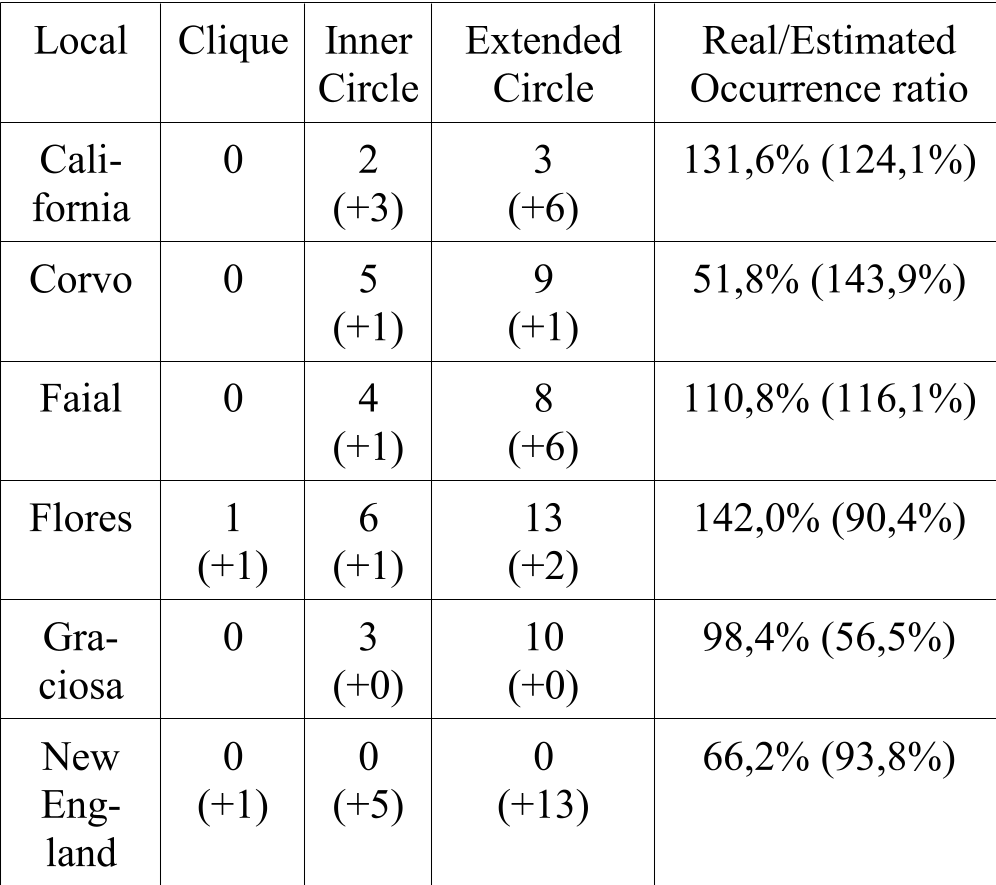
Key findings include:
- Flores and Pico as Hubs: These islands serve as social anchor points with high residency.
- The New England Link: The study identified 13 new "Extended Circle" connections to New England, proving that the Azorean population is not isolated but is part of a dynamic East-West Atlantic exchange.
- Transient Zones: St. Mary acts as a corridor rather than a residence, with significantly lower social complexity.
Critical Analysis & Conclusion
Takeaway
The social network of sperm whales is characterized by "small-world" properties—localized tight cliques connected by long-distance "weak ties." Protecting the Azores is not just a regional priority; it is a bottleneck for the social health of the entire North Atlantic population.
Limitations
While the photographic ID method is robust, it is biased toward whales that fluke (raise their tail) more often. Furthermore, the "Extended Circle" data likely underestimates the true scale of connectivity due to the difficulty of sampling in mid-ocean areas between the Azores and North America.
Future Work
The next step for this research involves integrating satellite telemetry with social network data to see if "social influencers" within a clique dictate the timing and route of trans-Atlantic migrations.