
From Pixels to People: Reconstructing Social Networks via Face Recognition
Social Network Construction and Analysis Based on Community Photo Collections with Face Recognition
This paper introduces a systematic framework for constructing and analyzing social networks using community photo collections via face recognition. By mapping co-occurrence in photographs to social ties, the authors demonstrate how to automatically mine community organizational structures and identify key individuals.
TL;DR
Can we map out a community's power structure simply by looking at their group photos? This paper proves we can. By processing community photo collections with face recognition algorithms, the researchers successfully reconstructed social graphs that reflect real-world relationships. Crucially, they found that even imperfect algorithms can still accurately identify a community's "key players."
Background & Motivation
In the age of Instagram and online community albums, we are drowning in multimedia data. While we have tools to tag faces, we haven't fully utilized these tags to understand the social architecture of the groups in the photos.
The authors identify a critical gap: most research focuses either on making face recognition more accurate or analyzing existing social networks (like Facebook). There is little work on how the errors in face recognition actually change our understanding of the social network. If an algorithm misidentifies a person, does the whole social graph fall apart?
Methodology: Building the Face Co-Occurrence Network (FCON)
The central intuition is simple: if two people are in a photo together, they likely have a social connection.
1. Three Scenarios of Construction
The paper explores how different levels of "prior knowledge" affect the network:
- Manual Tagging: The ground truth; 100% accuracy.
- Blind Information: The algorithm knows nothing beforehand and must decide if a face is a new person or someone it has seen before in the album.
- Range Determined: The algorithm has a pre-defined list of people (training set) to choose from.
2. Mathematics of Connection
They define three specific weights to describe a relationship between person and :
- Relationship Strength: How often they appear together.
- Proximity: Higher weight if they appear in small groups (suggesting closer ties) vs. large crowds.
- Cohesion: The ratio of their joint appearances to their individual appearances.
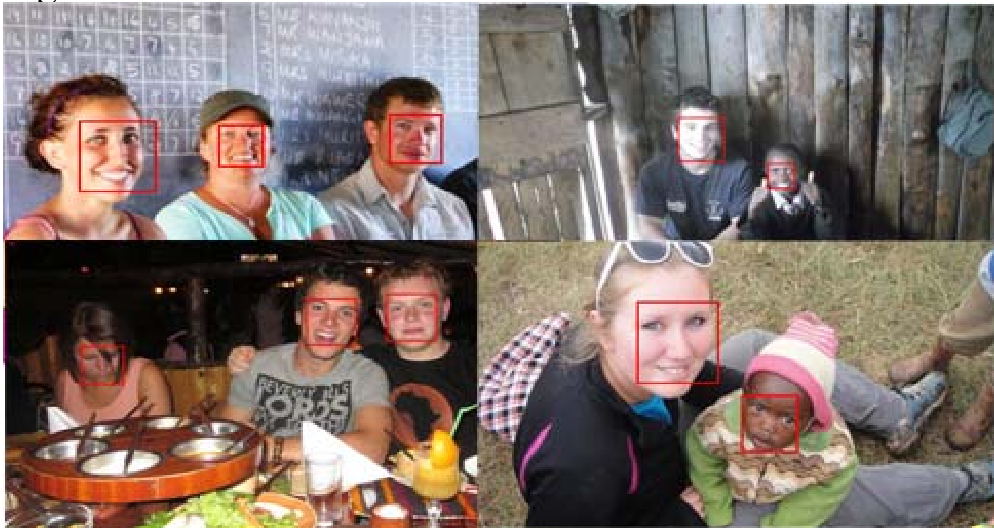 Figure 1: Sample data showing face detection and the resulting relationship mapping.
Exploring the "Algorithm Filter"
The most fascinating part of this research is the Ablation-style analysis of recognition accuracy. The authors systematically lowered the recognition probability () from 0.9 down to 0.6 to see how the network's properties—like density, average path length, and connectivity—shifted.
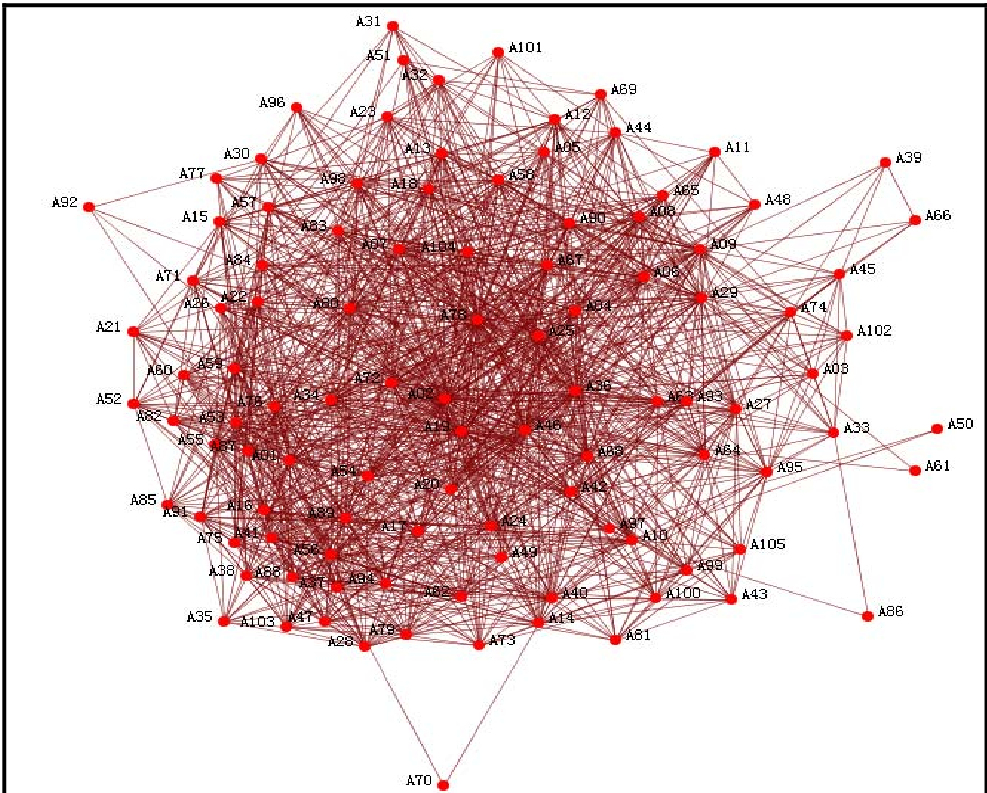 Figure 2: The ground-truth social network derived from manual tagging.
Key Findings from Experiments:
- Metric Sensitivity: Network Centralization (how much the network revolves around a few heroes) is highly sensitive to accuracy. When recognition fails, the network appears more "dispersed" than it actually is.
- Robust Key Nodes: Despite errors, the "Key Node Mining" (identifying leaders) remained surprisingly effective. Even at 60% accuracy, the top-10 list of influential people had a 50% overlap with the real list.
- The "New Person" Trap: In blind recognition, lower accuracy leads to an explosion of "isolated nodes"—the algorithm creates "ghost" identities because it fails to recognize that a face belongs to an existing member.
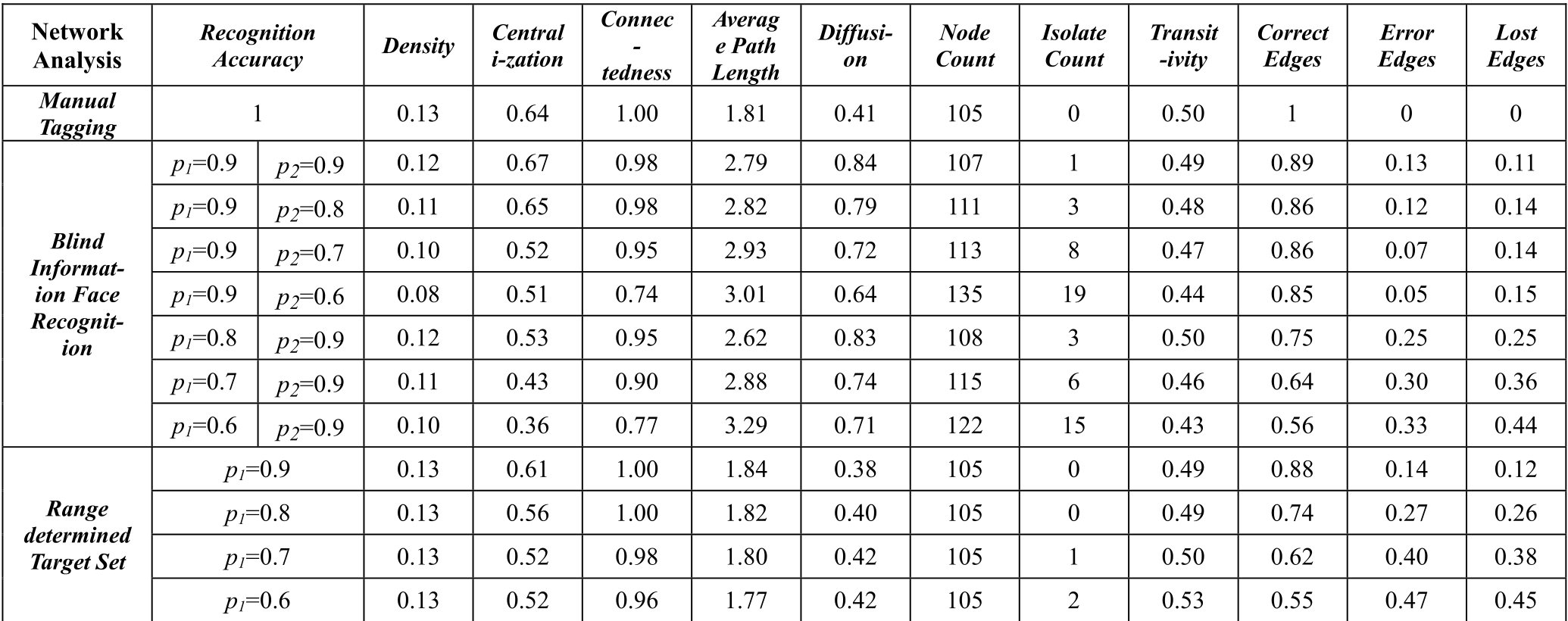 Table 1: Comparison of network properties across various recognition accuracies ().
Critical Analysis & Conclusion
The value of this work lies in its pragmatism. It acknowledges that AI isn't perfect and asks: "Is imperfect AI still useful for sociology?" The answer is a resounding yes.
Takeaways:
- For Researchers: When building graphs from noisy AI data, focus on "Cohesion" metrics, as they are more stable than simple "Strength" metrics.
- For Industry: This approach can be used to automatically organize photo apps not just by "who is in this photo," but by "who are your closest social circles" based on co-occurrence patterns.
Limitations: The study used a relatively small dataset (50 photos). In massive datasets, the "noise" from accidental co-occurrences in large crowds might require more sophisticated filtering (like the freq-filtering shown in Figure 3 of the paper).
Future Work
The next frontier is moving beyond "co-occurrence" to "interaction." Are the people in the photo looking at each other? Are they smiling? Incorporating pose estimation and sentiment analysis could turn a simple social graph into a rich map of community dynamics.