
Securing the Social Fabric: A Dual-Watermarking Approach to Content Management
Social Network Content Management through Watermarking
The paper proposes a dual-watermarking scheme for social networks (SNs) to mitigate identity theft and unauthorized content sharing. It introduces a framework combining robust and semi-fragile watermarks to automate ownership tracking and tamper detection without requiring a complete redesign of existing social media architectures.
TL;DR
Social networks are currently "identity theft friendly" because they lack mechanisms to verify the origin of images. This paper proposes a Dual Watermarking strategy—combining robust ownership tags with fragile integrity checks—to automate privacy enforcement. By identifying the original uploader and detecting modifications, social platforms can proactively block unauthorized sharing and alert users of privacy breaches.
Background: The Illusion of Privacy
In the era of Web 2.0, we share our lives through pixels. However, current social networks (SNs) treat privacy as a "gatekeeper" problem: once a "friend" passes the gate and downloads your photo, your privacy settings become obsolete. They can re-upload your photo to a fake profile or modify it without your knowledge. The authors argue that the issue isn't the social network's architecture, but the passivity of the content itself.
The "Laissez-Faire" State of Current Platforms
To prove that major platforms aren't doing enough, the researchers conducted a "upload-download-compare" experiment on Facebook and Google+.
Key Experimental Findings:
- Google+: Acts as a mirror. For images below a certain resolution, the downloaded file is identical to the original (Mean Square Error = 0). No watermarking is applied.
- Facebook: Applies aggressive compression to save storage space (significant reduction in file size), but does not embed unique user identifiers. If two different users upload the same image, the resulting file on Facebook's servers is identical, proving a lack of individual watermarking.
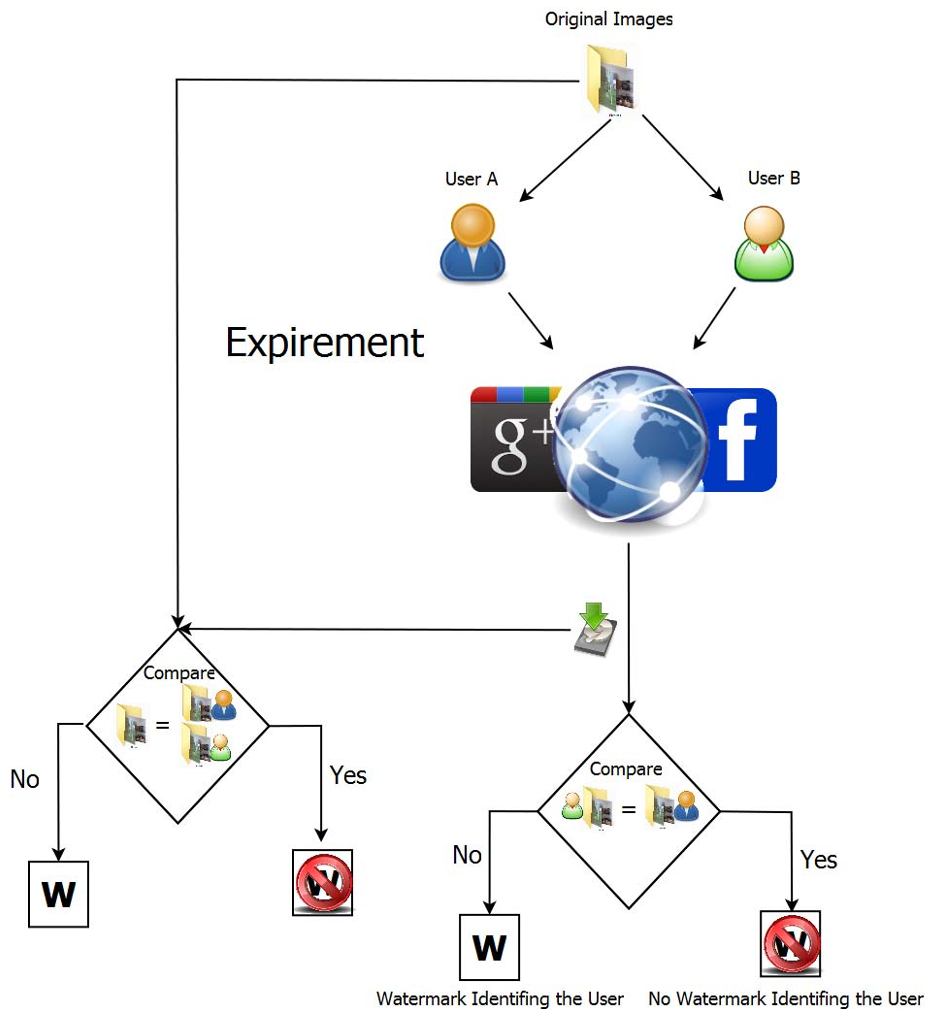 Figure 1: The workflow used to analyze how SNs handle uploaded images.
Methodology: The Dual-Watermarking Scheme
The core contribution is a security layer that embeds metadata directly into the signal (pixels) of the image. The system uses two types of "invisible" marks:
- Robust Watermark: This is the "Identity Card." It is designed to survive heavy processing (compression, resizing). It links the image to the original User ID.
- Semi-Fragile Watermark: This is the "Tamper Seal." It is sensitive to malicious modifications (like Photoshopping) but tolerant to routine operations like lossy compression.
How it Works in Practice
When User B tries to upload an image, the SN performs a check:
- Is there a watermark? If yes, who is the owner?
- Check Privacy Policy: Does the original owner (User A) allow User B to repost this?
- Integrity Check: Has User B altered the image? If the semi-fragile watermark is broken, the SN triggers an alarm to User A.
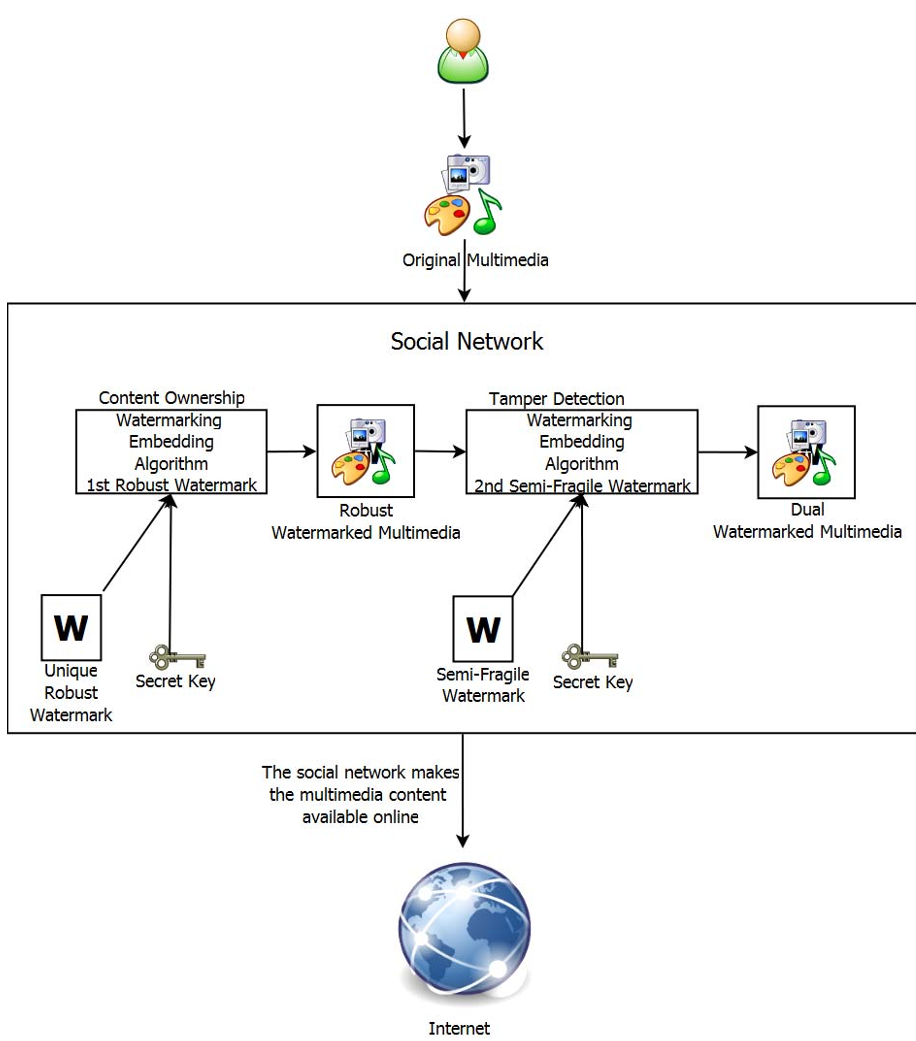 Figure 2: The proposed dual-embedding process for robust and semi-fragile marks.
Advanced Protection: On-the-Fly Fingerprinting
Beyond static watermarking, the authors suggest Fingerprinting. Every time a user views/downloads an image, the server embeds a unique "traitor tracing" watermark specific to that viewer. If that image later appears on a leaked site, the SN can trace exactly which "friend" leaked the content.
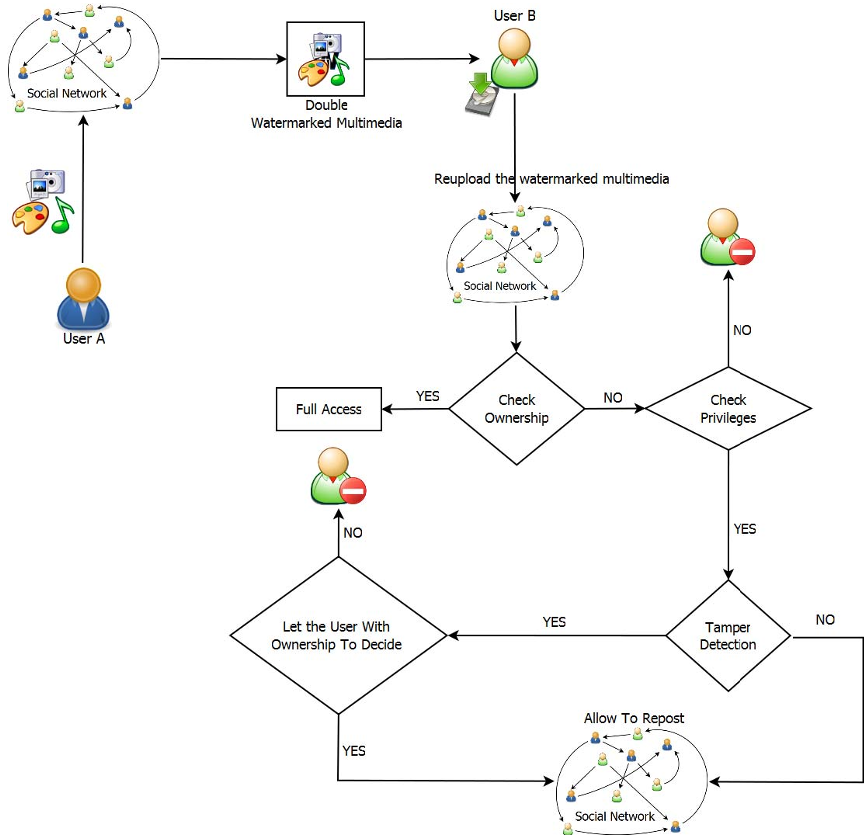 Figure 3: Fingerprinting mechanism for tracing the source of leaked content.
Critical Insight & Conclusion
The beauty of this approach is its backward compatibility. It doesn't require a "New Internet" or blockchain; it can be integrated into the ingestion pipelines of existing giants like Facebook.
Takeaway: Ownership in social media should be defined by the signal, not the link. By moving from "Access Control Lists" (who can see) to "Content Management" (who owns), we can significantly reduce identity theft.
Limitations: The paper notes a "first-mover" problem—if a thief uploads your photo before you do, the system will initially recognize them as the owner. Resolving these "ancestral" disputes still requires a manual reporting mechanism, though the overall volume of manual work would drastically decrease.