
Unmasking the Crowd: How Knowledge Graphs Power Social Network De-Anonymization
Social Network De-Anonymization and Privacy Inference with Knowledge Graph Model
This paper introduces a general Knowledge Graph (KG) framework to model attacker background knowledge for social network de-anonymization and privacy inference. It transforms the re-identification task into a maximum weighted bipartite matching problem and achieves over 60% de-anonymization accuracy on real datasets (Google+, Pokec) even with only 0.5% noisy auxiliary data.
Executive Summary
TL;DR: This paper bridges the gap between structured social data and semantic background knowledge. By modeling an attacker’s prior beliefs as a Knowledge Graph (KG), the authors demonstrate that de-anonymization isn't just about matching "shapes" in a graph—it's about logical and probabilistic inference. Leveraging bipartite matching and Path Ranking, they show that even minimal auxiliary information can lead to significant privacy leaks in large-scale networks like Google+ and Pokec.
Academic Positioning: This work evolves from traditional structure-only re-identification (like the Narayanan-Shmatikov model) toward a semantic-aware adversarial model. It treats de-anonymization as a data integration problem, placing the research at the intersection of Network Security and Knowledge Discovery.
The "Blind Spot" in Prior Privacy Models
Most existing privacy research assumes a "weak" or "specialized" attacker. For example, -degree anonymity assumes the attacker only knows how many friends you have. However, real-world attackers are messy:
- Probabilistic Knowledge: Attackers aren't always 100% sure; they have "beliefs" with varying confidence.
- Semantic Correlations: Knowing someone is a "Doctor" strongly implies a "High Salary." Traditional graph models ignore these attribute-to-attribute links.
- Chain Reactions: De-anonymizing one user often lowers the entropy for their neighbors, creating a domino effect that -anonymity fails to prevent.
Methodology: The Knowledge Graph Advantage
The authors redefine social data as RDF triples: (Subject, Predicate, Object). This allows them to treat "Alice is friends with Bob" and "Alice lives in New York" as equivalent edges in a unified graph.
1. De-Anonymization as Bipartite Matching
The attack maps nodes from the Prior Attack Graph () to the Anonymized Graph (). To solve this efficiently at scale, the paper introduces two key heuristics:
- BFS-Based Construction: Starts from a high-confidence "anchor" node and explores neighbors. If Bob is matched, his friends are likely to be found among the neighbors of Bob’s match in the anonymized data.
- LSH-Based Construction: Uses Locality-Sensitive Hashing to bucket users with similar attributes (e.g., job title + location). This allows for independent candidate selection, preventing the "error accumulation" common in seed-propagation methods.
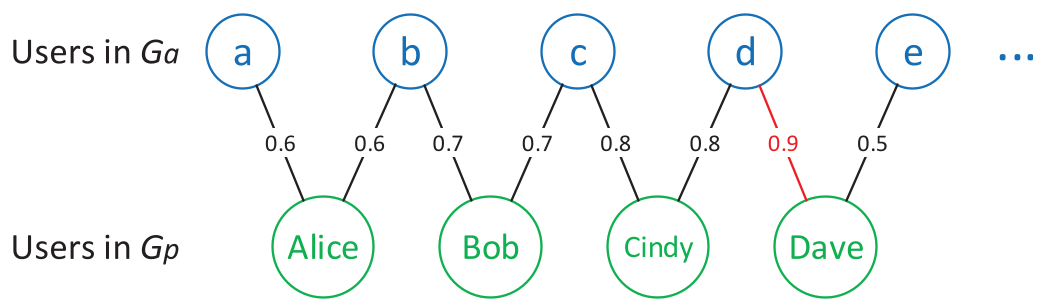 Figure 1: The overall workflow from prior knowledge to posterior inference.
2. Privacy Inference via Path Ranking (PRA)
Once a user is unmasked, the attacker doesn't just stop at their identity. They use Path Ranking Algorithms to predict missing sensitive links. If a path (User -> Job -> Salary_Range) exists frequently in the KG, the attacker can infer a specific user's salary even if it was suppressed in the published dataset.
Experimental Insights: Why the Attack Succeeds
The researchers tested their framework on Google+ and Pokec datasets.
- The Power of Attributes: Interestingly, attribute similarity () proved more robust than structural similarity (). In sparse graphs, the "shape" of a user's network changes significantly under perturbation, but their core attributes (if not generalized enough) remain a "smoking gun."
- Scalability: By using the "Top-" candidate strategy, the authors reduced the complexity of bipartite matching from to , making the attack feasible for networks with hundreds of thousands of nodes.
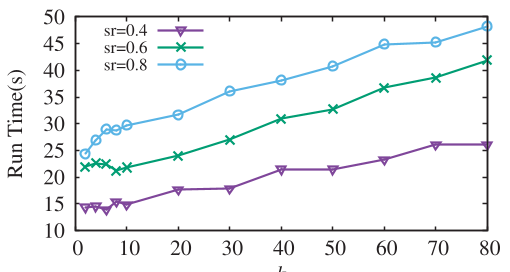 Figure 2: Impact of the number of candidates (k) on accuracy and runtime.
Critical Analysis & Conclusion
Takeaway
The core contribution is the movement away from "graph-only" attacks. By using a Knowledge Graph, the attacker can integrate "Common Sense" (e.g., gender-specific constraints) and "Statistical Trends" into the de-anonymization process. This makes the attack significantly harder to defend against using simple topological noise.
Limitations
- Seed Dependency: The BFS method still relies on an "outstanding initial node." If the internal graph is highly symmetric or the initial match is wrong, the propagation fails.
- Computational Overhead of LSH: While LSH avoids error accumulation, the neighborhood similarity computation is intensive, as it requires accessing the attributes of every neighbor.
Future Outlook
As Knowledge Graphs become the standard for representing heterogeneous data, we need a new generation of "Semantic Anonymization" techniques. Future work should explore how to add noise not just to the edges of a graph, but to the logical paths that an attacker might traverse to infer a user's private life.